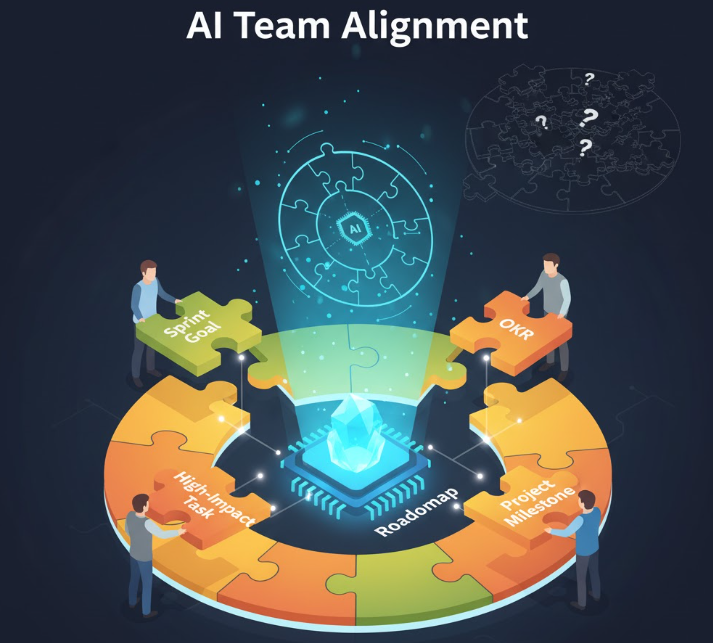
Introduction
Struggling to get your team on the same page? Even small misalignments in priorities can cascade into missed deadlines, duplicated work, and lost opportunities. AI team alignment tools are changing the game, providing clarity, structure, and actionable guidance to keep teams moving in sync.
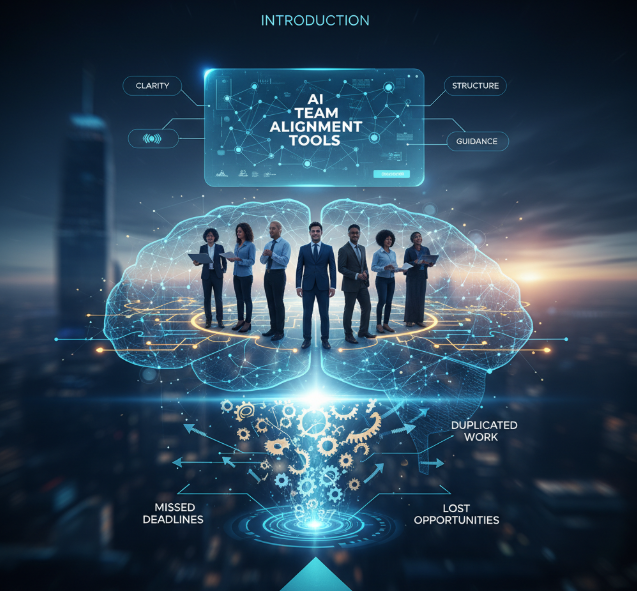
Why Teams Struggle with Alignment
- Scattered Objectives: Teams often juggle competing goals without a clear framework.
- Decision Fatigue: Leaders make dozens of small prioritization decisions daily.
- Inefficient Sprints: Without clarity, sprints become reactive instead of proactive.
- Communication Gaps: Misunderstandings about responsibilities slow execution.
How AI Improves Priority Planning
AI doesn’t replace strategy—it amplifies it. Here’s how:
1. Decision Frameworks
- AI analyzes past project outcomes and team performance.
- Suggests which initiatives will deliver the highest ROI.
- Flags potential conflicts between team priorities.
2. OKR Mapping and Tracking
- Connects company objectives to team-level key results.
- Highlights gaps or overlaps.
- Enables automated progress tracking and predictive outcome scoring.
3. Conflict Resolution & Prioritization
- AI identifies conflicting priorities across teams.
- Provides recommendations to resolve overlaps.
- Suggests adjustments for optimal resource allocation.
4. Sprint Planning & Workflow Automation
- AI generates recommended sprint backlogs based on urgency, impact, and resource availability.
- Automates routine tasks, freeing teams to focus on strategic work.
Checklist Example: AI-Enhanced Sprint Planning
- Define priority backlog items
- Analyze dependencies and blockers with AI
- Automate routine task assignments
- Monitor progress and adjust via AI insights
Common Mistakes Teams Make Without AI
- Relying solely on manual tracking for priorities
- Overloading team members with competing tasks
- Ignoring data-driven insights when planning sprints
- Failing to document rationale for decision-making
FAQ Section
Q1: How does AI team alignment differ from traditional project management tools?
AI provides predictive insights, real-time prioritization recommendations, and conflict detection beyond static task lists.
Q2: Can AI replace team leadership?
No, AI enhances decision-making but human judgment remains crucial for context-sensitive decisions.
Q3: How do I implement AI in sprint planning?
Integrate AI tools to analyze backlog, suggest prioritization, and automate repetitive assignments.
Q4: Will AI help reduce decision fatigue?
Yes, by highlighting high-impact tasks and providing recommendations based on historical data.
Q5: What types of AI tools are best for team alignment?
Look for platforms with predictive analytics, OKR tracking, and workflow automation capabilities.
Conclusion
Get your team aligned faster with actionable AI insights. Explore ActStrategic.ai tools to create a data-driven priority roadmap, optimize your funnel with our Fix My Funnel report, or enhance your website conversions using Fix My Website Conversions for smarter scaling.