Introduction: Why Your Sales Funnel Matters
Many business owners pour money into marketing only to feel like sales never catch up. Leads fall off, ad spend gets wasted, and growth feels stalled. The problem? A broken or unclear sales funnel.
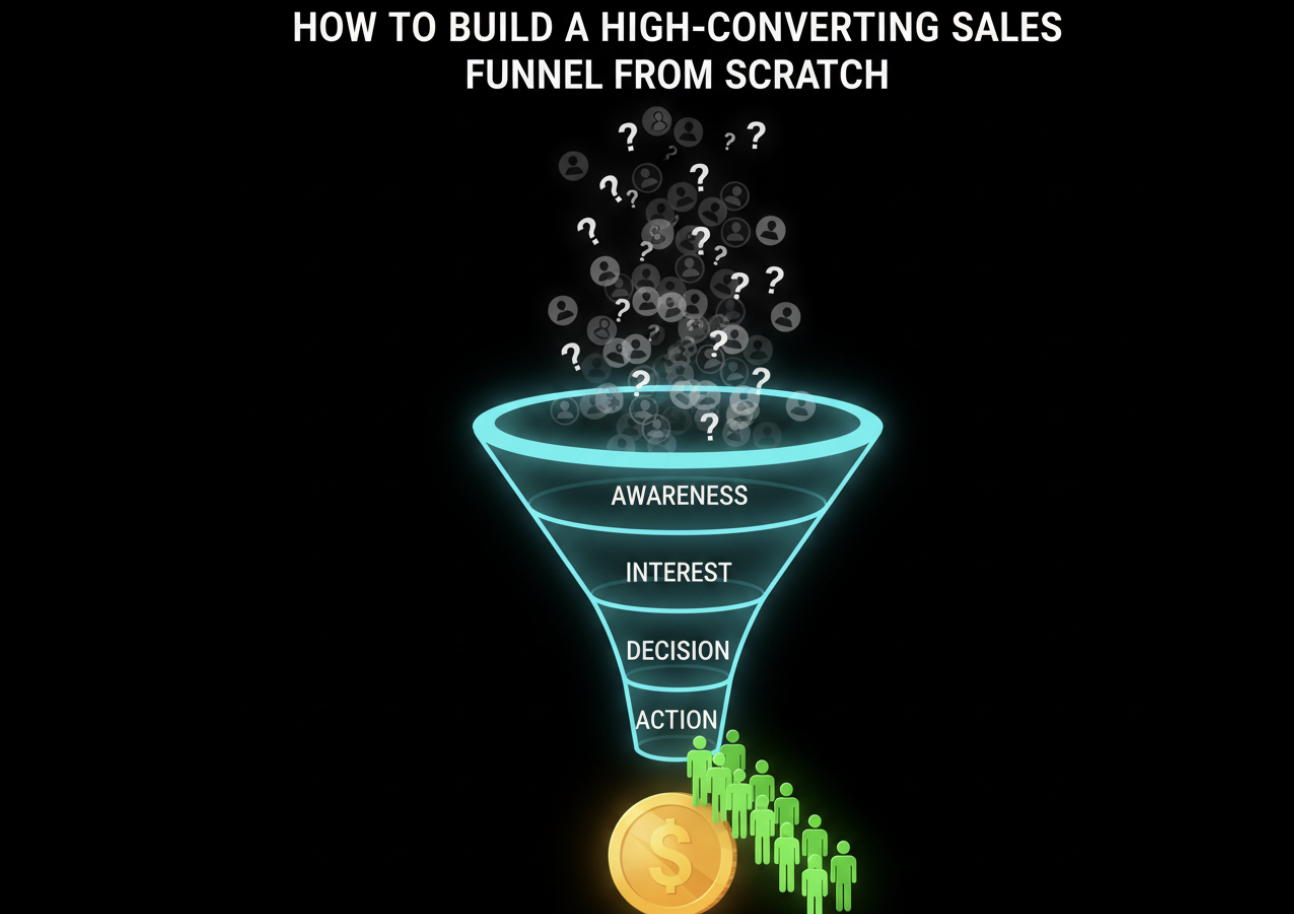
A sales funnel is your system for guiding strangers into becoming loyal customers. Done right, it gives structure to your customer journey and makes growth predictable. In this post, you’ll learn exactly how to build a sales funnel from scratch, so you can scale smarter and avoid costly mistakes.
Step 1: Map Your Customer Journey
A funnel isn’t built on software—it’s built on clarity. First, map out the path your ideal customer takes:
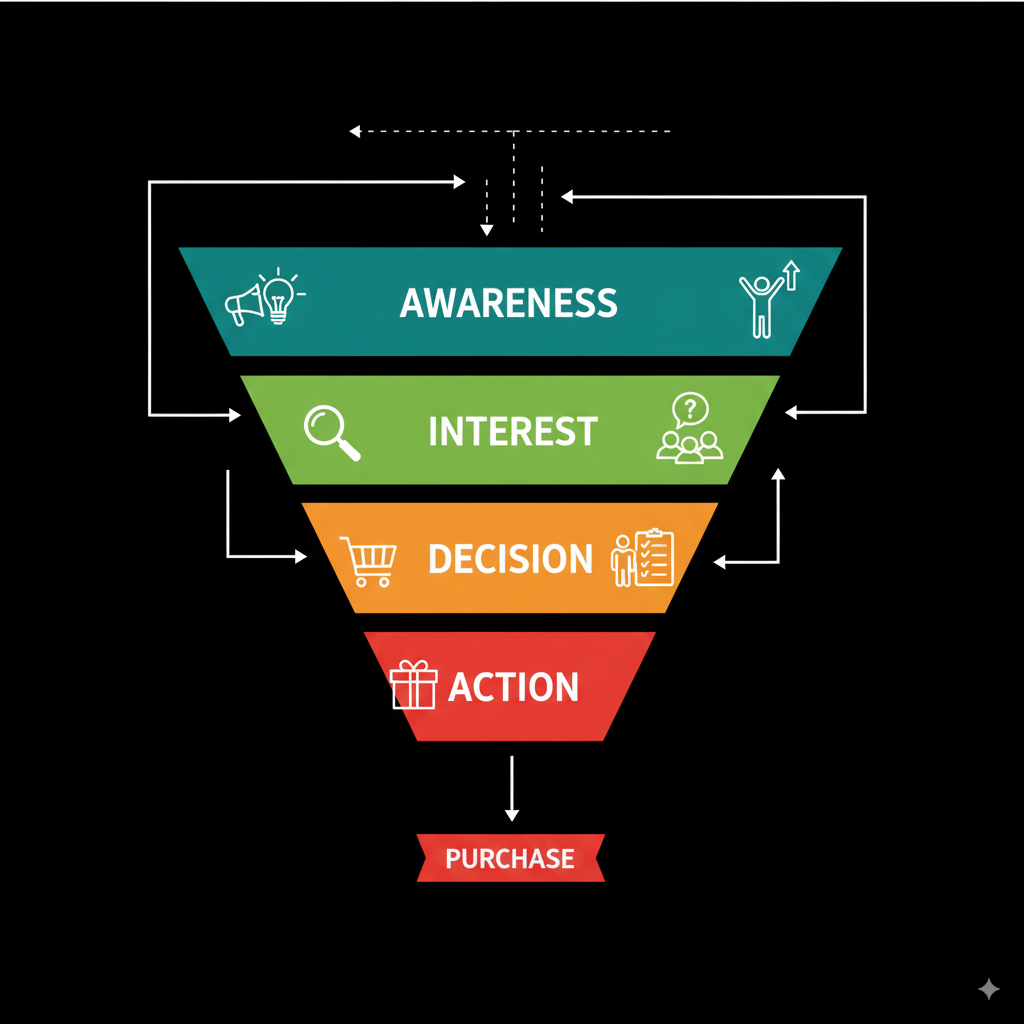
- Awareness: First touchpoint (ads, SEO, referrals).
- Interest: What captures attention (guides, webinars, blog posts).
- Decision: Trust builders (testimonials, case studies, demos).
- Action: Purchase drivers (limited-time offers, bonuses, guarantees).
👉 For a deeper primer, read What is a Sales Funnel and Why Your Business Needs One.
Step 2: Choose the Right Funnel Type
Not all funnels are created equal. The right one depends on your offer and audience:
| Funnel Type | Best For | Example Flow |
|---|---|---|
| Lead Magnet Funnel | Building an email list before selling | Free guide → Email nurture → Offer |
| Webinar Funnel | High-ticket coaching or consulting | Ad → Webinar → Discovery call |
| Product Launch | Courses, SaaS, or timed offers | Waitlist → Launch emails → Cart close |
| Evergreen Funnel | Consistent revenue from proven offers | Automated emails → Sales page |
👉 Ask yourself: Does my audience need education first, or are they ready to buy?
Step 3: Build Each Funnel Stage
Now let’s break it down:
Awareness (Top of Funnel)
- SEO-driven blog content.
- Targeted social ads.
- Free resources (guides, calculators, checklists).
Interest (Middle of Funnel)
- Email nurture sequences that educate.
- Webinars or case studies.
- Retargeting ads to re-engage leads.
Decision (Bottom of Funnel)
- Landing pages with one clear CTA.
- Proof: reviews, testimonials, logos.
- Urgency drivers like discounts or bonuses.
Action (Conversion & Beyond)
- Seamless checkout.
- Upsells and cross-sells.
- Post-purchase email flows for referrals and retention.
👉 If you suspect your offer is the weak link, try Fix My Offer.
Step 4: Optimize Relentlessly
A funnel is never truly “done.” Conversion gains come from testing:
- Metrics to track: CTR, conversion rates, CAC, LTV.
- A/B test headlines, CTAs, and offers.
- Find leaks using Google Analytics or Hotjar.
- Strengthen offers if conversions are consistently low.
👉 Not sure where your funnel is broken? Run a Fix My Funnel report to pinpoint leaks instantly.
Step 5: Leverage the Right Tools
Here are tools to help you execute faster:
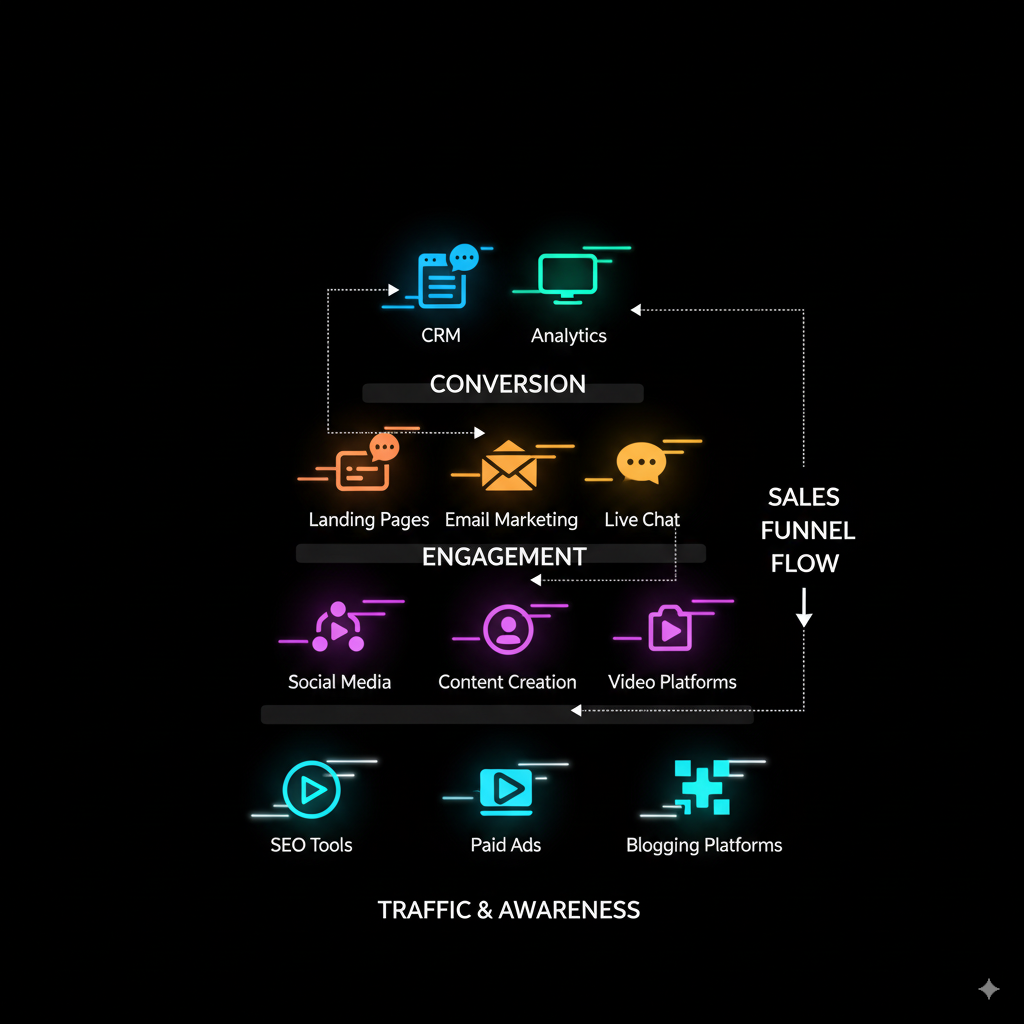
- Landing Pages & Checkout: Leadpages, ThriveCart, ClickFunnels.
- Email Automation: ActiveCampaign, ConvertKit, HubSpot.
- Analytics & Testing: Google Analytics, Hotjar, Optimizely.
- Strategy & Diagnosis: Fix My Funnel, Fix My Website Conversions.
👉 Tools are amplifiers. Strategy is the engine.
Step 6: Learn From Research and Best Practices
Don’t reinvent the wheel—borrow insights from proven sources:
- Harvard Business Review: The New Science of Customer Emotions
- Prompt Library for AI-powered productivity.
- AI Readiness Quiz to benchmark your business.
FAQs: Sales Funnel Fundamentals
1. What is funnel optimization?
Improving each funnel stage to reduce drop-offs and increase conversions.
2. How do I know if my funnel is broken?
Warning signs include high traffic but low sales, expensive ad spend with low ROI, or leads going cold.
3. How long does it take to build a funnel?
You can set up a simple funnel in days, but optimizing it into a true growth engine takes weeks or months.
4. Do I need a funnel for every product?
Not always. Similar offers can often share one funnel; distinct audiences may require separate funnels.
5. What if my offer doesn’t convert?
No funnel can save a weak offer. Refine your value proposition with Fix My Offer.
6. What if my website traffic isn’t converting?
Run Fix My Website Conversions to diagnose user experience and conversion issues.
Conclusion: Scale With Confidence
A sales funnel isn’t just a marketing tool—it’s your growth engine. By mapping customer journeys, choosing the right funnel type, and optimizing consistently, you create predictable revenue and scale with clarity.
👉 Ready to find your funnel leaks? Start with the Fix My Funnel report and gain clarity today.