Introduction: Why So Many Businesses Struggle with Growth
Ever feel like your marketing is working hard but not working smart? Ads are running, content is out there, leads are trickling in—but sales just aren’t growing the way they should. The truth is, most businesses don’t have a clear, structured sales funnel guiding prospects from curiosity to conversion. Without it, you’re leaving growth to chance.
In this post, we’ll break down what a sales funnel is, why it’s a cornerstone of modern business strategy, and how you can start building one that doesn’t just generate leads—but turns them into paying, repeat customers.
What is a Sales Funnel?
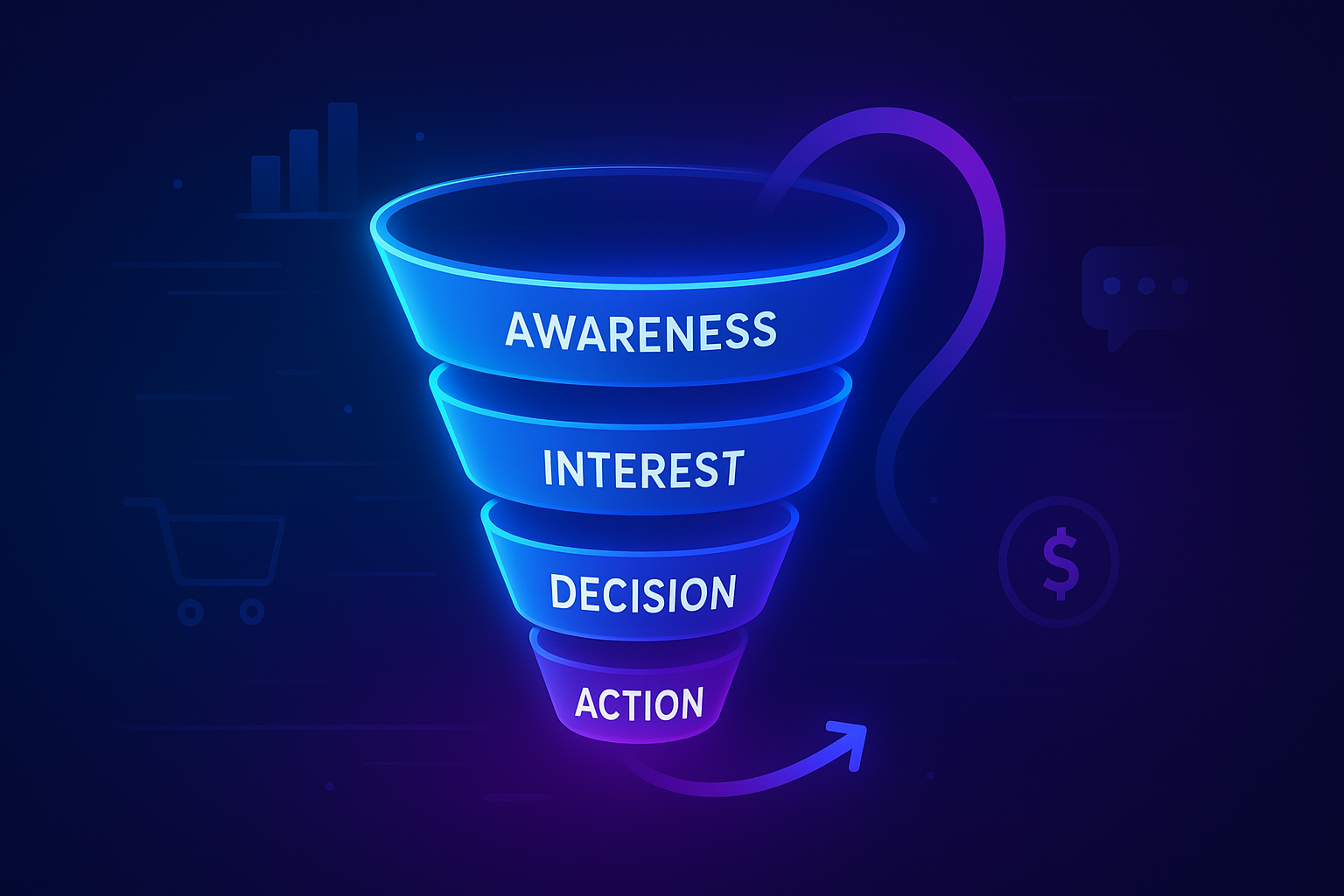
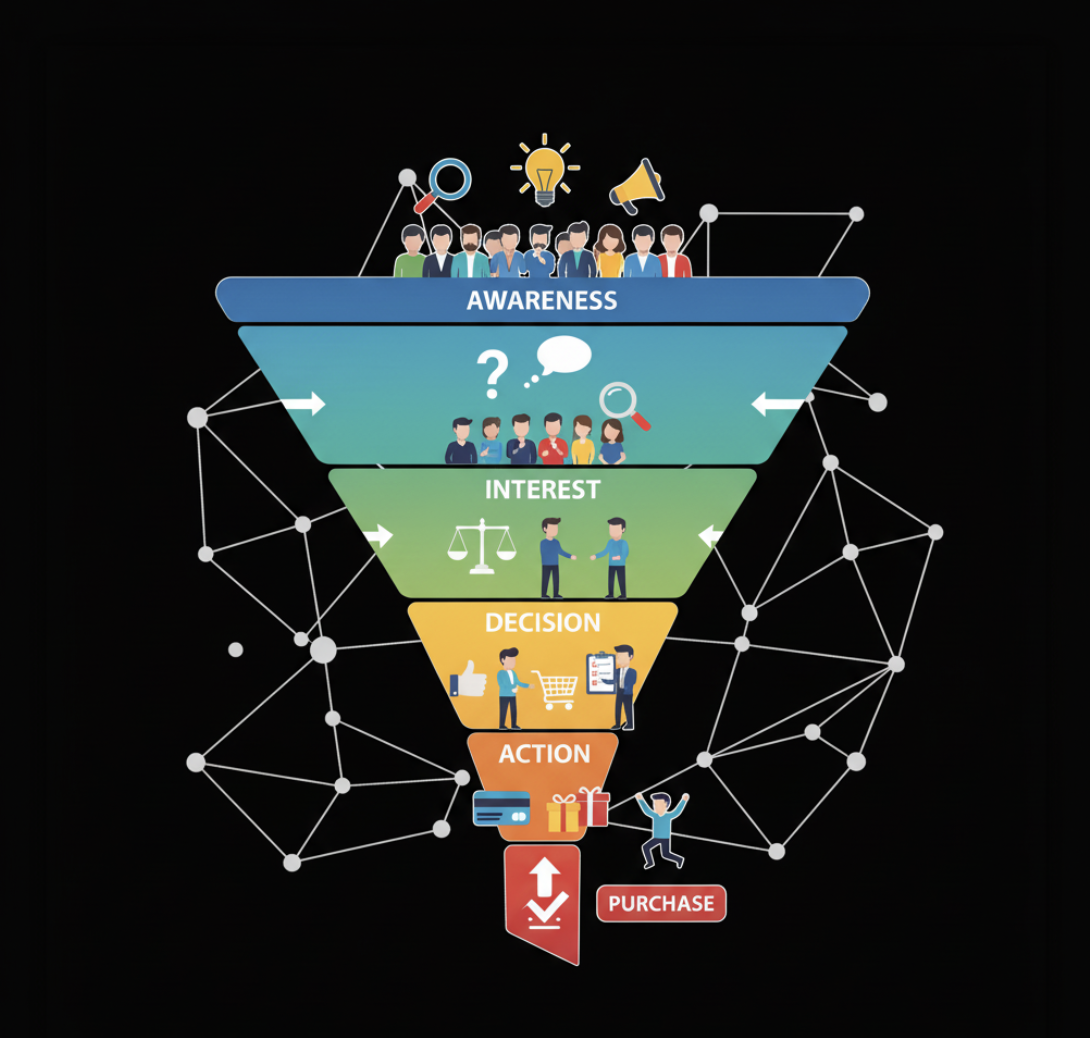
A sales funnel is the step-by-step journey your potential customers go through before making a purchase. Picture an actual funnel: wide at the top (lots of people becoming aware of your brand), narrowing as you guide them toward a buying decision.
The classic funnel has four main stages:
- Awareness – People discover your brand (via ads, content, referrals).
- Interest – They engage with your messaging (reading blogs, downloading a free resource, signing up for your newsletter).
- Decision – They weigh their options and consider buying from you.
- Action – They purchase, subscribe, or commit.
👉 Think of it as your customer conversion roadmap—without it, you’re hoping people figure it out themselves (they won’t).
Why Your Business Needs a Sales Funnel
If you’re still wondering whether you need a funnel, here’s why it’s non-negotiable for sustainable growth:
1. Funnels Turn Chaos into Clarity
- Without a funnel, your leads float around aimlessly.
- With a funnel, you have a structured system showing exactly where prospects drop off.
2. Funnels Help You Stop Wasting Ad Spend
Every dollar spent on ads should move people down the funnel. Without one, your money often disappears into clicks that don’t convert.
3. Funnels Boost Conversions (Even with the Same Traffic)
You don’t always need more leads. You need to better nurture the leads you already have. A funnel helps you do that systematically.
4. Funnels Scale With You
Whether you’re a solopreneur or running a fast-scaling startup, funnels adapt to your growth stage.
Harvard Business Review notes that businesses with structured sales processes consistently outperform those without one, proving that clarity equals scalability (HBR).
Common Funnel Mistakes to Avoid
Even if you have a funnel, you might be making these costly mistakes:
- Too much focus on traffic, not enough on conversion
- No follow-up system for leads who don’t buy immediately
- Weak offers that don’t move prospects from “interested” to “committed”
- Unclear customer journey (prospects don’t know what step to take next)
The good news? These problems are fixable. In fact, most fixes are surprisingly simple once you know where the leaks are.
A Simple Framework for Building Your Funnel
Here’s a straightforward approach to start mapping your funnel:
| Funnel Stage | Key Question | Example Action |
|---|---|---|
| Awareness | How do people first hear about you? | Run ads, publish SEO blogs, social posts |
| Interest | How do you capture their attention? | Free guide, email opt-in, webinar |
| Decision | What convinces them you’re the right choice? | Case studies, testimonials, product demos |
| Action | How do they buy or commit? | Clear CTA, frictionless checkout |
How to Know if Your Funnel is Broken
Ask yourself:
- Do I know where leads are dropping off?
- Are my conversion rates lower than industry averages?
- Am I spending more on ads than I’m making back?
- Do I have a clear follow-up for leads who didn’t convert right away?
If you answered “yes” to any of these, your funnel has leaks—and those leaks are costing you growth.
Tools to Fix and Optimize Your Funnel
You don’t need guesswork—you need clarity. That’s why we created the Fix My Funnel tool. It diagnoses where your funnel is leaking and gives you actionable fixes, fast.
Other helpful resources:
- Fix My Offer – If your offers aren’t converting
- Fix My Website Conversions – If your site isn’t turning visitors into leads
- YourNextVenture Prompt Library – Create better marketing prompts and campaigns
- FutureProof AI Readiness Quiz – Evaluate if your business is ready to leverage AI for growth
FAQ: Sales Funnel Basics
1. What is the purpose of a sales funnel?
A sales funnel guides potential customers step by step toward becoming paying customers.
2. How do I know if I need a sales funnel?
If you’re generating leads but struggling to convert them into sales, you need one.
3. Do funnels work for service-based businesses?
Yes. Whether you sell products, coaching, or B2B services, funnels clarify and scale your growth.
4. How long does it take to build a funnel?
It varies, but with the right tools and guidance, you can have a simple funnel running in weeks.
5. What’s the biggest mistake to avoid with funnels?
Building one without tracking or testing—it’s not “set and forget.” Optimization is key.
Conclusion: Start Scaling Smarter
Every business has leads slipping through the cracks. A sales funnel is the system that stops the leaks and creates predictable growth. Instead of guessing, get clarity today.
👉 Start by running your funnel through our Fix My Funnel tool—pinpoint your biggest leaks and get expert-backed fixes fast.