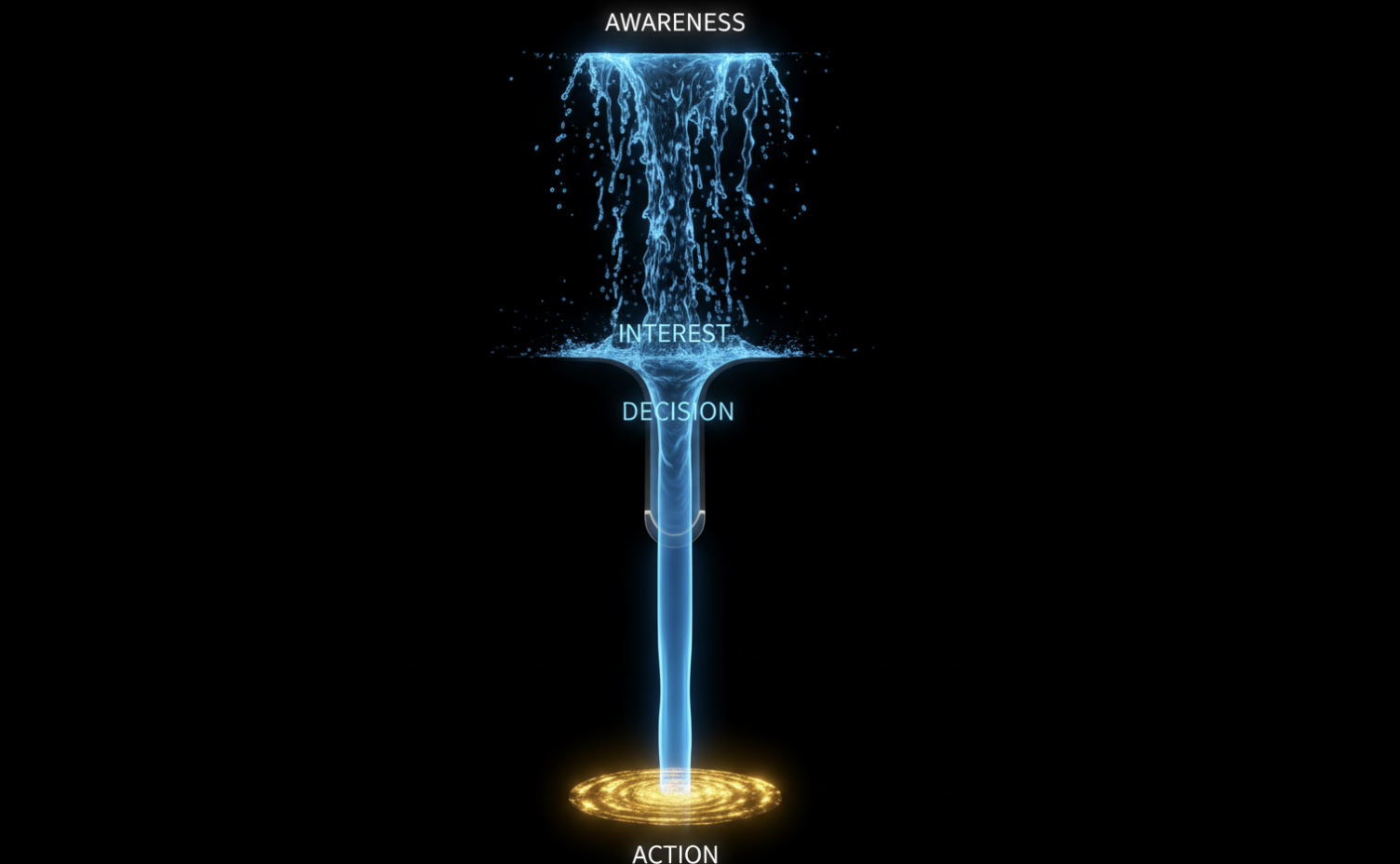
Introduction: Why Funnel Stages Matter
Every business owner knows the frustration of traffic that doesn’t convert. The truth is, most prospects don’t buy right away—they move through distinct marketing funnel stages. Understanding these stages (and optimizing them) is the difference between wasted ad spend and predictable growth.
In this guide, we’ll break down each funnel stage—from Awareness to Conversion—showing how prospects move, what they need at each step, and how to fix bottlenecks.
👉 Tip: If you suspect leaks in your funnel, try our Fix My Funnel tool for a personalized diagnostic.
The Four Core Marketing Funnel Stages
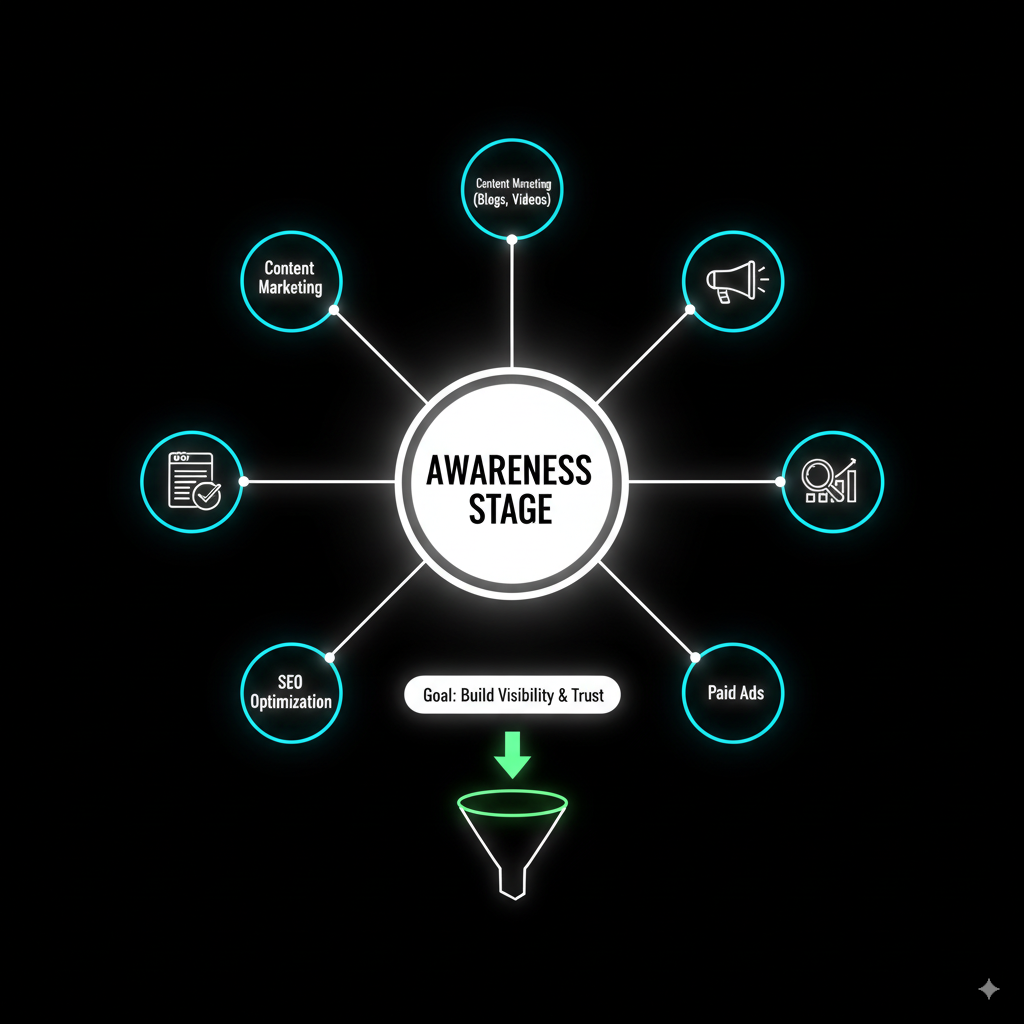
1. Awareness (Top of Funnel)
At this stage, prospects first discover your brand. They may not even know they have a problem yet.
Key Strategies:
- Content marketing (blogs, social posts, videos)
- SEO optimization
- Paid ads targeting problem-awareness keywords
Goal: Build visibility and trust.
2. Interest (Middle of Funnel)
Here, prospects start exploring solutions. They want to learn more about their problem and possible fixes.
Key Strategies:
- Lead magnets (guides, templates, toolkits)
- Email nurture sequences
- Webinars or demos
Goal: Capture leads and educate them.
👉 Related resource: Fix My Offer can help strengthen what you give away at this stage.
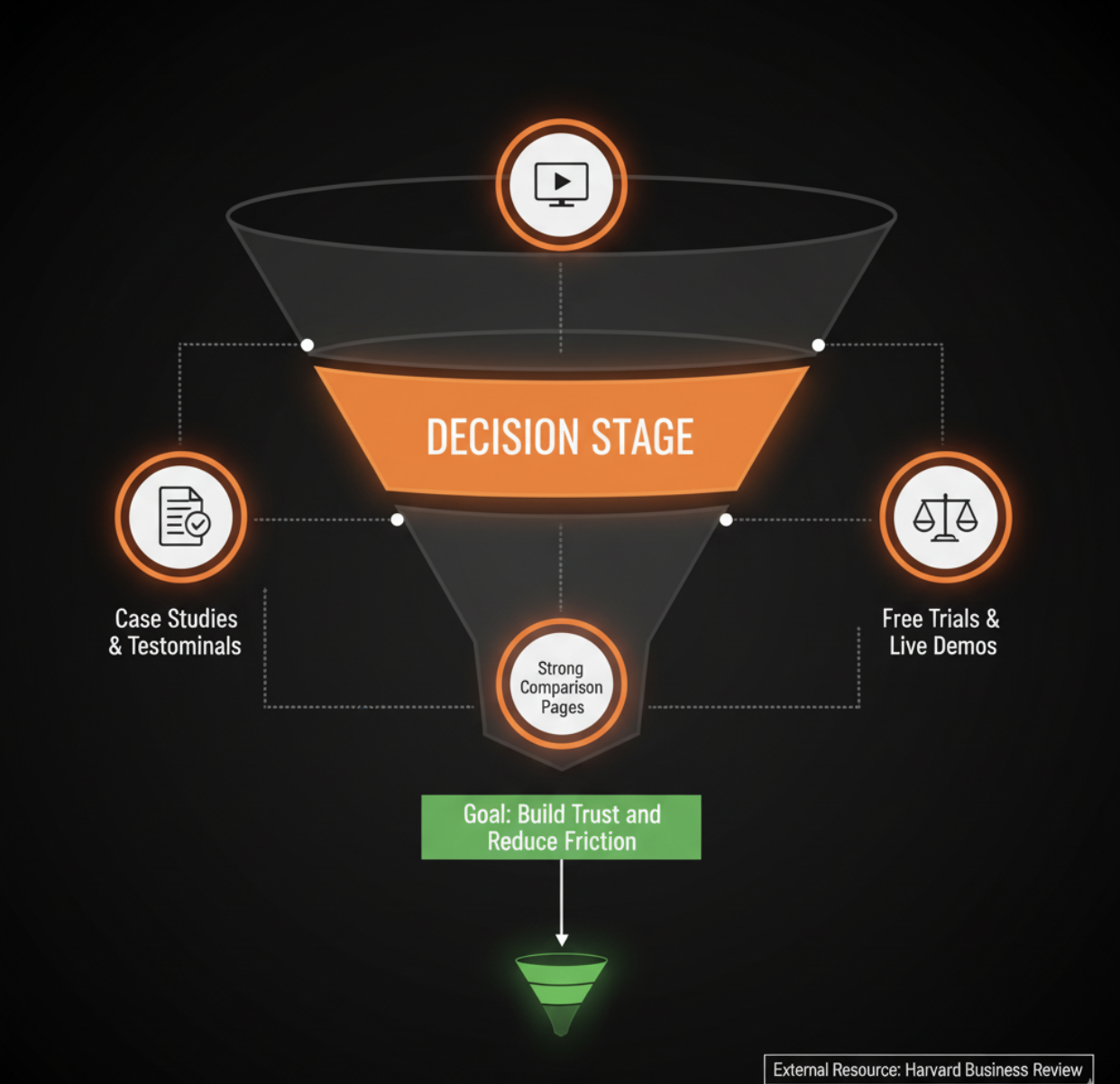
3. Decision (Bottom of Funnel)
Prospects are comparing providers and solutions. Your job is to prove why you’re the best choice.
Key Strategies:
- Case studies and testimonials
- Free trials and live demos
- Strong comparison pages
Goal: Build trust and reduce friction.
👉 External resource: Harvard Business Review on trust in customer decision-making.
4. Action (Conversion)
This is where prospects take the leap—signing up, purchasing, or subscribing.
Key Strategies:
- Streamlined checkout or sign-up process
- Clear CTAs
- Trust signals (security badges, money-back guarantees)
Goal: Eliminate last-minute hesitations.
👉 Related resource: Fix My Website Conversions.
Example Funnel Breakdown
| Funnel Stage | Prospect’s Mindset | What to Provide |
|---|---|---|
| Awareness | “I might have a problem.” | Blogs, ads, social content |
| Interest | “How do I fix this?” | Guides, webinars, email nurture |
| Decision | “Which solution is right?” | Testimonials, case studies, trials |
| Action | “I’m ready to commit.” | Simple checkout, strong CTA |
Common Funnel Mistakes (and Fixes)
- Too much focus on Awareness → Leads drop without nurturing.
- Weak offers at Interest stage → Low sign-up rates.
- Overcomplicated checkout → Abandoned carts.
👉 External resource: TechCrunch on SaaS growth bottlenecks.
FAQs About Marketing Funnel Stages
Q1: What is the most important funnel stage?
All stages matter, but the weakest link usually defines performance.
Q2: How do I know where my funnel is leaking?
Analytics tools + Fix My Funnel will reveal conversion drop-offs.
Q3: How often should I update my funnel content?
Review quarterly; audience behaviors and platforms change quickly.
Q4: Can AI help optimize funnel stages?
Yes—tools like ActStrategic.ai leverage AI for diagnostics and clarity.
Conclusion: From Awareness to Conversion, Clarity Wins
A well-designed funnel moves prospects smoothly from awareness to action. Each stage has its own role, and when optimized, the whole system works seamlessly.
Want to see exactly where your funnel is leaking? Start with the Fix My Funnel report and get a clear roadmap to higher conversions.