Introduction: Why A/B Testing Matters for Funnels
If you’ve ever wondered why your funnel isn’t converting the way it should, you’re not alone. Many business owners run ads, write emails, and launch landing pages—only to see underwhelming results. The problem isn’t always the strategy—it’s often the execution. That’s where funnel A/B testing comes in. By systematically testing and refining each stage of your funnel, you can uncover what truly resonates with your audience and maximize your conversion rates.
Think of it as moving from guesswork to data-driven clarity.
What Is Funnel A/B Testing?
Funnel A/B testing is the process of comparing two variations of a funnel element—like headlines, email subject lines, or call-to-action (CTA) buttons—to determine which performs better. Instead of guessing, you let real user behavior guide your optimization.
Key benefits of funnel A/B testing:
- Higher conversion rates across stages
- Reduced wasted ad spend
- Clear insights into what motivates your audience
- Scalable improvements that compound over time
✅ Pro Tip: Start with the highest-leverage changes (like CTAs or offers) before testing small design tweaks.
Funnel A/B Testing at Each Stage
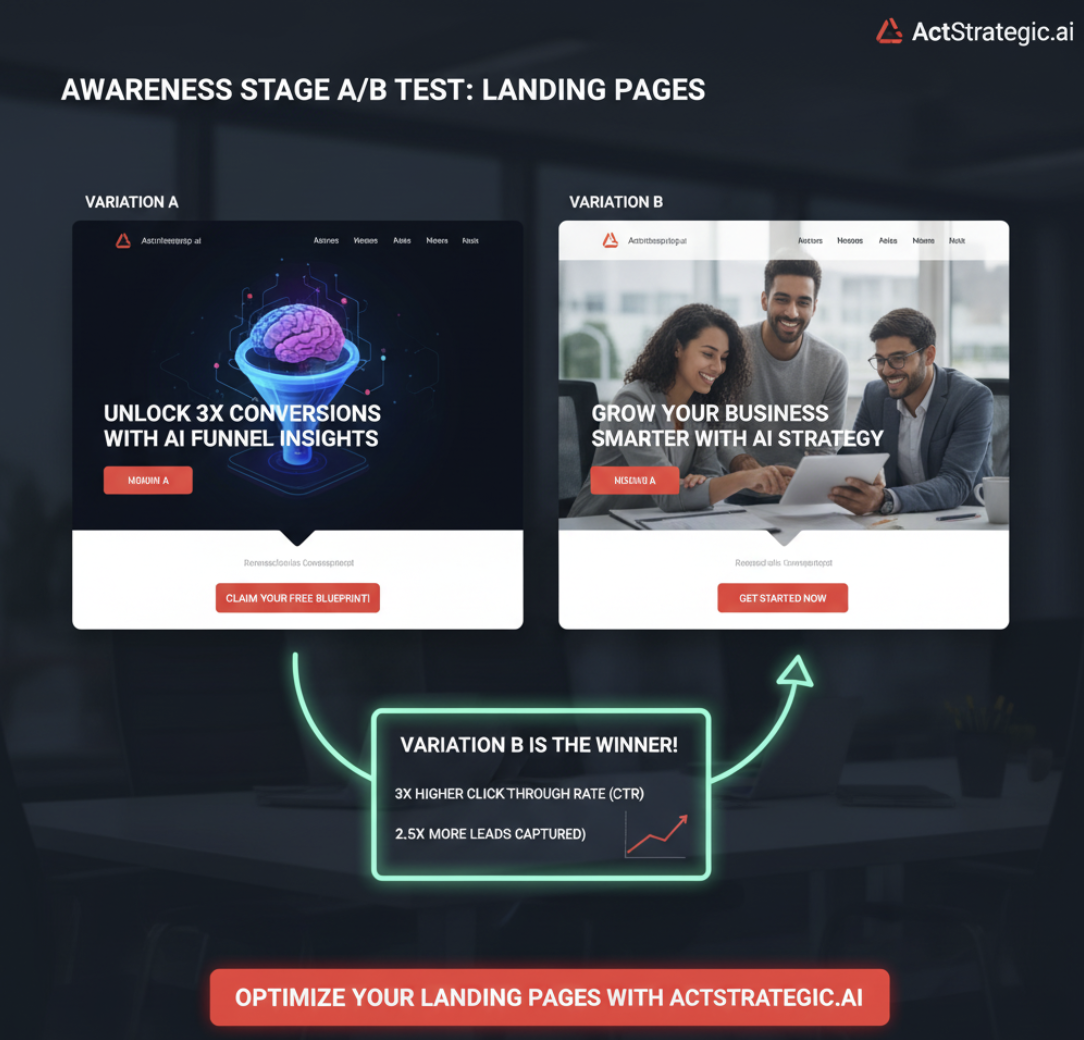
1. Awareness Stage: Landing Pages
At this stage, your goal is to capture attention and build trust.
Elements to test:
- Headlines: Test value-driven vs. curiosity-driven.
- Hero images: Illustrations vs. real photography.
- Social proof: Testimonials vs. case study highlights.
2. Interest Stage: Emails
Here, you nurture leads and keep them engaged.
Elements to test:
- Subject lines: Urgency-driven vs. benefit-driven.
- Email length: Short, snappy vs. detailed storytelling.
- CTA placement: Early in the email vs. at the end.
Checklist:
- Keep only one variable different per test.
- Run tests until you achieve statistical significance.
- Track click-through and reply rates, not just opens.
3. Decision Stage: Offers & CTAs
When leads are on the fence, small tweaks can tip the scales.
Elements to test:
- Button colors and text: “Start Free Trial” vs. “Get Instant Access.”
- Pricing display: Monthly vs. annual toggle default.
- Guarantees: “30-Day Free Trial” vs. “Money-Back Guarantee.”
Pro/Con Table Example:
| CTA Variation | Pros | Cons |
|---|---|---|
| Start Free Trial | Low friction, encourages signup | May attract unqualified leads |
| Get Instant Access | Sense of urgency | May feel pushy for cautious buyers |
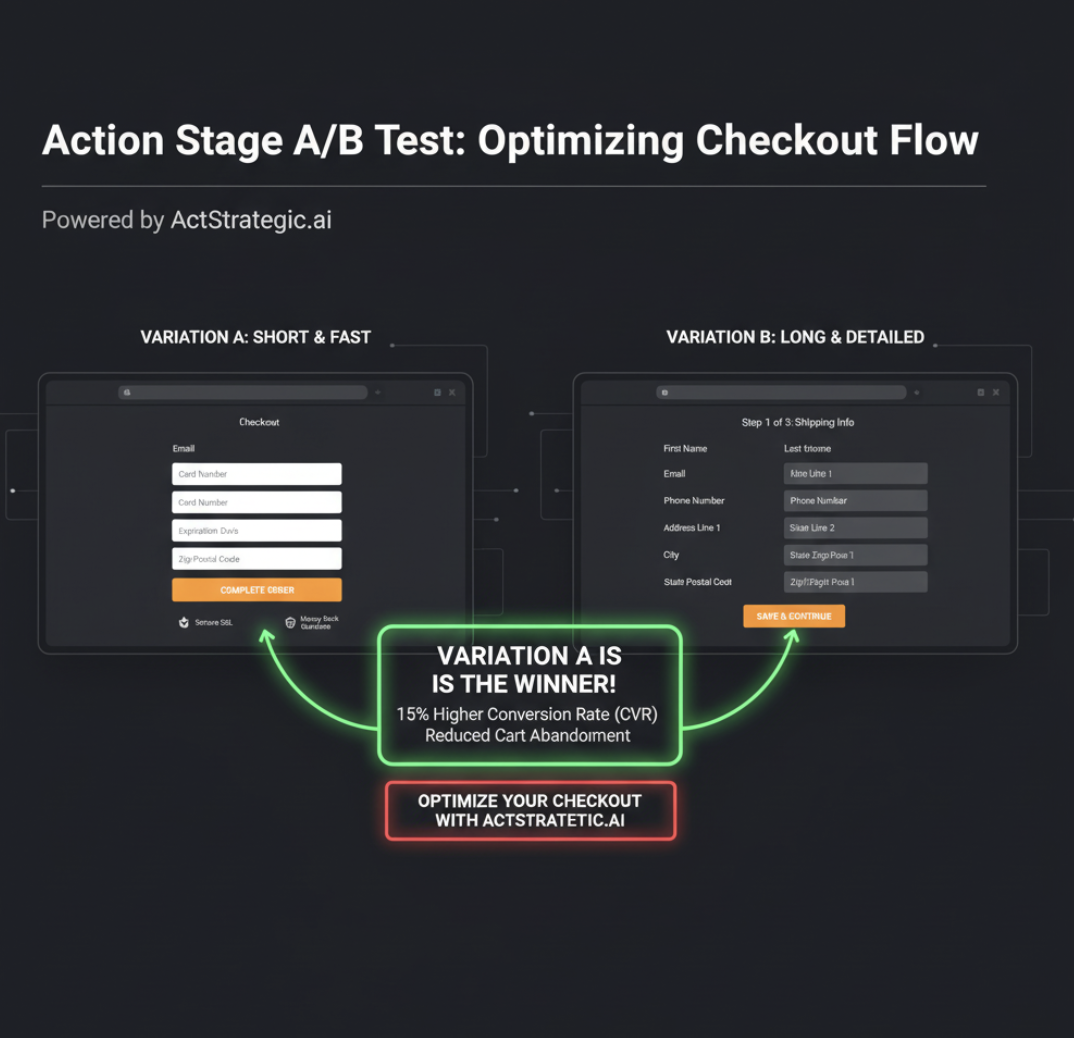
4. Action Stage: Checkout Flow
Even small improvements here can dramatically impact revenue.
Elements to test:
- Form length: Fewer fields vs. detailed information.
- Payment options: Credit card only vs. PayPal + Apple Pay.
- Progress indicators: Linear step tracker vs. simple single-page checkout.
Framework: The 3S Rule
- Simplify: Remove unnecessary fields.
- Speed: Minimize steps.
- Secure: Show trust badges and guarantees.
FAQs About Funnel A/B Testing
1. How long should I run an A/B test?
Until you have statistical significance—often at least 2–4 weeks, depending on traffic.
2. What tools can I use for funnel A/B testing?
Options include Google Optimize, Optimizely, and even built-in testing tools from email providers.
3. Should I test multiple funnel elements at once?
No. To avoid skewed results, only test one variable at a time.
4. How do I know if my funnel offer is weak?
If traffic is consistent but conversions are low, your offer likely needs refinement. Tools like Fix My Offer can help.
5. What’s the most important thing to test first?
Start with your CTA—it directly impacts action at every stage.
Conclusion: Small Tests, Big Wins
A/B testing isn’t about perfection—it’s about progress. By experimenting with one funnel element at a time, you’ll build a data-driven growth engine that compounds over time. The difference between a funnel that leaks conversions and one that maximizes revenue often comes down to consistent testing.
👉 Ready to see where your funnel is leaking? Explore our Fix My Funnel report and get tailored recommendations on your highest-impact A/B tests.
Helpful Resources
- ActStrategic.ai — Your AI Strategist for Business Growth
- Fix My Website Conversions Tool — Optimize your site for better funnel performance
- Prompt Resource — Free prompt engineering library
- Business Buying Playbook — Scale smarter with structured playbooks
- AI Readiness Quiz — See if your business is future-ready