Meta Description: Learn how a marketing funnel works — from awareness to conversion — with this beginner-friendly guide to building predictable business growth.
Introduction: Why Every Business Needs a Funnel
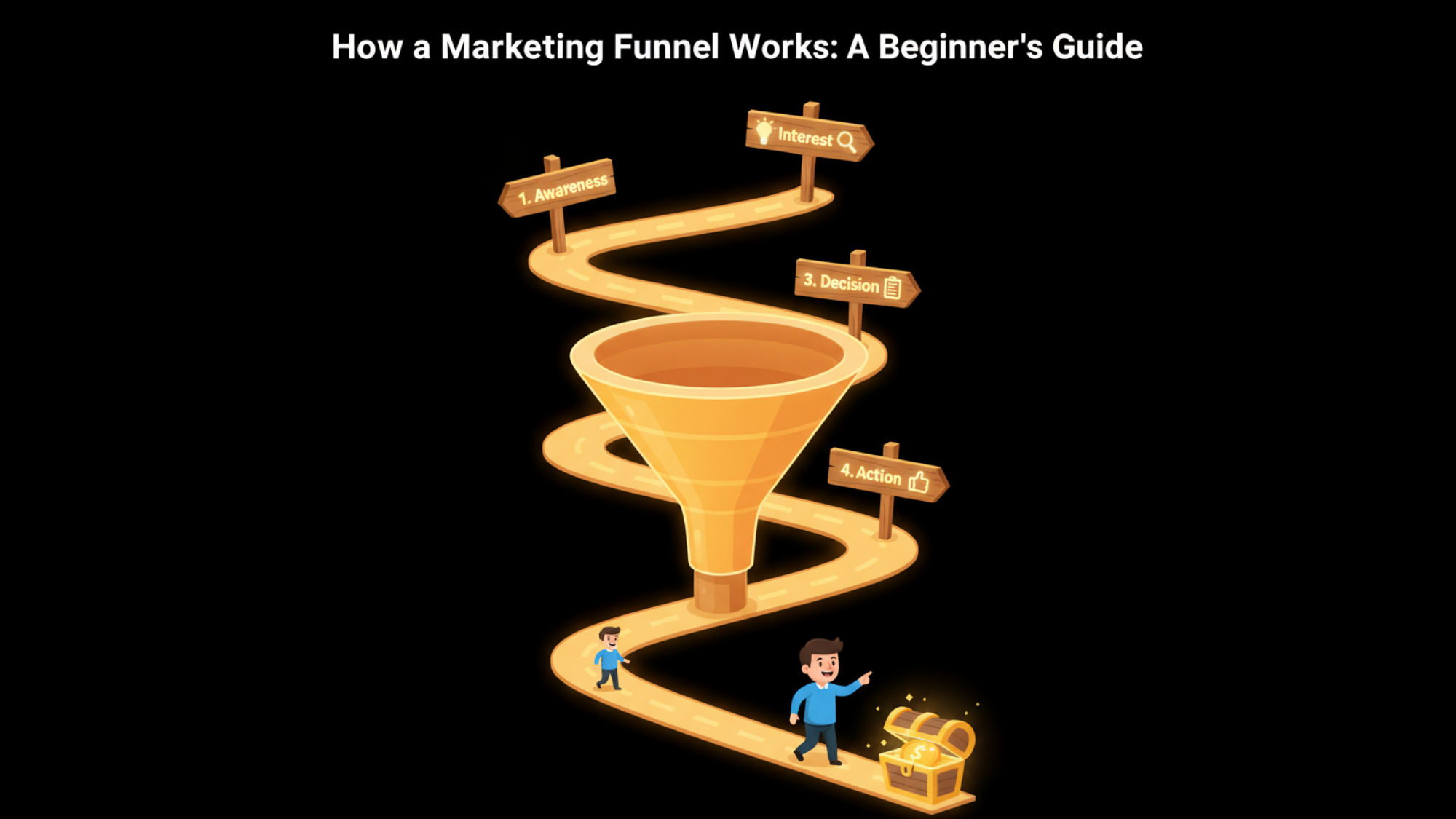
Imagine pouring water into a funnel — wide at the top, narrow at the bottom. That’s exactly how your customer journey works. Many people may discover your brand, but only a smaller number will take action and buy. Without a structured marketing funnel, businesses waste ad spend, miss opportunities, and leave growth up to chance.
The good news? Once you understand how a marketing funnel works, you can design one that consistently attracts, nurtures, and converts prospects into customers.
What is a Marketing Funnel?
A marketing funnel is a step-by-step framework that guides potential customers from first discovering your business to becoming paying (and ideally repeat) customers. It helps you:
- Attract the right audience
- Build trust through nurturing
- Guide decision-making with clarity
- Increase conversions and sales predictability
The Stages of How a Marketing Funnel Works
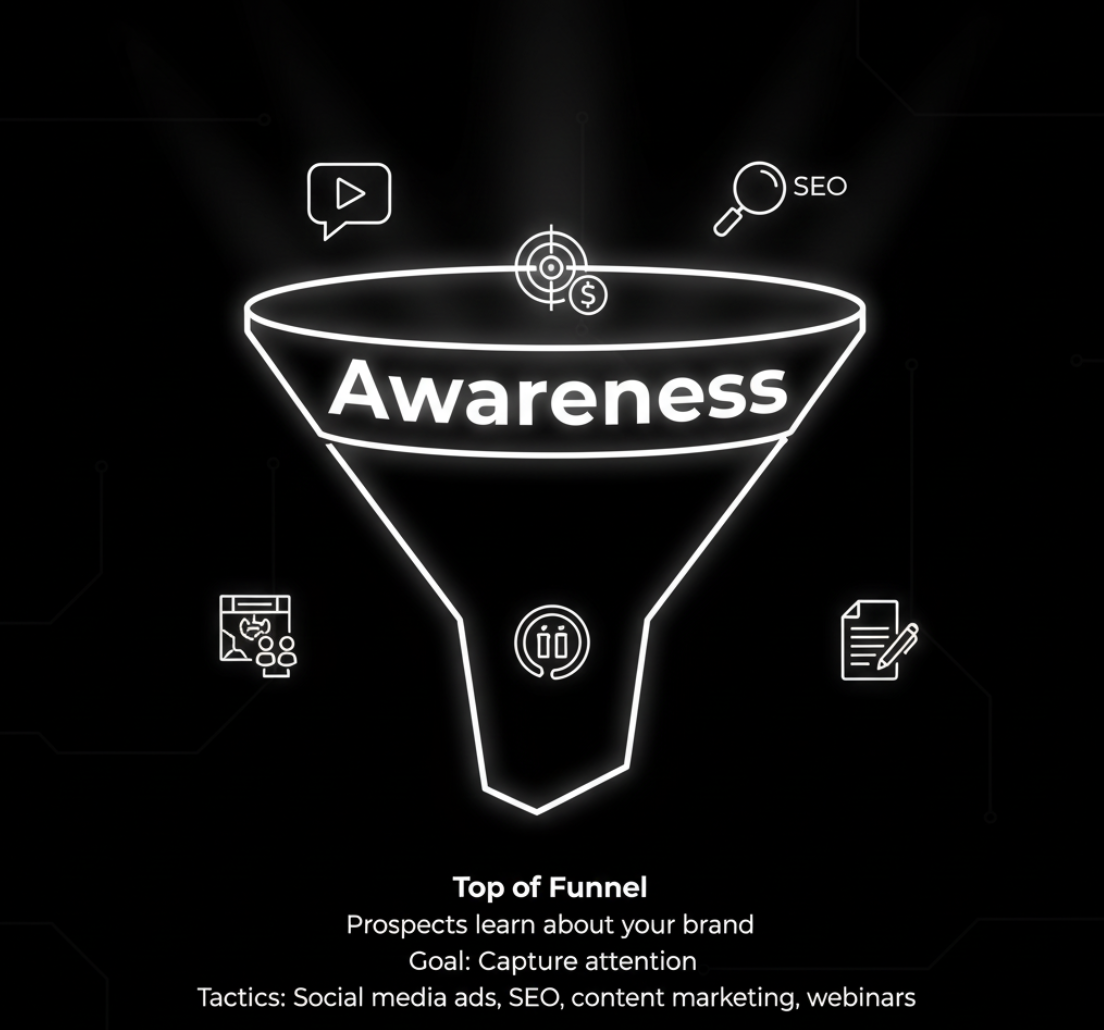
1. Awareness (Top of Funnel)
This is where prospects first learn about your brand.
- Goal: Capture attention.
- Tactics: Social media ads, SEO, content marketing, webinars.
2. Interest (Middle of Funnel)
Here, prospects start engaging and learning more.
- Goal: Educate and nurture.
- Tactics: Email newsletters, case studies, lead magnets, free resources.
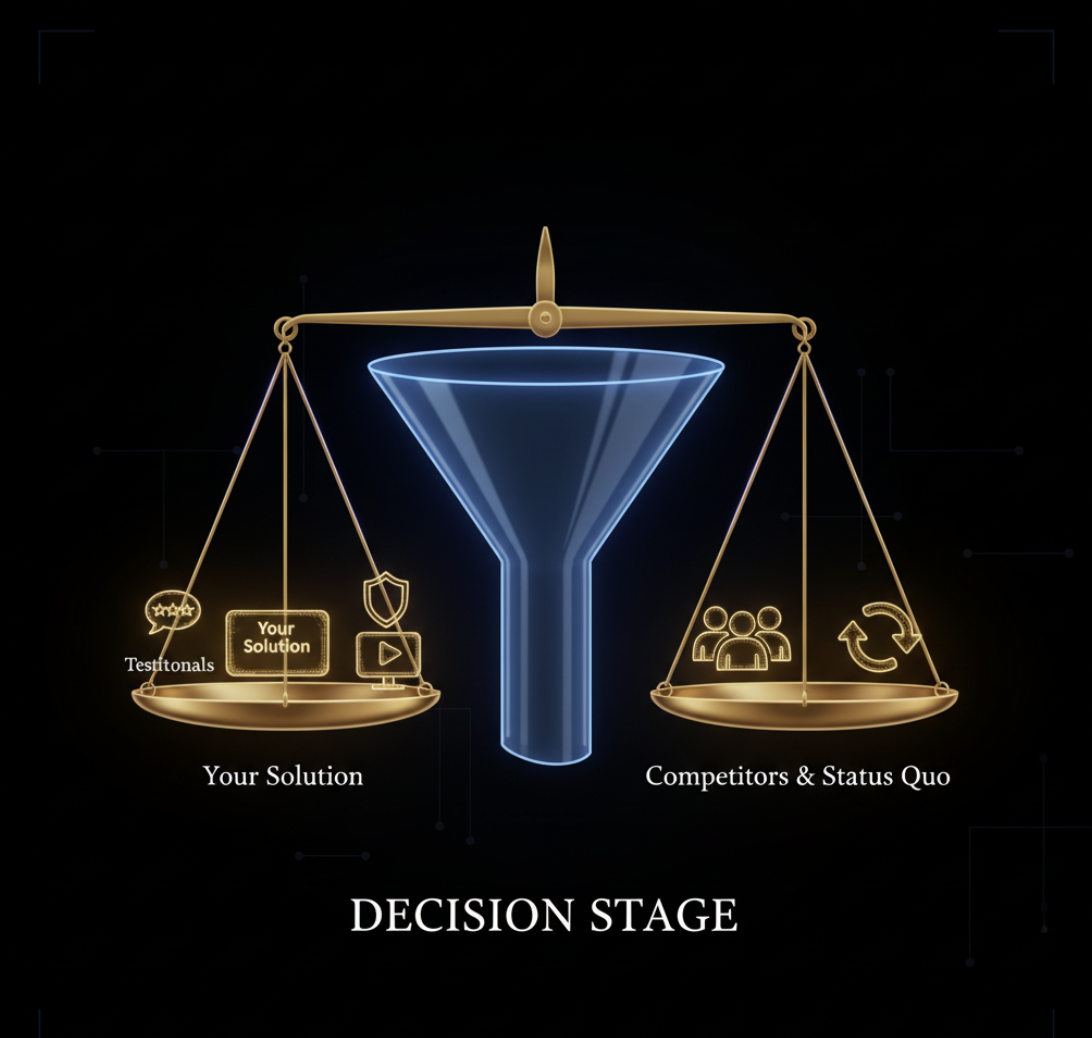
3. Decision (Lower Funnel)
At this stage, prospects evaluate whether your solution is the right fit.
- Goal: Provide proof and clarity.
- Tactics: Demos, pricing pages, testimonials, comparison charts.
4. Action (Conversion)
This is where the prospect becomes a customer.
- Goal: Close the deal.
- Tactics: Easy checkout, limited-time offers, onboarding support.
Why Funnels Fail (and How to Fix Them)
Even the best marketing funnels can leak. Common reasons include:
- Targeting the wrong audience
- Weak or unclear offers
- Too much friction in the checkout process
- Lack of follow-up nurturing
👉 Use our Fix My Funnel tool to diagnose exactly where your funnel is leaking and get a clear roadmap to improvement.
Practical Example: A Funnel in Action
Imagine you’re selling an online course:
- Awareness: A TikTok video sparks curiosity.
- Interest: Viewers download your free guide.
- Decision: They watch a webinar with student success stories.
- Action: They sign up for your course with a discount code.
Quick Funnel Success Checklist
- Is your offer irresistible and clear? (Fix My Offer)
- Are you nurturing leads with value?
- Is your website conversion-friendly? (Fix My Website Conversions)
- Do you know where your funnel is leaking? (Fix My Funnel)
FAQs: Beginner Questions About Marketing Funnels
Q1: What is funnel optimization?
Funnel optimization means improving each stage of your funnel to reduce leaks and increase conversions.
Q2: How do I know if my offer is weak?
If prospects engage but don’t buy, your offer may lack clarity, urgency, or perceived value. Tools like Fix My Offer can help.
Q3: Can small businesses benefit from funnels?
Absolutely. In fact, small businesses often benefit the most because funnels bring predictability to limited marketing budgets.
Q4: How long does it take to build a funnel?
It varies. A simple funnel can be built in a few days; complex ones may take weeks. The key is testing and iterating.
Q5: What if my funnel isn’t working?
Don’t guess. Diagnose the problem with a structured tool like Fix My Funnel.
Additional Resources for Smarter Growth
- Prompt Resource Library – AI-powered prompts for business growth.
- Business Buying Playbook – Frameworks for entrepreneurs.
- 90 Days Success Checklist – Post-acquisition clarity.
- The AI Advantage eBook – How AI drives growth today.
Conclusion: Build Funnels That Fuel Growth
A well-built funnel isn’t just a marketing tactic — it’s the backbone of scalable growth. By understanding how a marketing funnel works, you can create a predictable system for attracting, nurturing, and converting customers.
If you’re unsure where your funnel is breaking down, explore our Fix My Funnel tool to get clarity and take the fastest path to stronger conversions.