Introduction
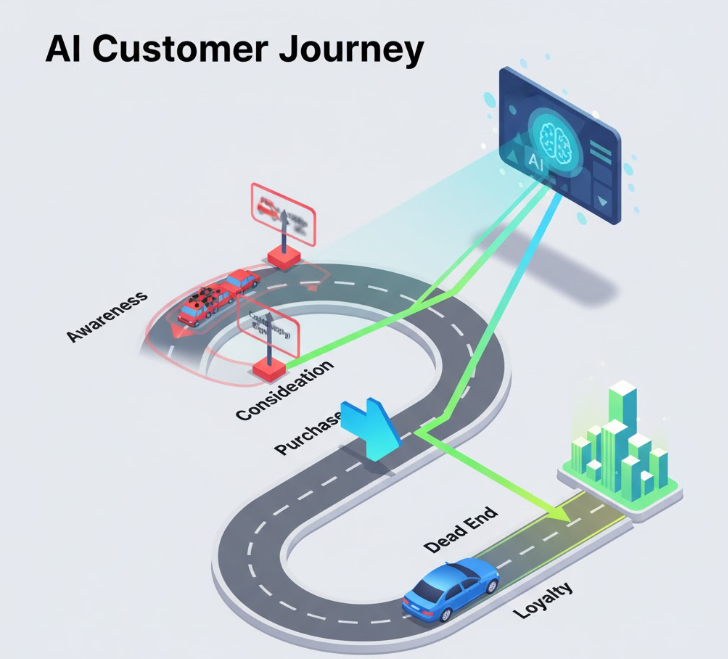
Struggling to understand why customers drop off at certain points in your funnel? Even small friction points can cost conversions, revenue, and long-term loyalty. AI customer journey tools help map stages, identify friction, and optimize experiences to drive better outcomes.
Why Traditional Journey Mapping Falls Short
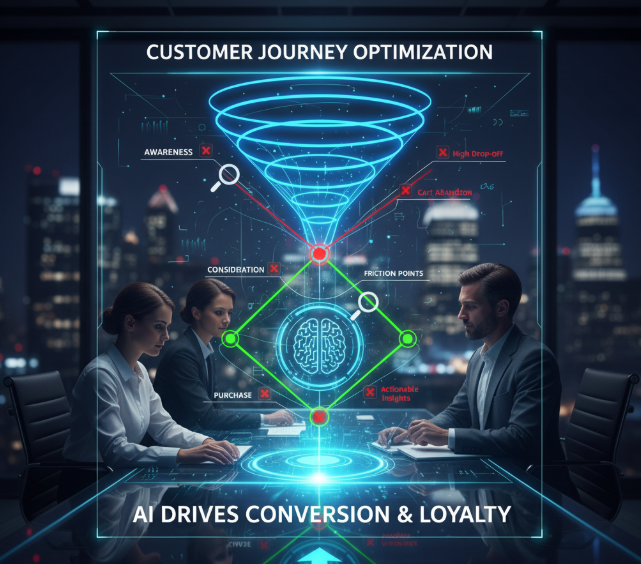
- Static Insights: Manual mapping often relies on historical data, missing emerging trends.
- Limited Personalization: Traditional analysis can’t scale to segment experiences across multiple audiences.
- Time-Consuming: Gathering and analyzing behavioral data manually is slow and error-prone.
- Blind Spots: Complex digital funnels have hidden friction points that manual reviews often miss.
How AI Enhances Customer Journey Mapping
AI doesn’t just analyze data—it actively provides actionable insights to improve customer experiences.
1. Stage Mapping at Scale
- AI automatically maps the entire customer journey across touchpoints.
- Highlights drop-offs, delays, and friction points.
- Enables scenario planning for new campaigns or product launches.
2. Identifying Friction and Opportunities
- Detects points where customers hesitate or abandon actions.
- Provides recommendations for reducing friction and improving flow.
- Suggests priority fixes based on predicted impact on conversions.
Checklist Example: AI-Enhanced Friction Analysis
- List all funnel touchpoints
- Measure drop-off and engagement rates per stage
- Rank friction points by predicted revenue impact
- Test recommended optimizations iteratively
3. Personalization and Predictive Insights
- AI segments users automatically based on behavior and intent.
- Suggests personalized messaging, offers, and experiences.
- Predicts future behavior, enabling proactive adjustments.
4. Actionable Insights and Continuous Improvement
- Integrates with CRM, analytics, and marketing tools.
- Generates dashboards and reports with leading indicators.
- Supports continuous optimization of the journey in real-time.
Common Mistakes Teams Make Without AI
- Relying solely on static reports for journey mapping
- Ignoring micro-moments and subtle drop-off signals
- Failing to test and iterate personalization strategies
- Overlooking cross-channel behavior insights
FAQ Section
Q1: How is AI customer journey mapping different from manual mapping?
AI automates data collection, identifies friction points in real-time, and scales personalization across segments.
Q2: Can AI predict customer behavior accurately?
Yes, AI uses historical and real-time data to generate predictive insights for future actions.
Q3: What types of businesses benefit most from AI journey tools?
SMBs and enterprise teams with multi-channel funnels, complex user behaviors, or high-value conversion paths.
Q4: Do I need a dedicated data team to use AI customer journey tools?
No, modern AI platforms are designed for business users and integrate easily with existing marketing and analytics tools.
Q5: How often should journeys be re-evaluated with AI?
Continuously—AI monitors behavior in real-time, providing updates and insights as customer behavior evolves.
Conclusion
Optimize your customer journey with actionable AI insights. Explore ActStrategic.ai tools to uncover friction points, enhance your funnel with Fix My Funnel, or boost conversions using Fix My Website Conversions for smarter scaling.