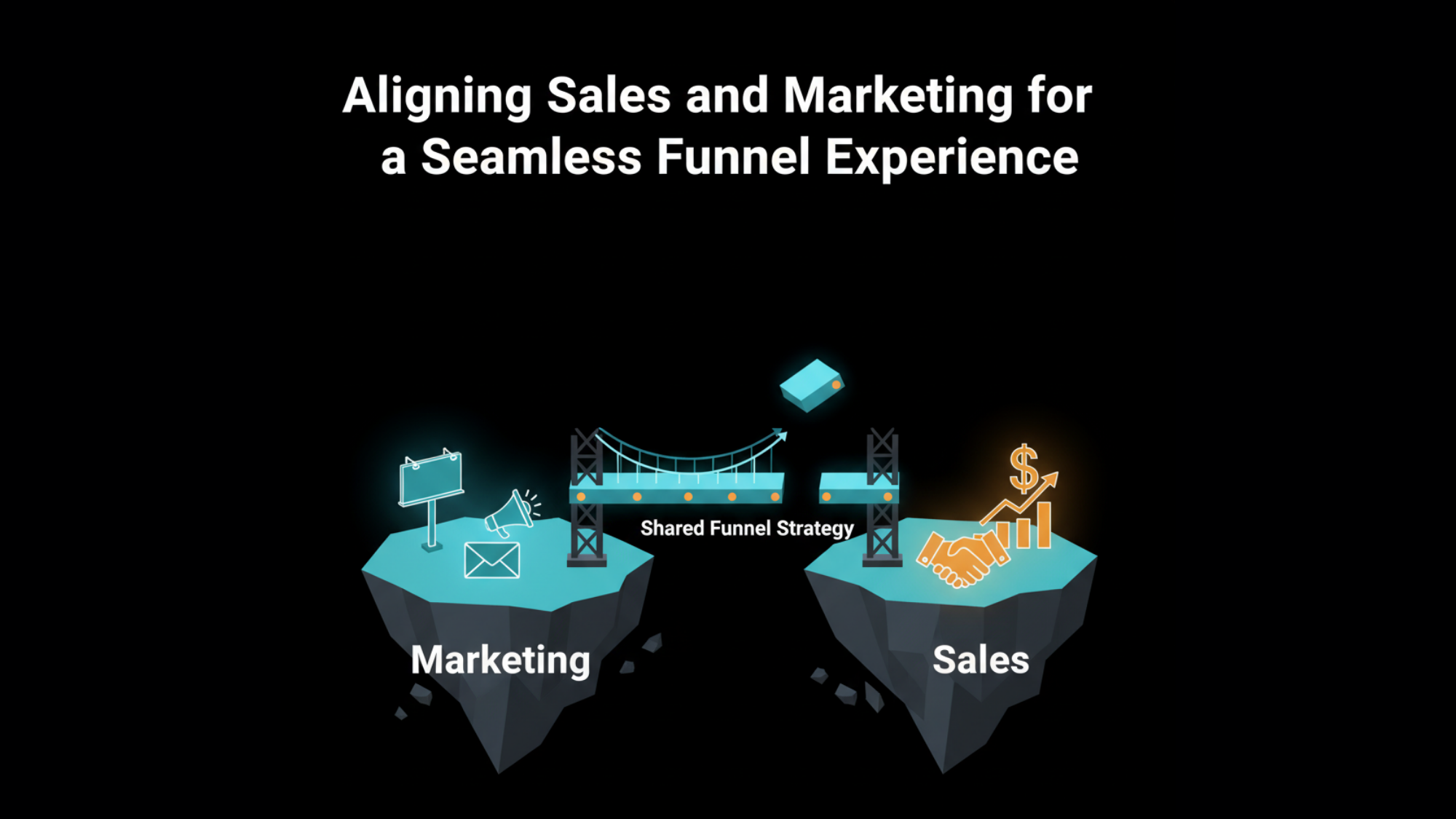
Introduction: Why Sales and Marketing Alignment Feels So Hard
You’ve invested in campaigns, poured money into ads, and yet—when leads trickle in—they stall, ghost, or drop out entirely. Marketing blames sales. Sales blames marketing. Sound familiar? The real problem often isn’t effort, but misalignment. When your sales and marketing teams aren’t on the same page, your funnel leaks everywhere.
In today’s growth landscape, businesses that align sales and marketing around a shared funnel strategy don’t just patch those leaks—they accelerate growth with clarity and confidence.
The Case for Alignment: Why It Matters More Than Ever
Common Symptoms of Misalignment
- Leads marked as “qualified” that sales instantly dismisses.
- Sales teams working outdated or incomplete lead data.
- Marketing celebrating high click-through rates while revenue flatlines.
The Cost of Misalignment
According to Harvard Business Review, companies with tight sales and marketing alignment see up to 208% higher marketing revenue compared to those without alignment. That’s not just a performance gap—that’s a survival gap.
Framework: How to Align Sales and Marketing Around the Funnel
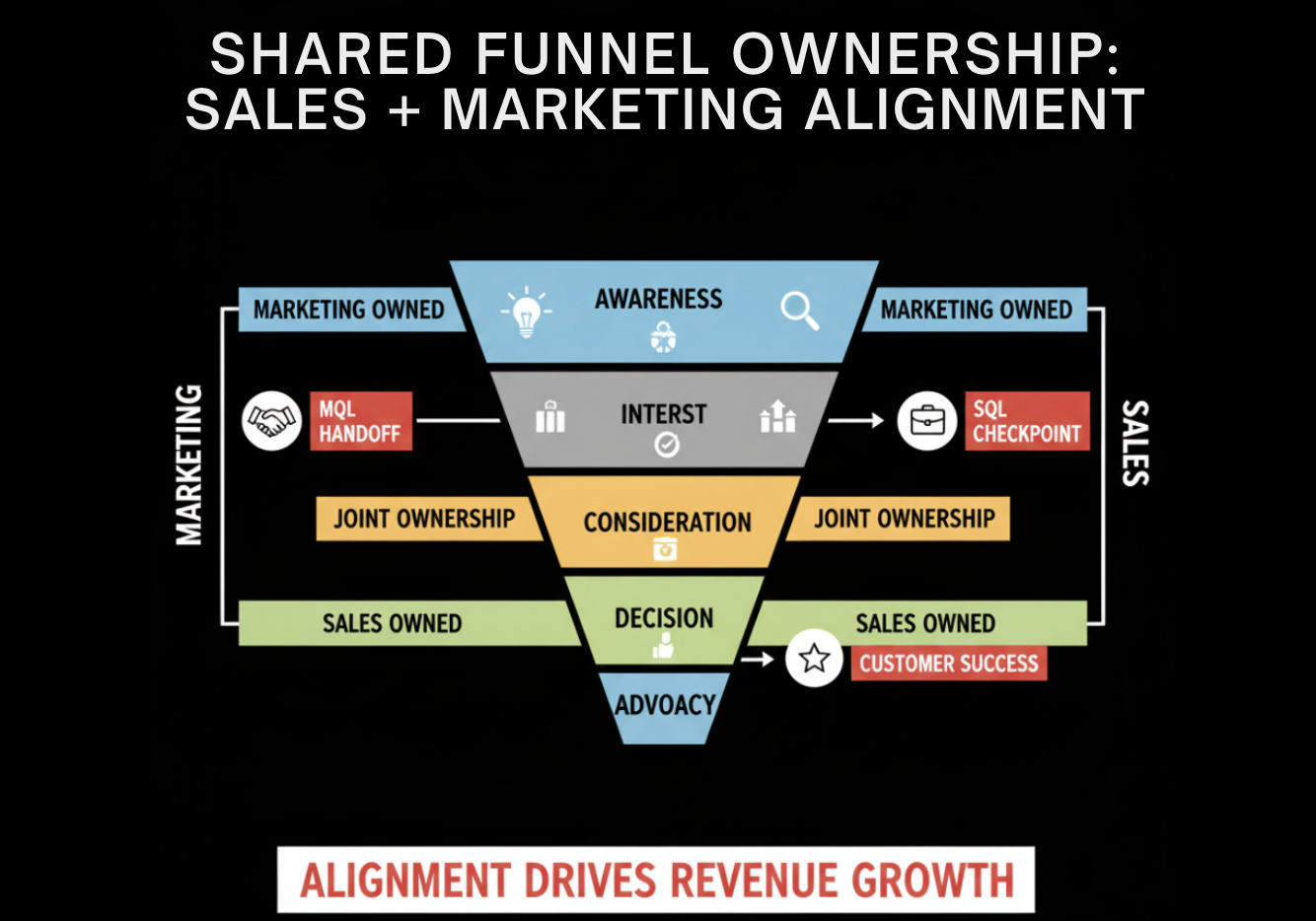
1. Define a Shared Funnel Language
- Awareness → Interest → Consideration → Decision → Action
- Agree on what qualifies as a Marketing Qualified Lead (MQL) vs. a Sales Qualified Lead (SQL).
2. Share Data in Real Time
- Implement shared dashboards that both sales and marketing can access.
- Automate lead scoring so data flows seamlessly between platforms.
- Use AI-driven insights (like ActStrategic.ai’s Fix My Funnel tool) to identify leaks.

3. Set Joint KPIs
Instead of separate scorecards, align around metrics that impact growth:
- Pipeline velocity (speed leads move through the funnel)
- Conversion rates at each stage
- Revenue per lead source
4. Optimize the Hand-off Process
- Use clear SLAs (Service Level Agreements) for lead response time.
- Build nurture sequences for leads not yet sales-ready.
- Provide sales with full marketing context before outreach.
Tools That Enable Alignment
At ActStrategic.ai, we’ve built a suite of tools that help eliminate misalignment by pinpointing funnel breakdowns:
- Fix My Funnel → Diagnose leaks in your funnel.
- Fix My Offer → Ensure your value proposition resonates.
- Fix My Website Conversions → Improve how visitors turn into leads.
Practical Checklist: Aligning Sales and Marketing Fast
- Hold a joint funnel mapping workshop.
- Agree on one shared funnel framework.
- Set up a single source of truth dashboard.
- Align KPIs tied directly to revenue.
- Revisit alignment quarterly with data-driven adjustments.
FAQs About Aligning Sales and Marketing Funnels
Q1: What is sales and marketing alignment?
It’s the process of ensuring both teams work toward the same funnel goals, using shared definitions, data, and KPIs.
Q2: How do I know if my funnel is misaligned?
If sales complains about lead quality or marketing celebrates metrics that don’t translate to revenue, your funnel is likely misaligned.
Q3: What tools can help with alignment?
Platforms like HubSpot, Salesforce, and AI-driven tools such as Fix My Funnel give both teams visibility into funnel health.
Q4: How often should teams meet to review alignment?
Monthly reviews are ideal, with deeper quarterly reviews to adjust strategies.
Q5: What’s the biggest risk of not aligning sales and marketing?
Wasted spend, lower conversions, and lost revenue—plus finger-pointing that damages team morale.
Further Reading & Resources
- Prompt Resource Library
- Business Buying Playbook
- AI Readiness Quiz
- How AI is Revolutionizing Contact Centers in 2025
Conclusion: Build Bridges, Not Silos
When sales and marketing teams operate in silos, the funnel fractures. But when you align them around shared goals, shared data, and shared accountability, your funnel becomes a smooth, predictable growth engine.
👉 Want to see exactly where your funnel is breaking down? Explore the Fix My Funnel tool to diagnose and repair your biggest conversion leaks.