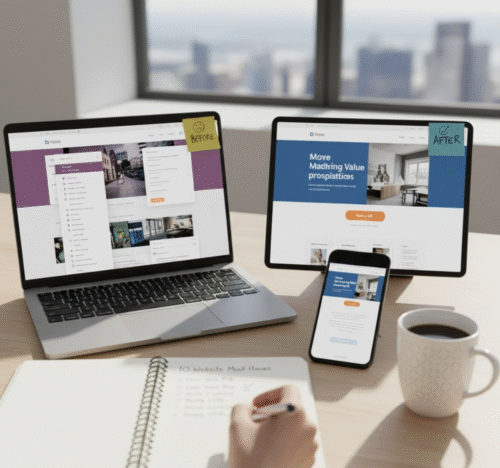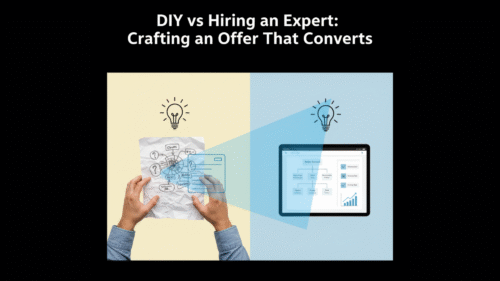
Your Website Never Sleeps — But Is It Actually Selling?
Imagine having a salesperson who works 24 hours a day, never asks for a raise, and can pitch your business perfectly every time. That’s your website — if it’s designed right.
For many businesses, though, their website isn’t a salesperson. It’s a brochure — static, wordy, and underperforming. It doesn’t guide visitors, address objections, or move prospects toward a decision.
In a world where 75% of buyers make decisions before ever talking to sales, your website isn’t just a marketing tool — it’s your digital sales engine.
Let’s break down how to transform your site from a passive presence into an active, 24/7 salesperson that grows your business while you sleep.
Step 1: Define Your Website’s Sales Role
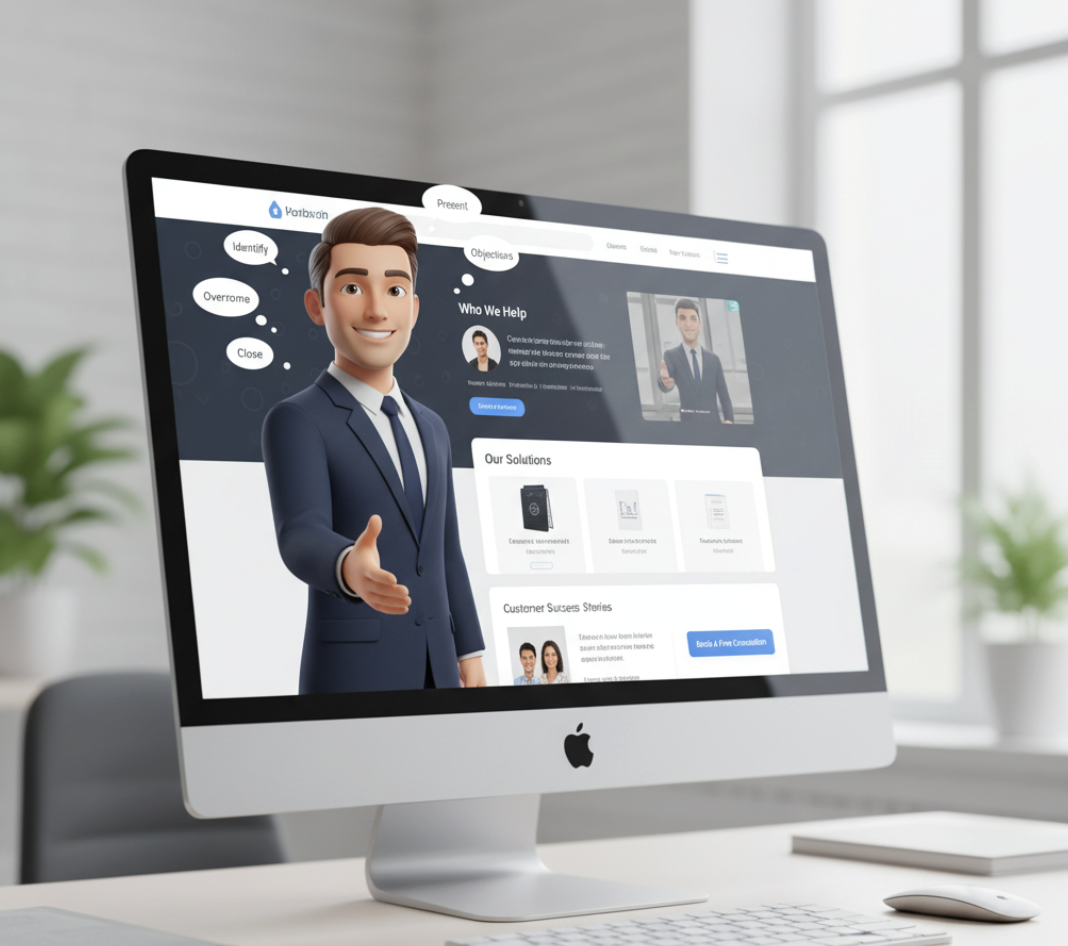
Most business owners think of their website as a brand showcase. But in reality, it should do what your best salesperson does:
- Identify your ideal customer.
- Present your offer clearly and confidently.
- Overcome objections.
- Close the deal (or at least book the call).
Ask yourself: If my website were a person, would I hire it to sell my product? If not, it’s time to rehire — or rather, redesign.
Step 2: Start with Strategic Clarity
Before optimizing anything, you need clarity on what your visitors actually need to do on your site.
Your website should have a primary conversion goal (e.g., booking a demo, scheduling a consultation, or making a purchase) — and every element should support that journey.
Ask these diagnostic questions:
- Can visitors understand what we offer in 5 seconds?
- Is our CTA clear and compelling?
- Are we addressing pain points early on the page?
If you can’t confidently say “yes,” that’s your first sales leak.
Step 3: Craft Messaging That Converts
Your copy is your pitch. But unlike a salesperson, your website only has one shot — no follow-ups, no tone, no charisma. That’s why clarity is everything.
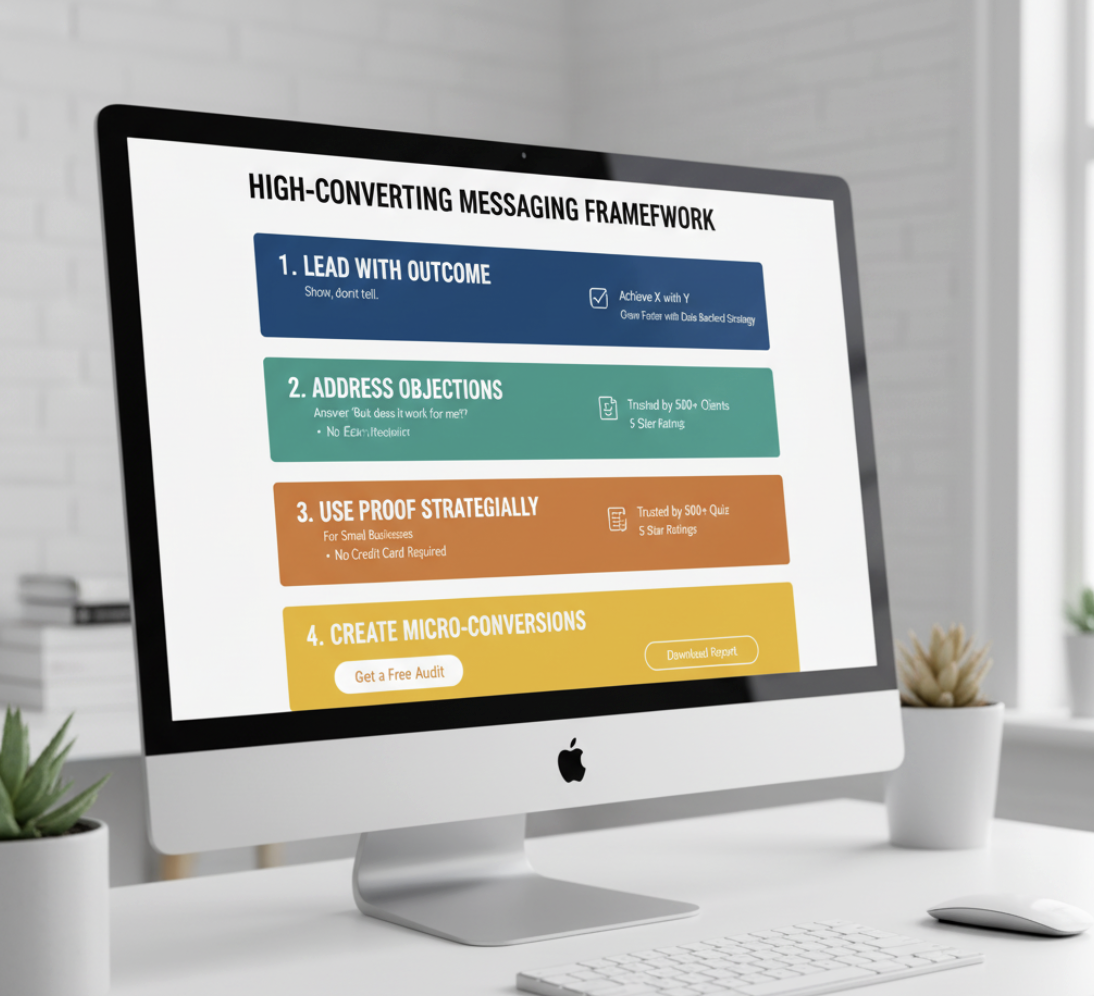
High-Converting Messaging Formula:
- Lead with the outcome, not the offer. (“Grow faster with data-backed strategy” vs. “We offer marketing audits.”)
- Address objections upfront. Anticipate “But does it work for me?” before they think it.
- Use proof strategically. Testimonials, case studies, and success metrics build trust fast.
- Create micro-conversions. Don’t just ask for a sale — invite engagement (free audit, quiz, or report).
Step 4: Optimize Design for Decision-Making
Design doesn’t just make things pretty — it drives action. A great design guides visitors like a well-trained salesperson:
| Salesperson Action | Website Equivalent |
|---|---|
| Builds rapport | Clean, trustworthy design with consistent branding |
| Asks good questions | Clear navigation that helps users self-select |
| Handles objections | FAQ sections, social proof, pricing transparency |
| Closes confidently | Strong CTAs with urgency and clarity |
When design supports your messaging, you don’t have to “convince” — your website does it for you
Step 5: Automate and Analyze — The True 24/7 Advantage
A human salesperson can’t monitor every lead or respond instantly — but your website can.
Integrate automation and analytics tools that extend your reach and responsiveness:
- Chatbots that qualify leads while you sleep.
- Email sequences triggered by downloads or visits.
- Analytics dashboards (like GA4 or Hotjar) that reveal drop-off points.
This data doesn’t just show what users do — it tells you why they don’t convert. Use insights from Fix My Website Conversions to identify your biggest leaks and prioritize fixes.
Step 6: Build Trust — The Invisible Sales Driver
Even the best pitch fails without trust. Your website builds it through:
- Authentic testimonials (real names and photos matter)
- Transparency (pricing, process, results)
- Social proof (logos, awards, partnerships)
- Educational content (blogs, guides, resources)
When visitors trust you, they buy faster — and stay longer.
Step 7: Test, Refine, Repeat
Top-performing websites evolve. Just like your best salesperson learns from every pitch, your site should learn from every visitor.
Use A/B testing, heatmaps, and conversion reports to continuously refine headlines, CTAs, and layouts. Small tweaks compound into big revenue gains.
Remember — your website isn’t a project. It’s a living, learning sales asset.
Common Website Sales Mistakes (and How to Fix Them)
| Mistake | Why It Hurts | Quick Fix |
|---|---|---|
| Too many CTAs | Creates confusion | Focus on one clear goal per page |
| No social proof | Lowers trust | Add 3–5 testimonials or case studies |
| Slow load times | High bounce rate | Compress images and use caching |
| Jargon-heavy copy | Alienates users | Write like you talk to a customer |
| No mobile optimization | Missed conversions | Design mobile-first |
FAQs About Turning Your Website into a 24/7 Salesperson
1. How can I tell if my website is underperforming?
If your traffic is steady but leads or sales aren’t growing, your site likely has conversion leaks.
2. How often should I update my website?
At least quarterly — focus on optimizing what drives conversions, not just aesthetics.
3. Can AI really help improve my website’s performance?
Absolutely. Tools like ActStrategic.ai use AI to analyze funnels, detect friction, and recommend data-backed improvements.
4. What’s the most important part of a high-performing website?
Clarity. If visitors don’t instantly understand what you do, you’ve already lost them.
5. What’s the ROI of a strategic website redesign?
Businesses often see 30–50% higher conversions after fixing UX, messaging, and trust issues.
Your Next Step: Let Your Website Sell Smarter
Your website doesn’t need more pages or prettier visuals — it needs purpose. Treat it like the top salesperson it’s meant to be.
If you’re ready to transform your site into a true 24/7 conversion engine, start with Fix My Website Conversions — your shortcut to clarity, performance, and growth.