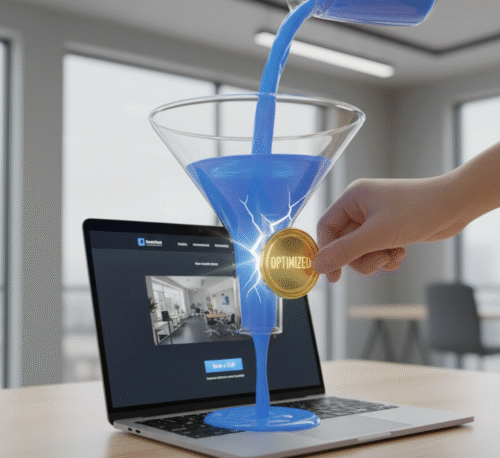
Why Funnel Metrics Are Your Growth Compass
Here’s the uncomfortable truth: if you’re not tracking the right marketing funnel metrics, you’re essentially flying blind. Many business owners rely on vanity numbers (likes, clicks, or impressions) while missing the signals that show where revenue is leaking. Others drown in dashboards but lack clarity on which numbers truly matter. The result? Wasted spend, unclear direction, and slow growth.
The solution is focus. By monitoring the 7 key metrics across your funnel, you’ll diagnose weak points, uncover hidden leaks, and scale with precision.
The 7 Key Marketing Funnel Metrics
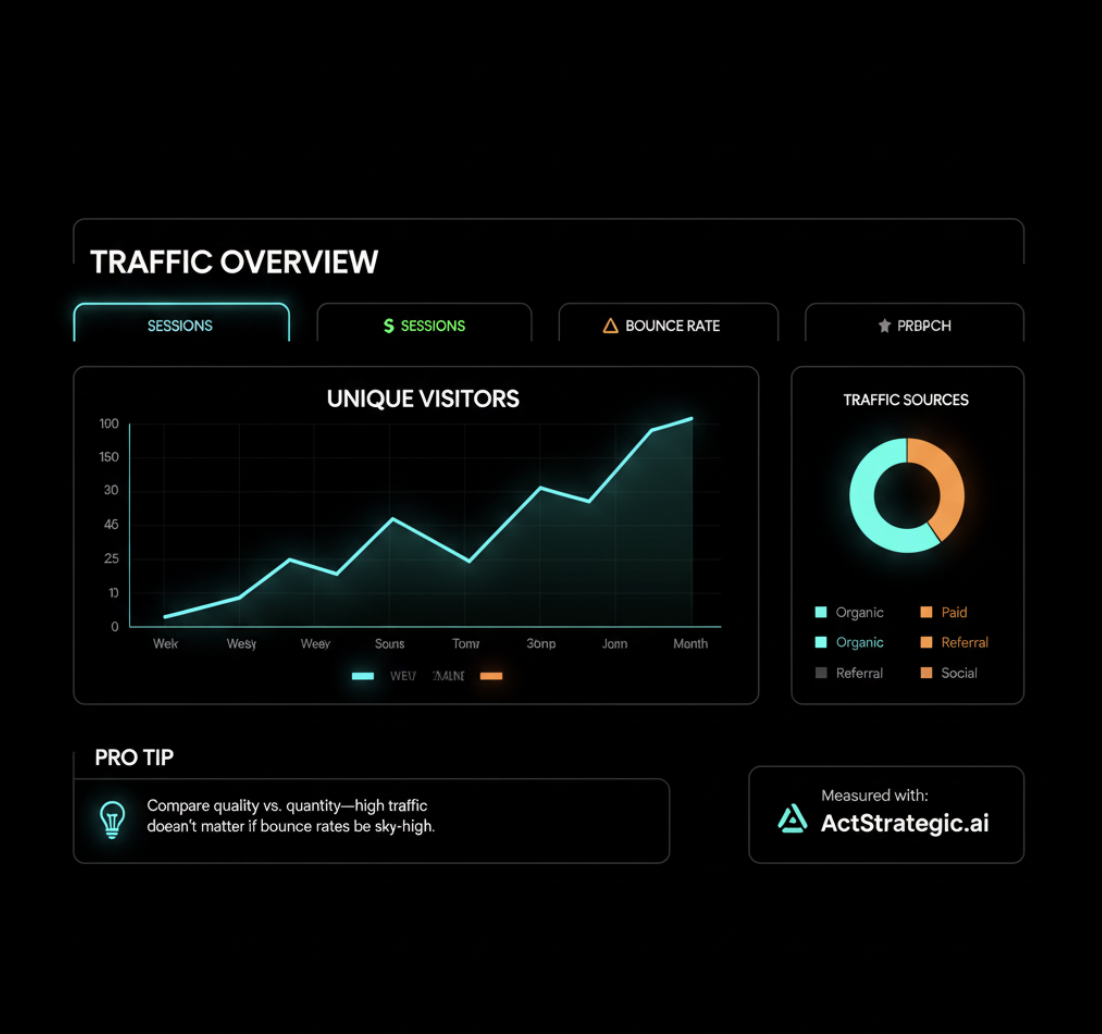
1. Awareness Stage: Website Traffic
- What to Track: Unique visitors, sessions, and traffic sources (organic, paid, referral, social).
- Why It Matters: Traffic is the top of your funnel. Without a steady flow, there’s no pipeline to optimize.
- How to Measure: Use Google Analytics or tools like ActStrategic.ai to monitor traffic trends.
- Pro Tip: Compare quality vs. quantity—high traffic doesn’t matter if bounce rates are sky-high.
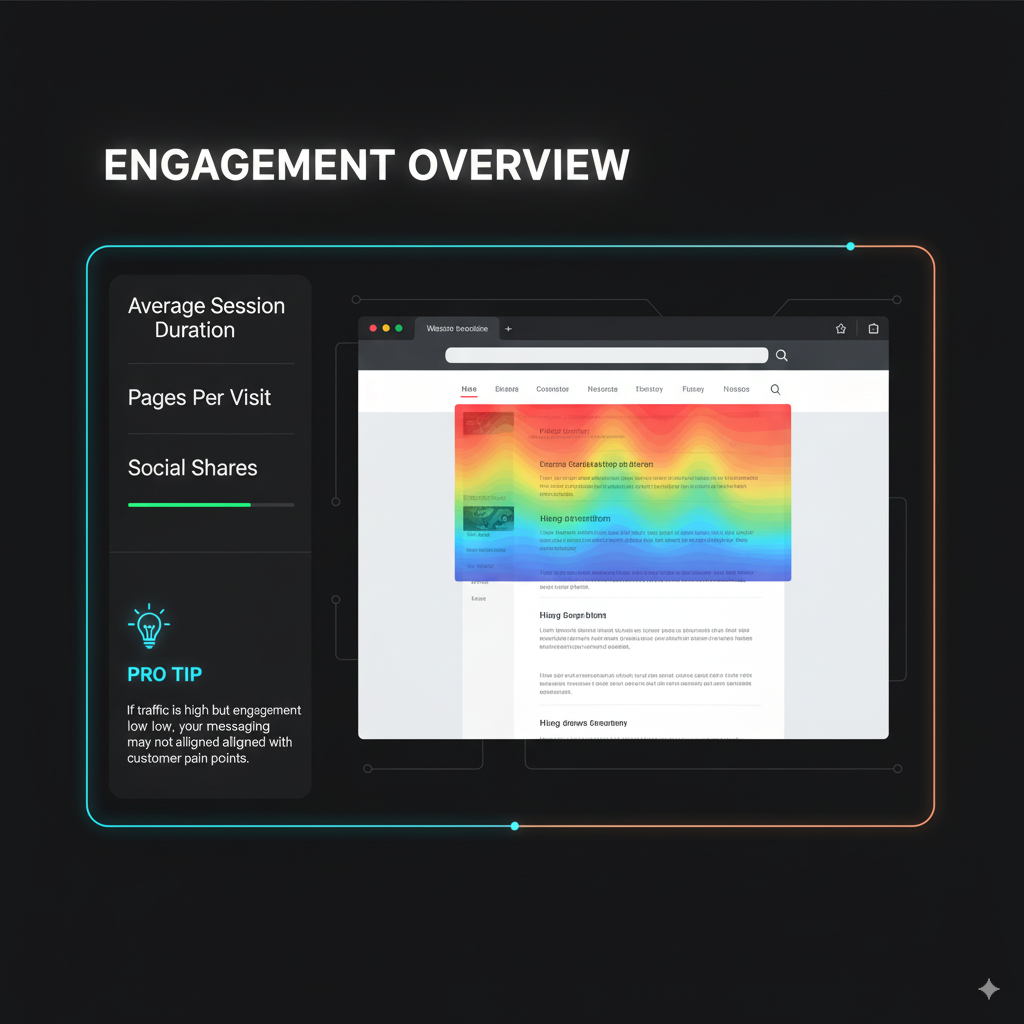
2. Awareness Stage: Engagement Metrics
- What to Track: Average session duration, pages per visit, social media engagement.
- Why It Matters: Engagement shows whether your content is resonating with your target audience.
- How to Measure: Track dwell time and scroll depth in analytics tools.
- Pro Tip: If traffic is high but engagement is low, your messaging may not be aligned with customer pain points.
3. Consideration Stage: Lead Generation Rate
- What to Track: Form fills, email sign-ups, demo requests.
- Why It Matters: This shows whether your funnel is converting awareness into interest.
- How to Measure: Calculate lead conversion rate = Leads ÷ Visitors × 100.
- Pro Tip: If the number is low, revisit your lead magnet or offer positioning. (Fix My Offer)
4. Consideration Stage: Cost Per Lead (CPL)
- What to Track: Total spend ÷ total leads generated.
- Why It Matters: CPL shows the efficiency of your lead generation efforts.
- How to Measure: Use ad platform analytics (Meta, Google Ads) to track.
- Pro Tip: Compare CPL across campaigns to identify your highest-performing channels.
5. Decision Stage: Lead-to-Customer Conversion Rate
- What to Track: % of leads who become paying customers.
- Why It Matters: This is the clearest measure of funnel effectiveness.
- How to Measure: Conversion Rate = Customers ÷ Leads × 100.
- Pro Tip: A weak conversion rate often points to offer positioning or sales process gaps. (Fix My Website Conversions)
6. Decision Stage: Customer Acquisition Cost (CAC)
- What to Track: Total spend ÷ number of new customers.
- Why It Matters: CAC helps you understand profitability.
- How to Measure: Sum up all marketing and sales costs for a period, divide by customers acquired.
- Pro Tip: Compare CAC to Customer Lifetime Value (CLV) for a true profitability picture. (Harvard Business Review has great insights here.)
7. Retention Stage: Customer Lifetime Value (CLV)
- What to Track: Average revenue per customer × average customer lifespan.
- Why It Matters: CLV reveals long-term sustainability and scale potential.
- How to Measure: Use CRM or subscription billing analytics.
- Pro Tip: A CLV lower than CAC means you’re scaling unprofitably. Time to optimize offers and retention strategies.
Funnel Metrics Overview Table
| Funnel Stage | Metric | Why It Matters |
|---|---|---|
| Awareness | Website Traffic | Foundation of funnel growth |
| Awareness | Engagement Metrics | Shows if content resonates |
| Consideration | Lead Generation Rate | Converts visitors to leads |
| Consideration | Cost Per Lead (CPL) | Efficiency of lead acquisition |
| Decision | Lead-to-Customer Rate | Core measure of funnel effectiveness |
| Decision | Customer Acquisition Cost | Profitability of acquiring customers |
| Retention | Customer Lifetime Value | Long-term growth and sustainability |
FAQs About Marketing Funnel Metrics
1. What are marketing funnel metrics?
They’re the key performance indicators (KPIs) that measure effectiveness at each stage of your funnel, from awareness to retention.
2. Which funnel metric matters most?
It depends on your growth stage. Early-stage companies should focus on traffic and leads; scaling companies should focus on CAC and CLV.
3. How do I know if my funnel is broken?
Watch for sharp drop-offs between stages (e.g., strong traffic but poor lead generation). Tools like Fix My Funnel can pinpoint the leaks.
4. How often should I track these metrics?
Weekly for tactical decisions, monthly for strategic insights.
5. What’s the biggest mistake with funnel metrics?
Chasing vanity metrics and ignoring profitability signals like CAC vs. CLV.
Final Take: Clarity Comes From the Right Metrics
When you know your funnel metrics, you gain clarity. You stop guessing. You see exactly where growth stalls, and you fix it fast. That’s how smart operators scale.
👉 Ready to uncover your biggest funnel leaks? Explore our Fix My Funnel tool and get a clear, actionable report today.