Why Study Marketing Funnel Examples?
Every business owner has asked the same question at some point: “Why aren’t my ads converting?” or “Why do leads drop off before the sale?”
The answer often lies in the marketing funnel—the system that guides strangers from first touch to loyal customer.
By studying marketing funnel examples from successful brands, you gain proven blueprints you can adapt to your own business. This article breaks down five funnels that deliver results, shows you what works, and gives you actionable takeaways.
👉 Want to spot leaks in your own funnel fast? Try our Fix My Funnel tool to uncover your biggest conversion gaps.
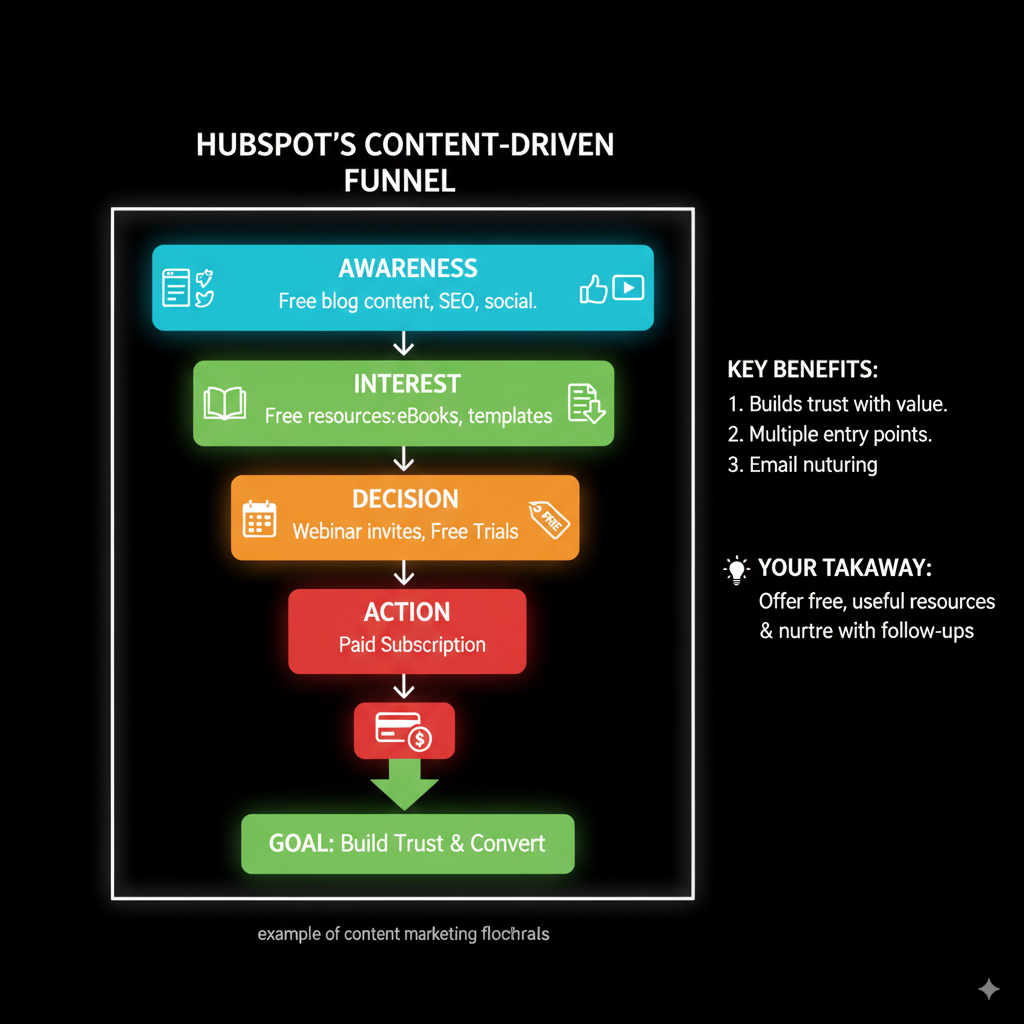
1. HubSpot – Content-Driven Lead Generation Funnel
Stage Breakdown:
- Awareness: Free blog content optimized for SEO.
- Interest: Free resources (eBooks, templates, checklists).
- Decision: Webinar invites, free trial offers.
- Action: Paid subscription upsells.
Why It Works:
- HubSpot builds trust by giving away real value first.
- Multiple entry points (guides, blogs, templates) feed into email nurturing.
Takeaway for You:
Offer a free, useful resource that speaks to your ideal buyer’s pain point. Then nurture them with helpful follow-ups.
2. Apple – Product Launch Funnel
Stage Breakdown:
- Awareness: Buzz-building through media events and keynote launches.
- Interest: High-quality landing pages and videos showcasing product features.
- Decision: Pre-order campaigns.
- Action: Seamless online and retail store purchasing.
Why It Works:
- Apple creates anticipation and exclusivity.
- Their funnel is designed to build momentum before the product is even available.
Takeaway for You:
If you’re launching something new, build anticipation early through storytelling and controlled teasers.
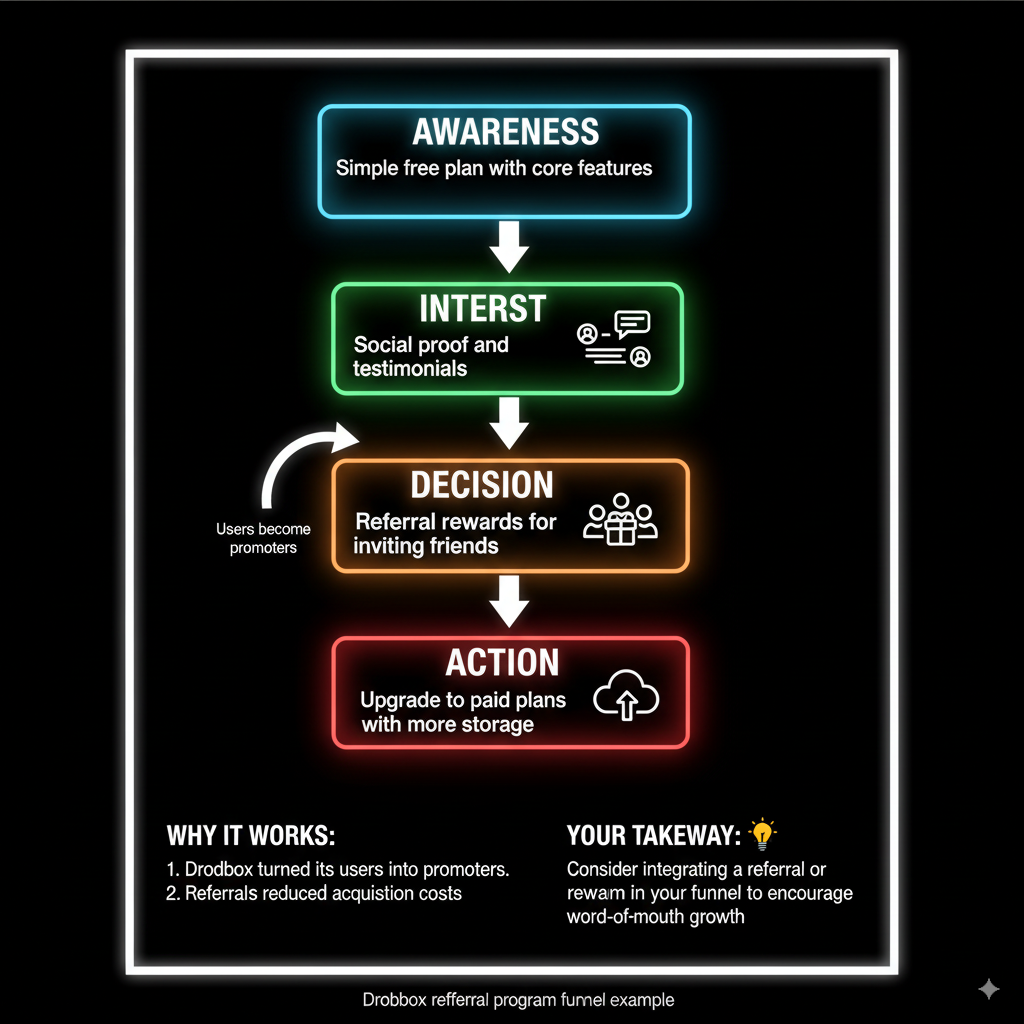
3. Dropbox – Viral Referral Funnel
Stage Breakdown:
- Awareness: Simple free plan with core features.
- Interest: Social proof and testimonials.
- Decision: Referral rewards for inviting friends.
- Action: Upgrade to paid plans with more storage.
Why It Works:
- Dropbox turned its users into promoters.
- Referrals reduced acquisition costs while rapidly growing the user base.
Takeaway for You:
Consider integrating a referral or reward system in your funnel to encourage word-of-mouth growth.
4. Amazon – Retargeting Funnel
Stage Breakdown:
- Awareness: Search traffic and marketplace browsing.
- Interest: Product recommendations and wishlists.
- Decision: Retargeting ads and email reminders for abandoned carts.
- Action: One-click purchase.
Why It Works:
- Amazon reduces friction at every stage.
- Retargeting ensures prospects don’t forget what they browsed.
Takeaway for You:
Implement retargeting campaigns and cart reminders to recover lost sales.
5. Tesla – Experience-Based Funnel
Stage Breakdown:
- Awareness: Elon Musk’s personal brand, PR buzz.
- Interest: Sleek videos and futuristic positioning.
- Decision: Test drive opportunities.
- Action: Pre-orders and direct online sales.
Why It Works:
- Tesla leverages experience (test drives, events) to close high-ticket sales.
- Direct-to-consumer removes middlemen, creating a seamless path.
Takeaway for You:
Sometimes a hands-on experience or demo is the most powerful funnel stage.
Quick Comparison Table of Funnel Strengths
| Brand | Funnel Type | Unique Strength |
|---|---|---|
| HubSpot | Content-Driven | Builds trust through free value |
| Apple | Launch Funnel | Anticipation & exclusivity |
| Dropbox | Referral Funnel | Viral growth through incentives |
| Amazon | Retargeting Funnel | Frictionless conversion recovery |
| Tesla | Experience Funnel | Hands-on engagement for buy-in |
How to Apply These Funnel Insights
- Audit your own funnel: Use a checklist to spot weak links. (Try Fix My Funnel).
- Map your stages: Define what “Awareness,” “Interest,” “Decision,” and “Action” look like for your business.
- Borrow and adapt: Don’t copy brands outright. Instead, extract principles—like HubSpot’s free content or Amazon’s retargeting—and apply them to your context.
👉 Also see our tools: Fix My Offer and Fix My Website Conversions.
FAQs About Marketing Funnel Examples
1. What is a marketing funnel example?
A marketing funnel example is a real-world case study showing how a business structures its customer journey from awareness to purchase.
2. Why study marketing funnel examples?
Because they reveal proven tactics and highlight what works across industries. You save time by learning from leaders.
3. How do I know if my funnel is working?
Track metrics at each stage: traffic, opt-ins, conversion rates, and sales. Drops indicate weak spots.
4. Do I need expensive tools to build funnels?
Not always. Many brands succeed with simple tools and clear strategies. What matters is diagnosing gaps. (Our Fix My Funnel can help.)
5. Which funnel type is best for small businesses?
It depends on your model. Content funnels (like HubSpot) are great for service businesses, while referral funnels (like Dropbox) are ideal for SaaS.
Final Thoughts: Build Smarter Funnels
Marketing funnel examples prove there’s no “one-size-fits-all.” The best funnels are tailored to your audience, product, and growth goals.
The key is clarity: knowing which stages are working and which are leaking money.
👉 Want that clarity? Get your Fix My Funnel report today to pinpoint your biggest conversion leaks.