Introduction: The Offer That Makes or Breaks Your Funnel
If you run a SaaS business, you’ve likely wrestled with the same dilemma: Should we offer a freemium plan or a free trial? Both models are powerful lead magnets. Both have propelled SaaS giants like Dropbox and Slack to billions. But both can also become a drain if misaligned with your funnel. Choosing between freemium vs free trial isn’t just about preference—it’s about growth, retention, and your bottom line.
At ActStrategic.ai, we help business owners uncover exactly where their funnels leak conversions. And time and again, we see this decision—freemium vs free trial—as a critical pivot point in growth strategy.
Freemium vs. Free Trial: Quick Definitions
Before diving deep, let’s clarify:
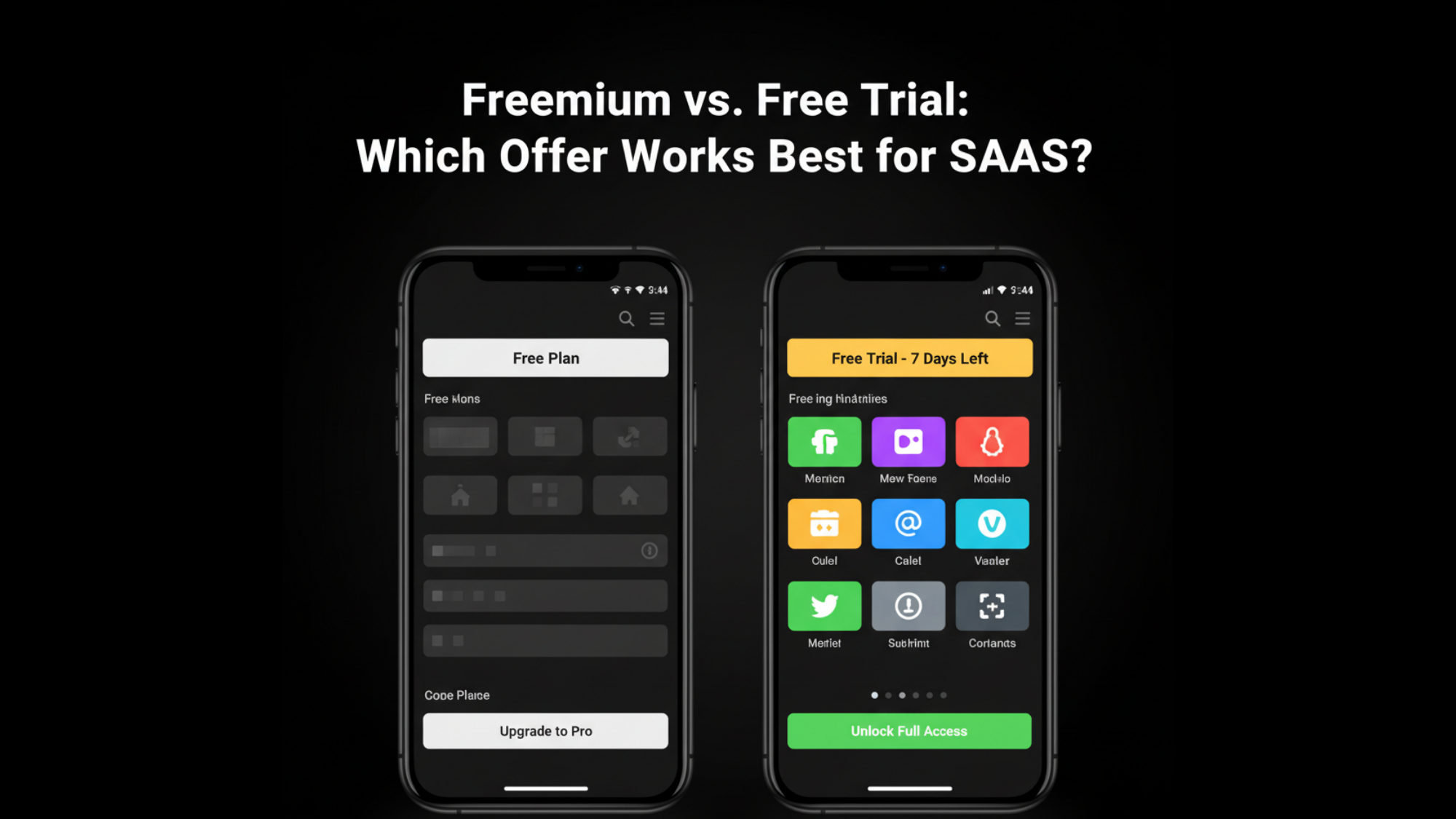
- Freemium Model → A permanent free plan with limited features. The goal: hook users long-term, then upsell when they crave premium functionality.
- Free Trial Model → A full-featured product available for a limited time (usually 7–30 days). The goal: create urgency, demonstrate value, and convert before access expires.
Both work. But which works best depends on your product, funnel, and customer behavior.
The Pros and Cons of Freemium
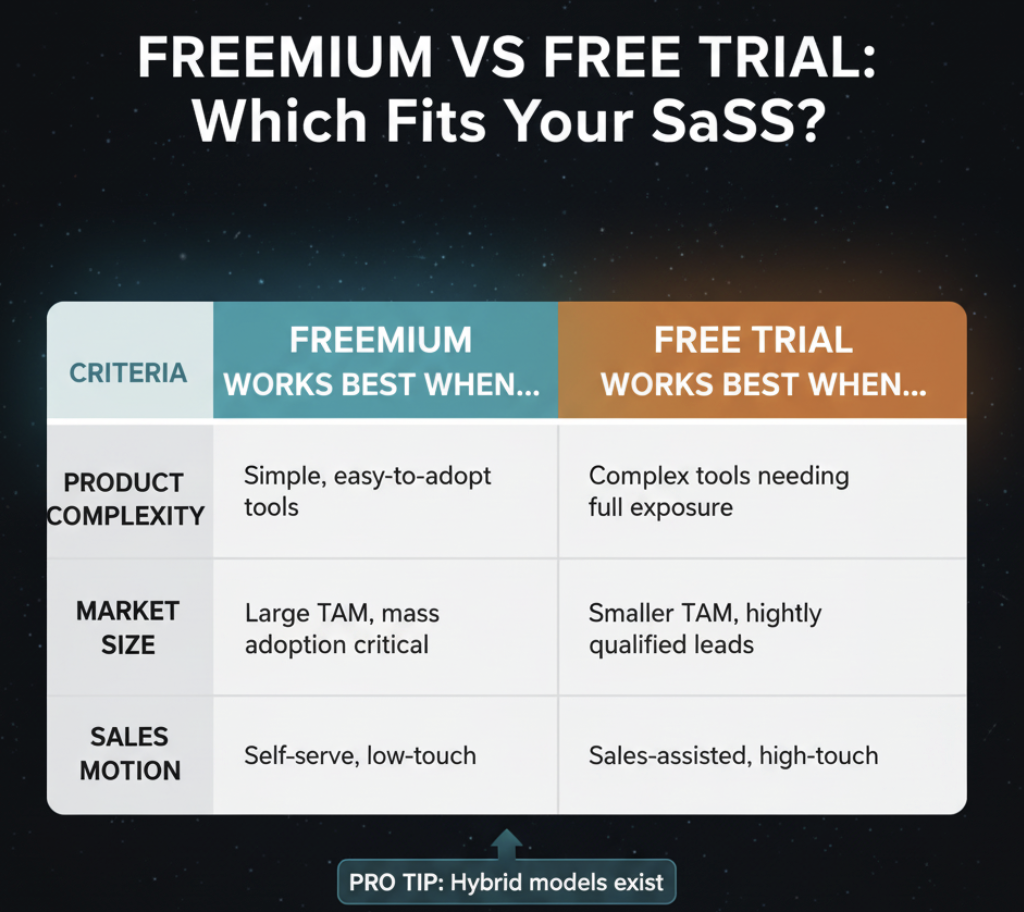
Freemium has become a SaaS classic because it lowers all barriers to entry. But it comes with trade-offs.
✅ Advantages
- Wider Top of Funnel: Anyone can sign up—no credit card required.
- Network Effects: More users = faster organic growth (see Slack).
- Upsell Path: Gradual nudges into premium plans.
❌ Challenges
- Conversion Struggles: Many users never upgrade.
- Support Costs: Free users still need onboarding and support.
- Feature Dilution: Give too much away, and paid feels unnecessary.
The Pros and Cons of Free Trial
Free trials lean on urgency and exclusivity. They’re a sharper blade—but not always the right one.
✅ Advantages
- Faster Conversions: Users decide quickly—yes or no.
- Value Showcase: Prospects experience the full product.
- Higher Intent Users: Those who sign up are serious.
❌ Challenges
- Short Window: Not enough time to build habits.
- Drop-Off Risk: Users may churn the moment the trial ends.
- Marketing Pressure: You need strong onboarding and follow-up.
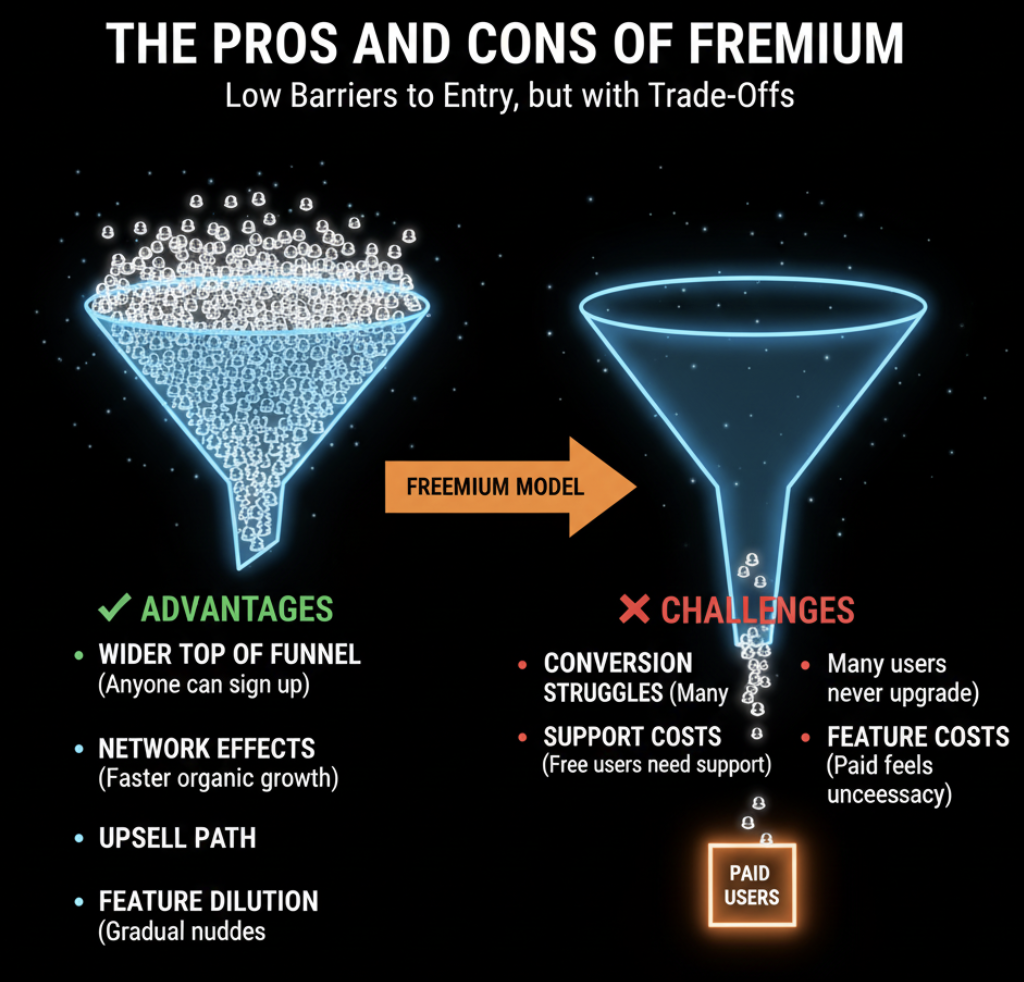
Freemium vs Free Trial: Which Fits Your SaaS?
Choosing the right model requires more than guessing. Here’s a simple framework:
| Criteria | Freemium Works Best When… | Free Trial Works Best When… |
|---|---|---|
| Product Complexity | Simple, easy-to-adopt tools (e.g., Dropbox, Canva) | Complex tools needing full exposure (e.g., HubSpot, Salesforce) |
| Market Size | Large TAM where mass adoption is critical | Smaller TAM where leads are highly qualified |
| Sales Motion | Self-serve, low-touch | Sales-assisted, high-touch |
| Time-to-Value | Users get quick wins immediately | Users need guided onboarding |
👉 If you’re unsure, hybrid models exist: free trials that downgrade to freemium, or freemium with premium trial unlocks.
Strategic Considerations for SaaS Growth
The best SaaS don’t pick freemium vs free trial blindly—they design offers around the funnel. Ask yourself:
- What’s my time-to-value? Do users see results in 2 minutes or 2 weeks?
- What’s my support capacity? Can my team handle a flood of free users?
- What’s my sales motion? Do I rely on quick self-serve upgrades or longer consultative sales?
If your funnel feels fuzzy, our Fix My Funnel tool pinpoints exactly where conversions stall.
The Role of Offers in SaaS Conversions
Your offer is often the true lever of growth. A strong offer reduces ad spend, improves CAC payback, and drives upgrades naturally.
That’s why we built the Fix My Offer tool—to help SaaS founders stress-test their offers against real conversion psychology. Because if your freemium or free trial isn’t aligned with user psychology, you’ll always be chasing growth.
For more clarity on optimizing conversion levers, explore our Fix My Website Conversions tool.
FAQs About Freemium vs Free Trial
1. What’s the difference between freemium and free trial?
Freemium is unlimited-time access to limited features; a free trial is limited-time access to all features.
2. Which model converts more paying users?
Free trials often show higher short-term conversion, but freemium can drive larger long-term adoption.
3. Can I offer both freemium and free trial?
Yes. Many SaaS companies blend both—using trials to showcase premium and freemium for retention.
4. How do I know if my offer is weak?
If conversions plateau, churn is high, or ads underperform, your offer likely needs a reset. Try our Fix My Offer tool for clarity.
5. How does the offer type affect CAC and LTV?
Freemium often increases CAC (due to many free users), but can extend LTV through habit formation. Free trials lower CAC but risk faster churn.
Conclusion: The Offer Is the Strategy
Freemium vs free trial isn’t just a tactical choice—it’s a strategic growth lever. The right model aligns with your product complexity, funnel structure, and customer psychology. The wrong one bleeds cash and stalls growth.
If you’re stuck on which to choose, clarity starts with diagnosing your funnel. Explore our Fix My Funnel tool and discover exactly what’s holding back your conversions.
Because growth doesn’t happen by accident. It happens by strategy.