Introduction: Your Website Is Your Silent Salesperson — Is It Doing Its Job?
If you’re a small business owner, your website isn’t just an online brochure — it’s your hardest-working salesperson. But here’s the truth: most small business websites underperform. They look decent but fail where it matters — converting visitors into paying customers.
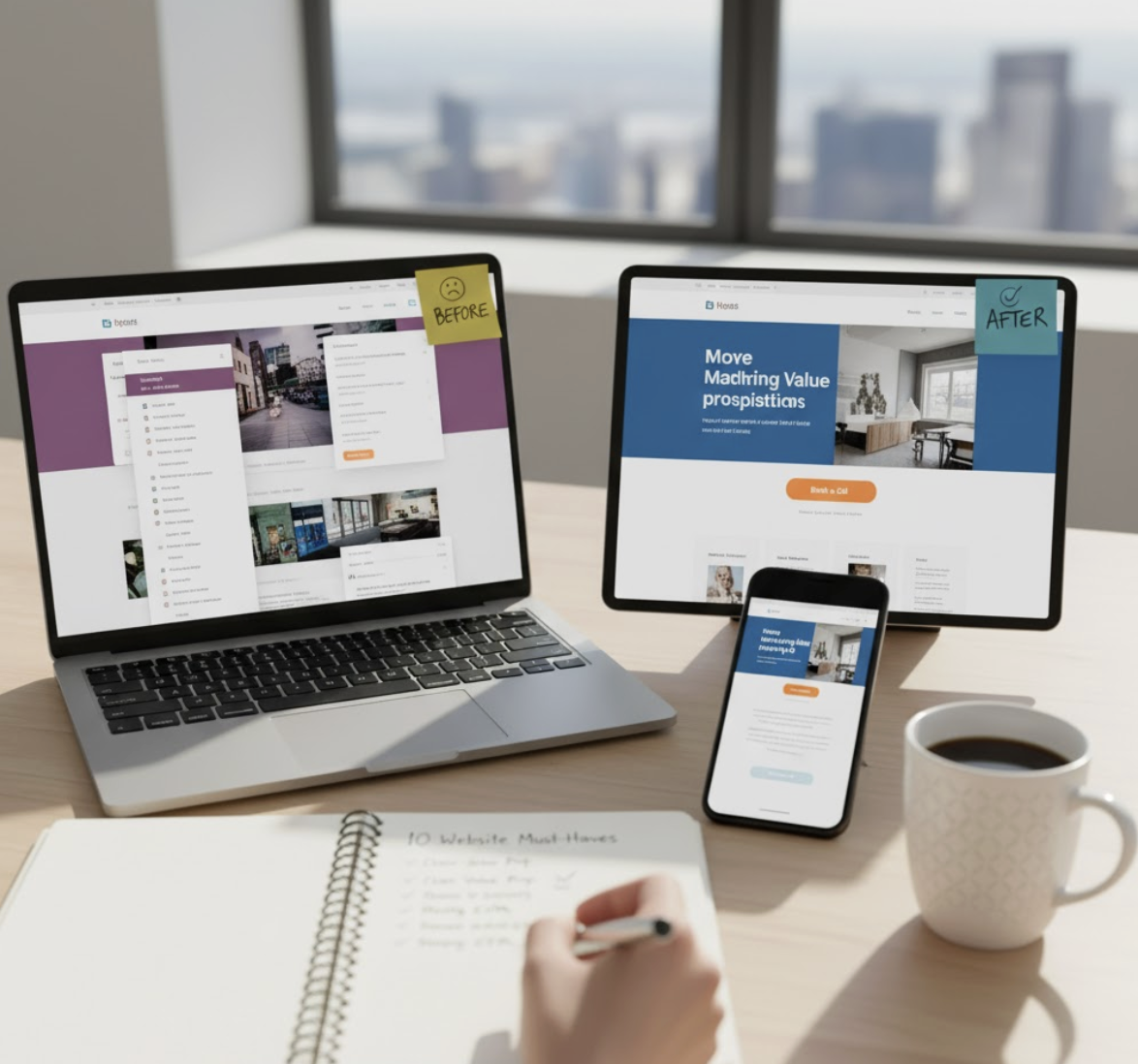
Whether it’s unclear messaging, clunky navigation, or missing calls-to-action (CTAs), small errors can quietly drain thousands in lost opportunities. The good news? Fixing them isn’t rocket science. You just need the right structure — and that’s what we’ll walk through today.
1. Clear, Compelling Value Proposition
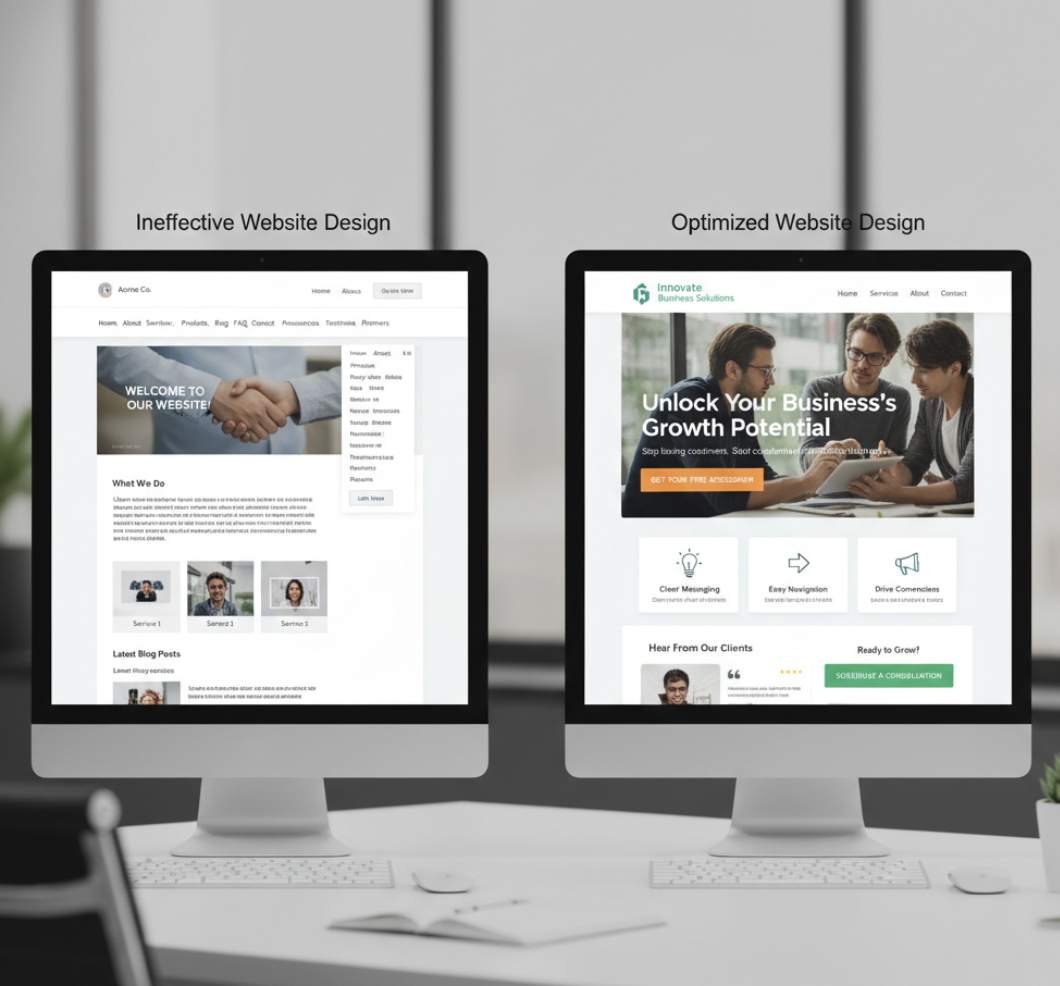
Your homepage should answer one question immediately: Why should I choose you? Within five seconds, visitors should understand what you offer, who it’s for, and what makes it valuable.
Pro tip: Place a bold, benefit-driven headline above the fold. Avoid clever slogans that confuse — clarity converts.
2. Fast, Mobile-Friendly Design
More than 60% of web traffic now comes from mobile devices. If your site isn’t responsive, you’re losing leads. Test your site’s performance with Google’s Mobile-Friendly Test and prioritize speed using compression tools.
Checklist:
- Responsive design adapts to any device
- Images are optimized for speed
- Font sizes are legible on mobile
3. Clear Navigation Structure
Think of your site navigation as the GPS for your visitors. A confused visitor is a lost customer.
Keep it simple:
- 5–7 main menu items max
- Use intuitive labels (Home, About, Services, Contact)
- Avoid jargon

4. High-Impact Visuals That Support Your Message
Images and videos should do more than decorate — they should demonstrate. Use visuals that show your product, service, or results in action.
5. Compelling Calls-to-Action (CTAs)
Your CTAs guide users toward conversion. Don’t bury them — make them bold and specific.
Examples:
- “Book Your Free Consultation”
- “See Our Work”
- “Fix My Website Conversions”
Test CTAs throughout your page — top, middle, and bottom — to capture different buyer intents.
6. Trust Builders: Testimonials, Case Studies & Proof
Trust is your strongest conversion lever. Showcase customer success stories, social proof, and recognizable logos.
Pro tip: Feature video testimonials or before-and-after client results to build credibility.
(Image suggestion: Testimonial section featuring smiling customers with quotes)
Alt text: “Customer testimonial section for small business website showing social proof.”
7. Contact Information & Accessibility
Don’t make users dig for your contact info. Display your phone number, email, and location clearly in the header or footer.
Also, add a contact form with minimal fields to boost submissions.
8. SEO-Optimized Content and Metadata
A stunning website is useless if no one can find it. Use keyword-rich copy, meta tags, and image alt text to improve your rankings.
Quick wins:
- Use your target keywords naturally (like small business website must haves)
- Add descriptive image alt tags
- Keep title tags under 60 characters
9. Analytics and Conversion Tracking
If you can’t measure it, you can’t improve it. Connect your site to Google Analytics and Google Tag Manager to track how visitors behave and where they drop off.
Pro tip: Use heatmaps (like Hotjar) to see what users click most — then adjust your layout accordingly.
10. A Strong Funnel That Converts Visitors Into Buyers
Your website is part of a larger system — your sales funnel. Without alignment, you might attract traffic but fail to convert it.
That’s where ActStrategic.ai’s Fix My Website Conversions tool helps. It diagnoses where your website leaks conversions and shows you exactly what to fix for measurable results.
FAQ: Small Business Website Must-Haves
1. What makes a good small business website?
A great small business website is fast, mobile-friendly, easy to navigate, and designed to convert visitors into customers.
2. How often should I update my website?
At least quarterly — check analytics, update offers, and refresh visuals to stay relevant.
3. How can I tell if my website is underperforming?
If traffic is steady but leads or sales are low, your conversion funnel likely needs work. Tools like ActStrategic.ai’s Fix My Funnel can pinpoint what’s broken.
4. Do small businesses really need SEO?
Yes — SEO ensures your ideal customers can find you online without paid ads.
5. What’s the best way to improve conversions fast?
Simplify your CTAs, clarify your value proposition, and test your funnel flow.
Final Thoughts: Your Website Deserves to Work as Hard as You Do
Your website shouldn’t just look good — it should sell effectively. When it’s aligned with your business goals, every page becomes a conversion asset, not just a digital placeholder.
Get clarity on what’s holding your website back. Try ActStrategic.ai’s Fix My Website Conversions — and turn your site into the growth engine it was meant to be.