The Problem: Random Acts of Marketing
Most small business owners know the frustration: you run ads, post on social media, maybe even send emails — yet results feel inconsistent. One month, sales are up; the next, silence. The culprit? Ad-hoc marketing without a structured funnel.
Without a digital marketing funnel, you’re relying on luck instead of strategy. That’s like trying to build a house without blueprints — you might get walls up, but will it stand? A funnel provides clarity, structure, and repeatability.
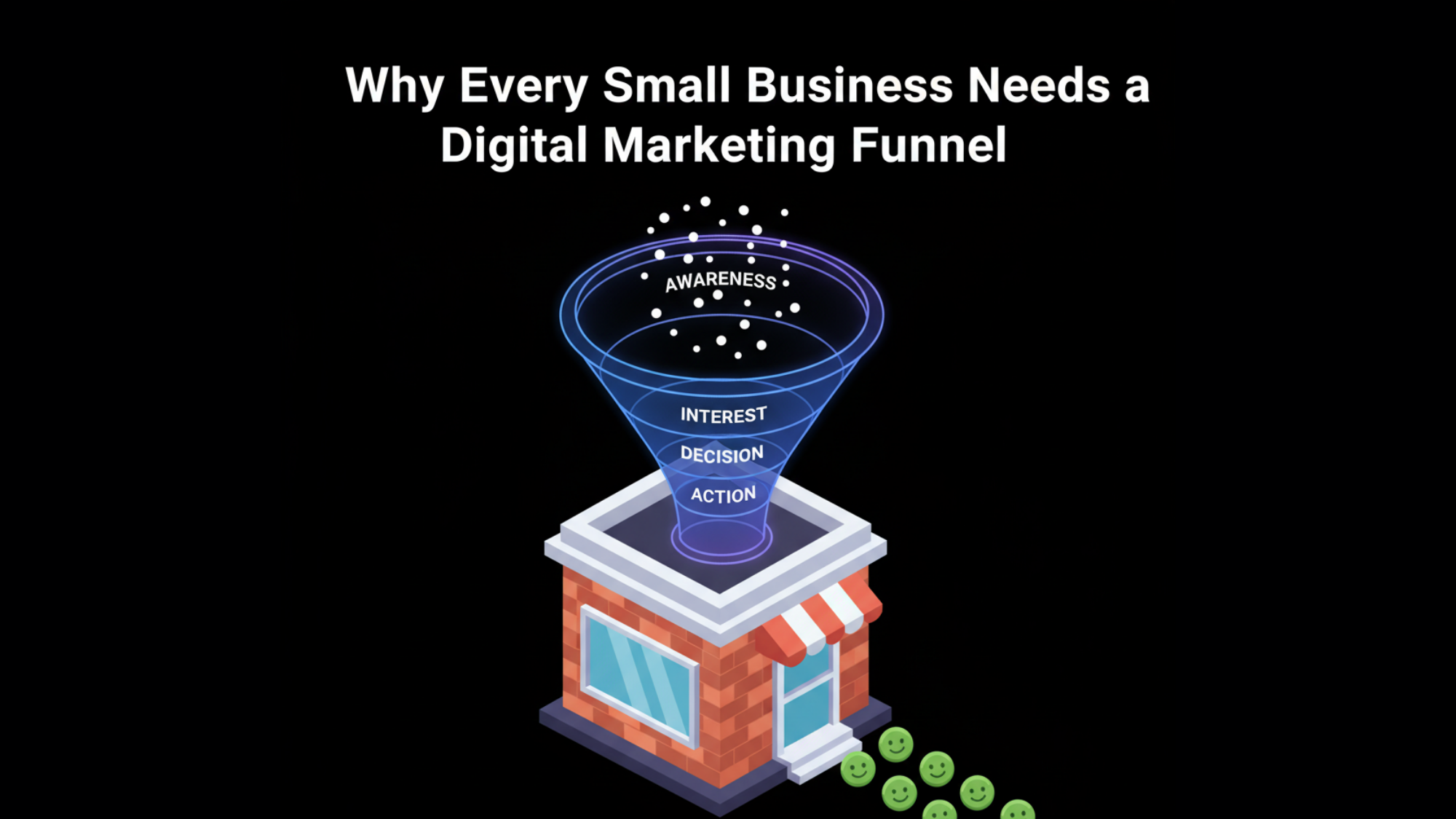
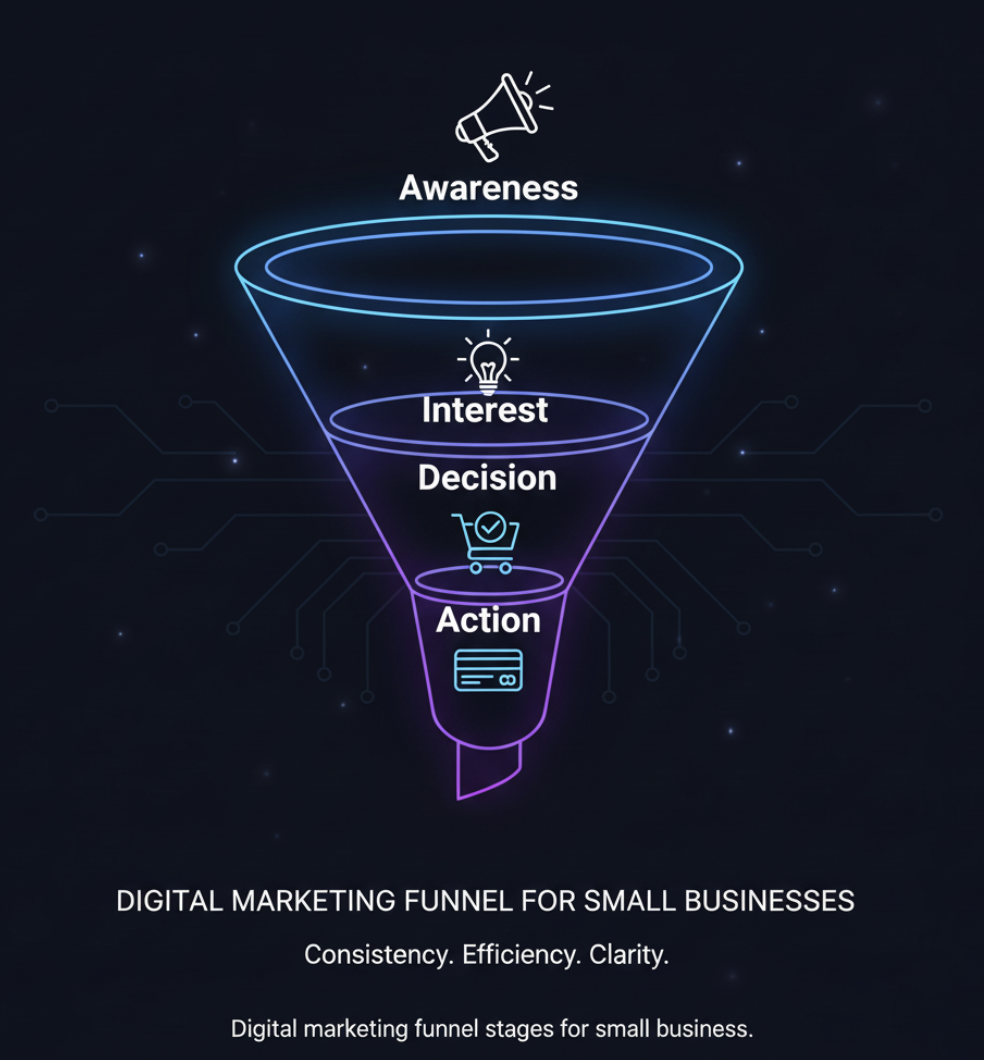
Definition: A digital marketing funnel for small business is a step-by-step path that turns strangers into paying customers using stages like awareness, interest, decision, and action.
Why Funnels Are Critical for Small Businesses
Unlike big brands with massive ad budgets, small businesses can’t afford wasted clicks or missed opportunities. A digital marketing funnel ensures that:
- Every visitor has a clear next step
- Leads are nurtured instead of lost
- Marketing efforts compound over time instead of starting from zero
Benefits of a Funnel-First Approach:
- Consistency: predictable lead flow instead of feast-or-famine sales cycles.
- Efficiency: spend less while getting more qualified leads.
- Clarity: you can diagnose where prospects drop off and fix leaks.
Anatomy of a Digital Marketing Funnel
1. Awareness
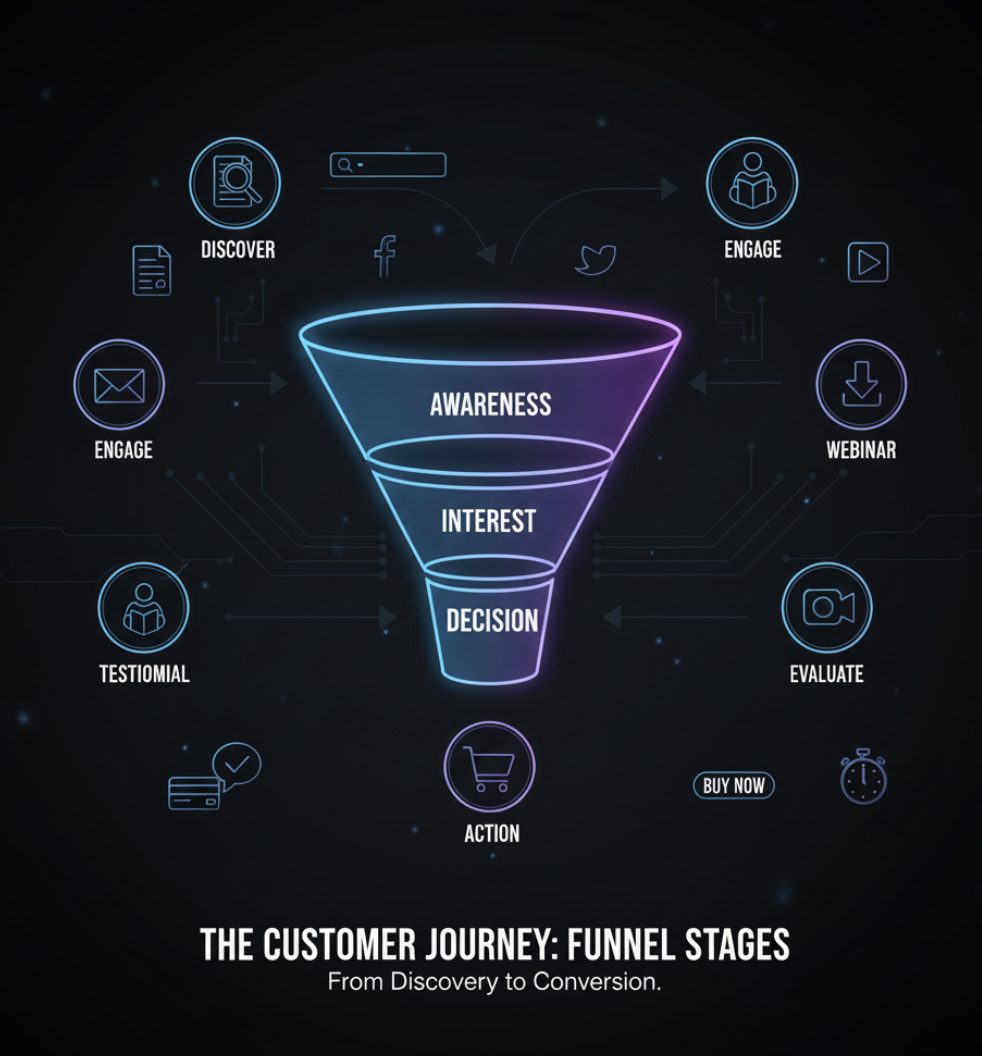
This is where prospects discover you — via ads, SEO, social posts, or word of mouth.
- Tactics: Blog content, social ads, SEO optimization
- Goal: Capture attention
2. Interest
Leads begin engaging more deeply — downloading resources, signing up for newsletters, or attending webinars.
- Tactics: Lead magnets, email sequences, retargeting
- Goal: Build trust
3. Decision
This is where the prospect evaluates your offer compared to alternatives.
- Tactics: Testimonials, case studies, demos
- Goal: Build confidence
4. Action
The prospect becomes a customer.
- Tactics: Optimized landing pages, clear CTAs, time-sensitive offers
- Goal: Conversion
Common Funnel Mistakes Small Businesses Make
- No lead capture: Sending traffic to a homepage without capturing emails.
- Leaky middle: Ignoring the Interest stage, leading to unqualified or cold prospects.
- Weak offer: Not aligning offers to real customer pain points.
- No diagnostics: Guessing what’s wrong instead of analyzing conversion data.
How to Build Your First Funnel (Step-by-Step)
- Map the customer journey — define the stages from awareness to action.
- Create an irresistible lead magnet — something useful enough to earn an email.
- Automate nurturing — use simple email drips to educate and warm leads.
- Optimize conversion pages — clear, focused landing pages with one CTA.
- Measure and refine — identify leaks with analytics and fix them fast.
💡 Pro tip: Start small — even a 2-step funnel (lead magnet → email follow-up → offer) beats scattered ads.
Tools That Help
- CRM + Email: HubSpot, ActiveCampaign
- Funnel Builders: ClickFunnels, Leadpages
- All-in-One Growth Tools: Fix My Funnel to diagnose leaks in your current system
(Internal link suggestion: Also check out our Fix My Offer tool and Fix My Website Conversions tool for deeper optimization.)
(External link suggestion: See Harvard Business Review’s insights on small business digital transformation.)
Quick Funnel Diagnostic Checklist
- Do you know where your leads are dropping off?
- Are you nurturing leads or just collecting them?
- Is your offer aligned with your audience’s #1 pain point?
- Do you have one clear call-to-action per stage?
If you answered “no” to any of these, your funnel is likely leaking.
FAQs About Digital Marketing Funnels for Small Businesses
Q1: What is a digital marketing funnel?
A structured path that moves prospects from awareness to purchase through intentional stages.
Q2: How do I know if my small business needs one?
If you rely on ads, referrals, or social media but sales are inconsistent — you need a funnel.
Q3: Are funnels complicated to set up?
Not necessarily. Start with a simple email sequence and landing page; you can expand later.
Q4: What’s the biggest mistake small businesses make?
Skipping the Interest stage and pushing for sales too fast.
Q5: How do I measure if my funnel is working?
Track conversion rates between each stage. If drop-off is high, that’s where to optimize.
Final Takeaway
A digital marketing funnel isn’t just a nice-to-have — it’s the growth engine small businesses need to compete in 2025 and beyond. Without it, you’re left guessing. With it, you’re building predictable, scalable revenue.
👉 Want clarity on your own funnel? Explore our Fix My Funnel report to pinpoint your biggest conversion leaks.