The Illusion of Savings: Why Cheap Websites Cost More Than You Think
Every business wants to save money, especially when launching online. But here’s the truth — a cheap website isn’t a bargain if it ends up costing you customers, credibility, or conversions.
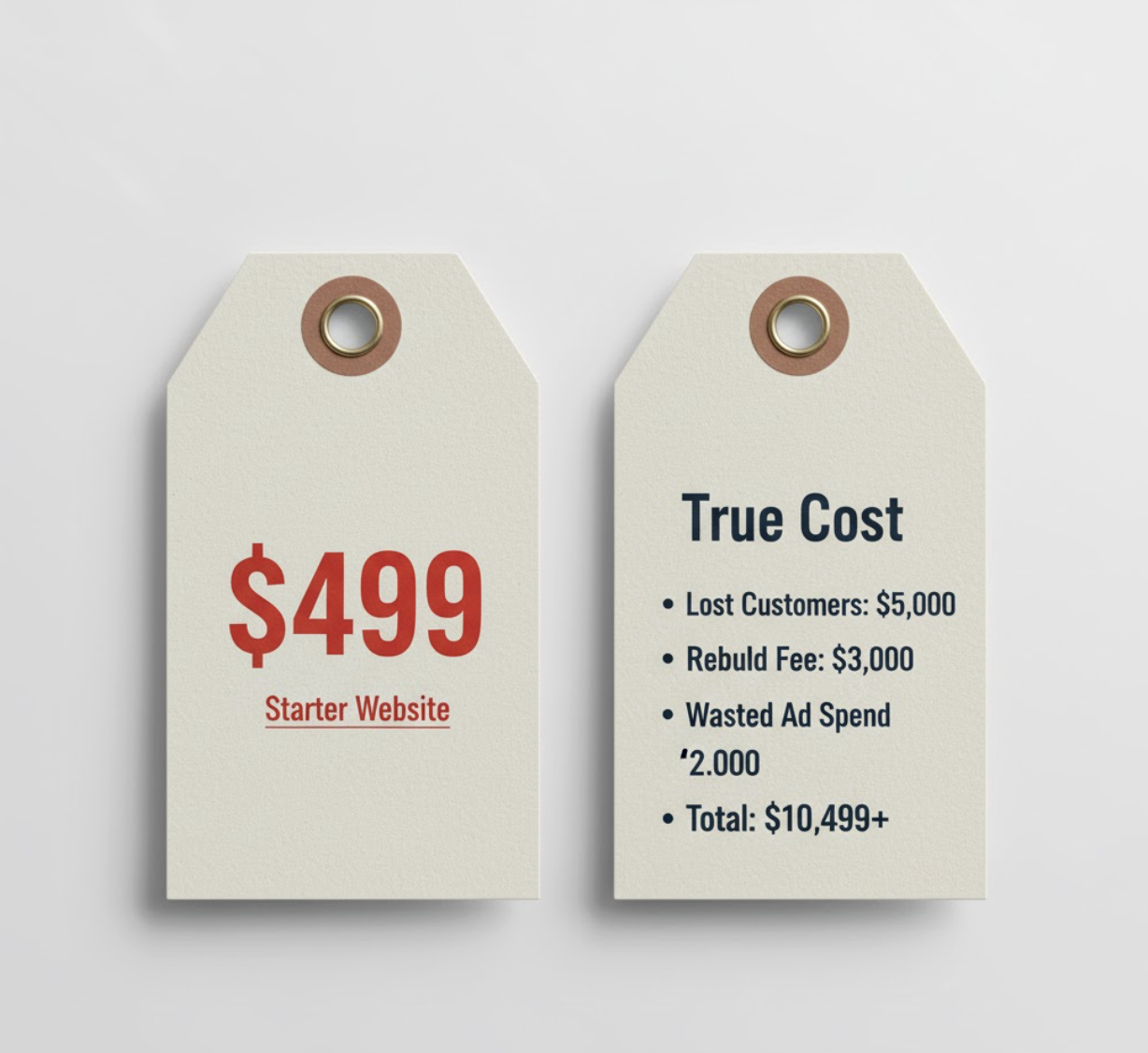
At first glance, $300 for a site sounds tempting. But dig deeper, and you’ll uncover hidden costs that come with poor design, weak hosting, slow load times, and zero strategic thinking.
Your website isn’t just a digital brochure — it’s your sales system. And if that system is broken, your marketing spend is leaking value every day.

What “Cheap” Really Means in Web Design
When we talk about a cheap website, we’re not just referring to cost — we’re talking about cutting corners. Typically, low-cost sites suffer from:
- Poor User Experience (UX): Generic templates, poor navigation, or non-responsive layouts frustrate visitors.
- Weak SEO Foundations: No optimization for keywords, metadata, or site speed.
- Limited Scalability: Adding new pages or features becomes a technical nightmare.
- Low Security Standards: Vulnerable plugins and outdated CMS versions put your business at risk.
- Minimal Strategy: A focus on aesthetics without addressing customer journeys or conversions.
A cheap website may look okay at first glance — but it’s like building a house on sand. The foundation simply doesn’t hold.
The Hidden Costs of a Cheap Website
| Hidden Cost | Description | Impact on Your Business |
|---|---|---|
| Lost Conversions | Visitors drop off due to poor design or unclear messaging. | Reduced sales and lead generation. |
| Frequent Fixes | Cheap builds often require ongoing troubleshooting and patching. | You end up paying more in developer fees. |
| Slow Load Times | Low-quality hosting or bloated themes drag performance. | Higher bounce rates, lower Google rankings. |
| Security Breaches | Outdated software or unprotected hosting. | Potential data loss and brand damage. |
| Rebuild Costs | Eventually, you’ll need to redo it right. | Double investment — time and money wasted. |
What’s worse? Most business owners realize these costs only after their cheap website has gone live
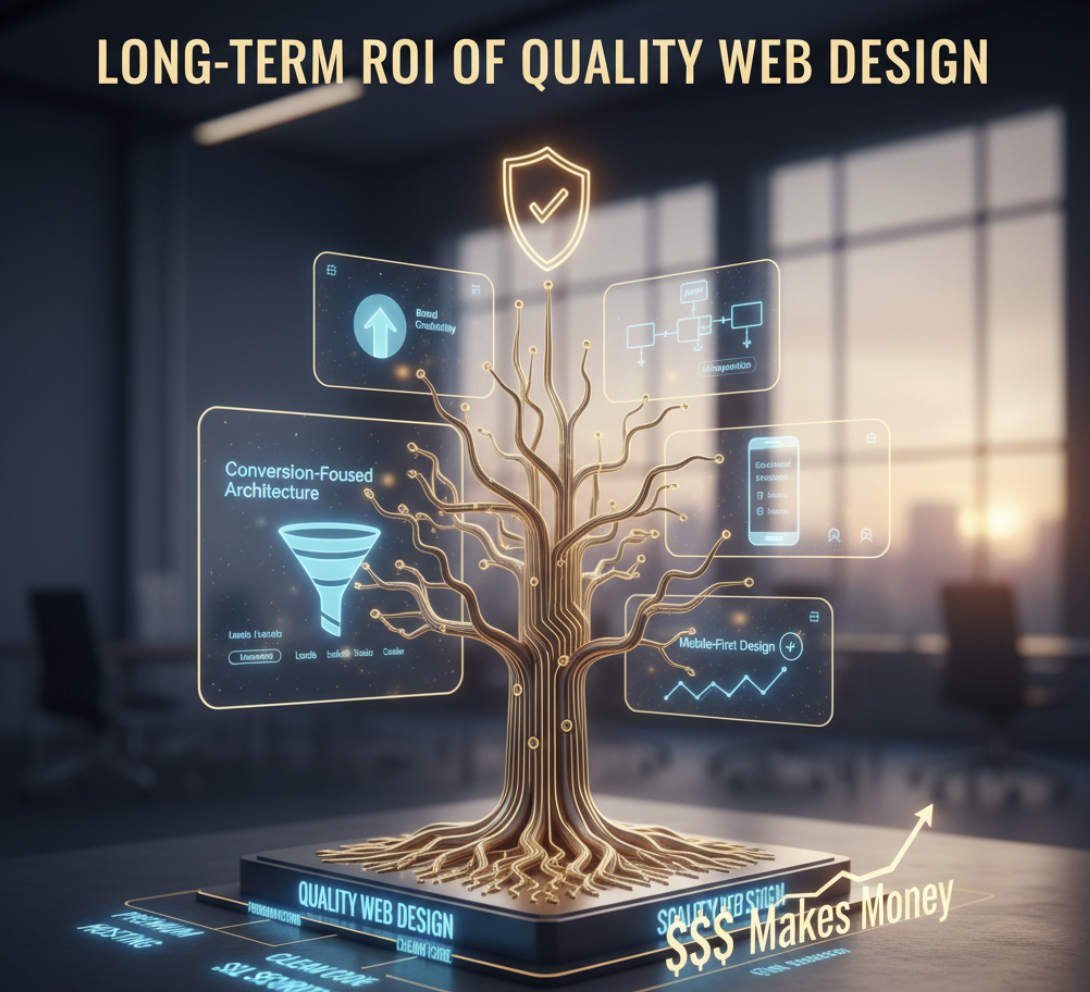
The Long-Term ROI of Quality Web Design
A professional website isn’t just about looks — it’s about performance, conversion, and trust. When done right, it becomes your most powerful marketing asset.
Here’s what you gain when you invest wisely:
- Conversion-Focused Architecture: Every page has a purpose, guiding visitors toward your key offers.
- Mobile-First Design: Optimized for today’s dominant mobile audience.
- Speed & Security: Built with premium hosting, clean code, and SSL standards.
- Scalability: Easily expand features, landing pages, or integrations as you grow.
- Brand Credibility: A polished, fast, and strategic website builds trust instantly.
In short — a well-built website doesn’t cost money. It makes money.
A Strategic Investment, Not a One-Time Expense
Think of your website as a living system — one that should evolve with your business. The question isn’t, “How much does it cost?” It’s, “How much value will it create?”
The smartest businesses treat their websites like an engine for growth — refining, testing, and optimizing for results. That’s how you scale efficiently.
If your current site isn’t converting as it should, it’s not too late to fix it.
👉 Explore our Fix My Website Conversions report — pinpoint exactly what’s broken and get expert guidance on how to turn your site into a growth engine.
How to Know If You’ve Outgrown Your Cheap Website
Use this quick checklist:
- Your site takes more than 3 seconds to load.
- You don’t have clear CTAs on every key page.
- It’s not optimized for mobile or tablet.
- You can’t easily update or track performance.
- You’re unsure if your site converts traffic effectively.
If you said “yes” to two or more, it’s time for a website strategy upgrade.
FAQs About Cheap Websites and ROI
1. Why are cheap websites so common?
Because they appeal to businesses looking for quick, budget-friendly solutions. Unfortunately, most skip strategy and performance.
2. What’s the average lifespan of a cheap website?
Usually 1–2 years before major functionality or design issues require a rebuild.
3. How much should I invest in a professional website?
It depends on your goals, but a well-optimized, conversion-ready site typically starts from $2,000–$5,000 for small businesses.
4. Can I improve my current cheap website instead of starting over?
Yes — a site audit can identify areas to fix or optimize before rebuilding. ActStrategic.ai offers diagnostics to help.
5. How do I measure if my website investment is paying off?
Track conversions, bounce rates, and lead quality. A strong website should amplify all your marketing efforts.
Final Thoughts: Quality Websites Don’t Cost — They Compound
Cheap websites might save you today but cost you tomorrow. A well-designed, conversion-optimized site compounds returns over time — attracting better leads, improving credibility, and driving measurable growth.
Your website deserves more than “good enough.” It deserves to be strategic.
💡 Ready to see where your site could perform better? Get your Fix My Website Conversions Report today.