Introduction: Your Website Might Be Invisible (And Here’s Why)
You’ve built a beautiful website. But there’s one problem — no one’s finding it. It’s like opening a stunning store in the middle of the desert. Without visibility, even the best products and services can go unnoticed.
That’s where SEO (Search Engine Optimization) comes in. For growing businesses, understanding website SEO basics isn’t optional — it’s foundational. Think of SEO as the roadmap that helps Google (and your customers) find you online.
In this guide, we’ll break down how search engines work, what matters most for rankings, and simple steps you can take to start climbing Google’s results — even if you’re not an expert.
What Is SEO (and Why It Matters for Your Business)?
SEO is the process of improving your website so it appears higher on search engines like Google. The higher your site ranks, the more likely potential customers will find (and trust) you.
Here’s why it matters:
- 93% of online experiences begin with a search engine (Source: Search Engine Journal).
- Ranking on the first page of Google can increase clicks by over 90%.
- SEO builds long-term organic traffic — not just short bursts like ads.
For small businesses and entrepreneurs, SEO is one of the highest ROI marketing channels — because once optimized, your site keeps attracting visitors without ongoing ad spend.
The 3 Pillars of Website SEO Basics
Think of SEO as a three-legged stool. Miss one leg, and your site’s growth becomes unstable. Here’s the breakdown:
1. On-Page SEO: Optimize What’s on Your Website
On-page SEO covers everything within your control — the content, structure, and technical elements of your site.
Checklist for Strong On-Page SEO:
- Use your primary keyword (e.g., “website SEO basics”) naturally in the title, headers, and intro.
- Include meta titles and descriptions that clearly explain each page’s topic.
- Add alt text to all images (e.g., “example SEO keyword placement screenshot”).
- Structure your content with H1–H3 headings for readability.
- Link internally to relevant resources (like ActStrategic.ai).
2. Off-Page SEO: Build Your Reputation
Off-page SEO is about building authority outside your website — mainly through backlinks, mentions, and brand trust.
Tips:
- Earn backlinks from credible industry sources (e.g., Harvard Business Review, TechCrunch).
- Encourage satisfied clients to mention or review your business online.
- Stay active on social platforms and directories relevant to your niche.
3. Technical SEO: Make It Easy for Google to Read Your Site
Even the best content won’t rank if Google can’t properly crawl your site. Technical SEO ensures your website runs smoothly and loads quickly.
Essentials:
- Improve site speed and mobile responsiveness.
- Use an SSL certificate (https://).
- Fix broken links or missing pages.
- Submit your sitemap to Google Search Console.
How to Start: A Simple SEO Framework for Beginners
Here’s a 5-step framework to improve your search visibility starting today:
| Step | Action | Why It Matters |
|---|---|---|
| 1 | Research keywords | Identify what your customers actually search for. |
| 2 | Optimize your pages | Align your titles, content, and images with those keywords. |
| 3 | Improve site structure | Help Google understand your hierarchy and navigation. |
| 4 | Build credibility | Earn backlinks and social mentions. |
| 5 | Monitor performance | Use Google Analytics and Search Console to track growth. |
🔗 Tip: If you’re unsure where your current SEO gaps are, ActStrategic.ai can analyze your website’s visibility and conversion leaks in one report.
Common SEO Mistakes to Avoid
Avoiding pitfalls can save you months of frustration. Here are some traps many business owners fall into:
- Keyword stuffing: Overusing keywords makes content sound robotic and hurts rankings.
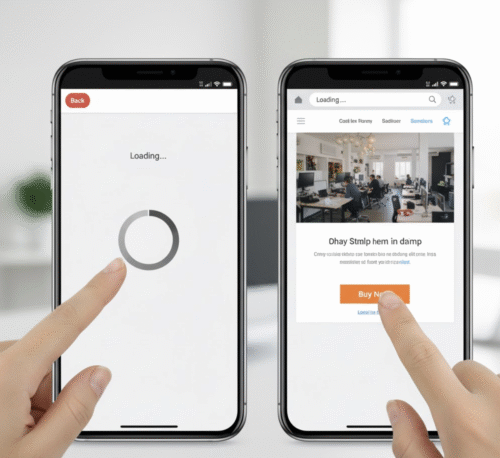
- Ignoring mobile users: Over 60% of searches happen on phones — a slow mobile site costs traffic.
- Neglecting local SEO: If you serve a specific area, optimize for location-based keywords.
- Skipping analytics: Without tracking, you can’t measure progress.

Quick SEO Wins You Can Implement This Week
- Update old blog posts with new keywords and internal links.
- Add unique meta descriptions to your top 5 pages.
- Compress large images to improve page speed.
- Claim your Google Business Profile for local SEO.
- Add alt text to every image (e.g., “optimized homepage design example”).
Small actions compound over time. You don’t need a full rebuild — you just need consistent optimization.
FAQ: Website SEO Basics for Beginners
1. How long does SEO take to work?
Typically, 3–6 months before noticeable results appear — depending on competition and consistency.
2. Do I need to blog for SEO?
Blogging helps build authority and rank for long-tail keywords, but quality beats quantity.
3. Can I do SEO myself, or should I hire an expert?
You can start with the basics yourself, then consider expert help for technical audits and strategy.
4. How do I know if my SEO is working?
Track rankings, traffic, and conversion rates in Google Analytics and Search Console.
5. What’s the difference between SEO and paid ads?
SEO drives long-term organic traffic; paid ads give instant but temporary visibility.
Final Thoughts: Visibility Is the First Step to Growth
Getting found online isn’t luck — it’s strategy. SEO is about understanding how your audience searches and showing up at the right time with the right message.
By applying these website SEO basics, you’ll turn your site from an invisible asset into a traffic-generating engine.
If you’re not sure where to start or suspect your website is underperforming, get a clarity report with Fix My Website Conversions — it reveals what’s blocking your visibility and how to fix it.