Introduction
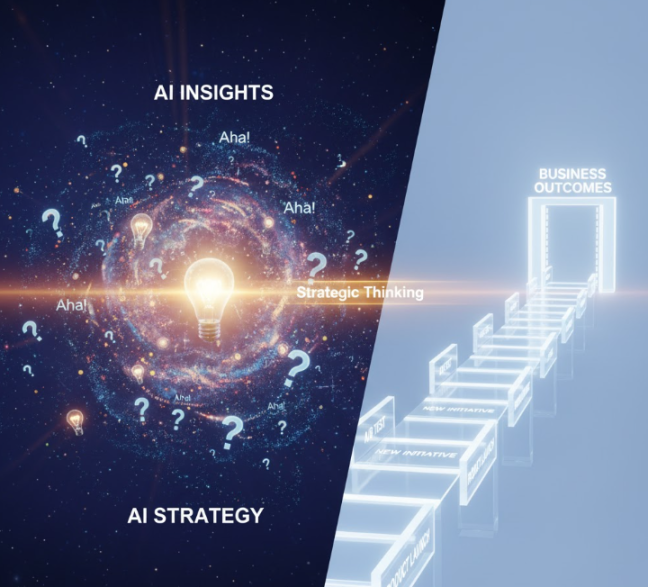
In the age of AI, businesses are awash with data and recommendations. Founders and operators often confuse AI insights with AI strategies, expecting raw observations to directly drive outcomes. The truth? Insights are starting points, not execution plans.
With AI tools like ActStrategic.ai, you can go beyond surface-level observations and turn strategic AI output into actionable business moves. This distinction is key to improving decision-making and achieving measurable results.

Understanding AI Insights vs Strategy
What Are AI Insights?
- Definition: Raw observations or recommendations generated by AI based on data analysis.
- Examples: Conversion rate drops in a funnel step, top-performing ad copy, or high churn segments.
- Limitation: Insights indicate patterns but don’t prescribe action.
What Makes AI Output Strategic?
- Execution-Ready: Strategic output includes clear actions and priorities.
- Contextual Understanding: Aligns insights with business goals, resource constraints, and timelines.
- Decision Framework: Translates observations into a roadmap or plan.
| Insight Example | Strategic Output Example |
|---|---|
| Funnel drop at checkout | Implement A/B tests on checkout flow and adjust UX copy within two weeks |
| High click-through ad | Allocate 30% more budget, test similar messaging across channels, and track ROI |
How to Turn AI Insights Into Strategy
- Prioritize Based on Impact: Focus on insights that align with high-value KPIs.
- Define Clear Actions: Specify tasks, owners, and timelines for each observation.
- Integrate Into Planning: Embed AI recommendations into funnel optimization or offer strategy workflows.
- Review and Refine: Use feedback loops to adjust AI-generated plans for better outcomes.
Common Misuses
- Acting on every insight without prioritization.
- Ignoring context or resource constraints.
- Expecting AI to replace human strategic thinking.
FAQ Section
Q1: What is the main difference between AI insights vs strategy?
A1: Insights reveal patterns and observations, while strategy provides a structured plan to act on those insights.
Q2: Can AI create a full business strategy on its own?
A2: AI can guide and recommend, but human decision-making is essential to contextualize, prioritize, and execute strategies.
Q3: How can I prioritize AI-generated insights?
A3: Map insights against key business KPIs, potential ROI, and resource availability to determine focus areas.
Q4: What tools help turn insights into strategic action?
A4: Platforms like ActStrategic.ai provide structured workflows, templates, and dashboards for actionable planning.
Q5: How often should I review AI strategy outputs?
A5: Review weekly or monthly to incorporate new data, assess progress, and refine tactics.
Q6: How do I avoid common mistakes in using AI for strategy?
A6: Avoid over-reliance on raw insights, consider business context, and combine AI recommendations with human judgment.
Conclusion
Ready to transform AI insights into actionable strategies? Explore ActStrategic.ai to generate strategic AI output, streamline decision-making, and accelerate business growth.