The Website Dilemma: What Kind of Site Does Your Business Really Need?
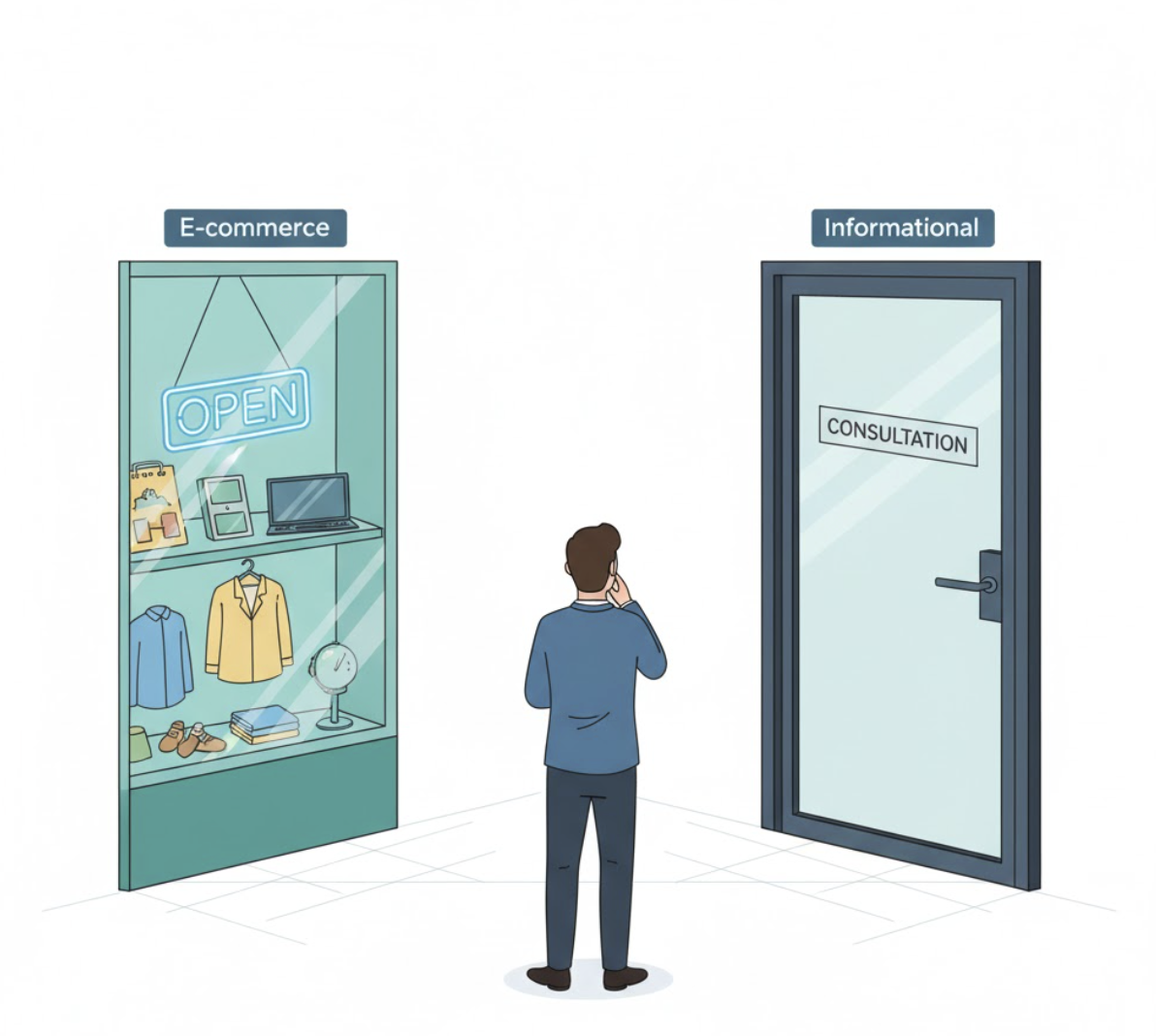
Every business needs a website — but not all websites are built for the same purpose. One of the most common mistakes business owners make is launching a site without clarity on its core objective. Is it meant to sell products directly, or to educate and generate leads? The difference determines your design, structure, and success metrics.
This is where understanding e-commerce vs informational websites becomes essential. Choosing the right type of site is the first step to building a digital foundation that aligns with your growth goals.
What Is an E-Commerce Website?
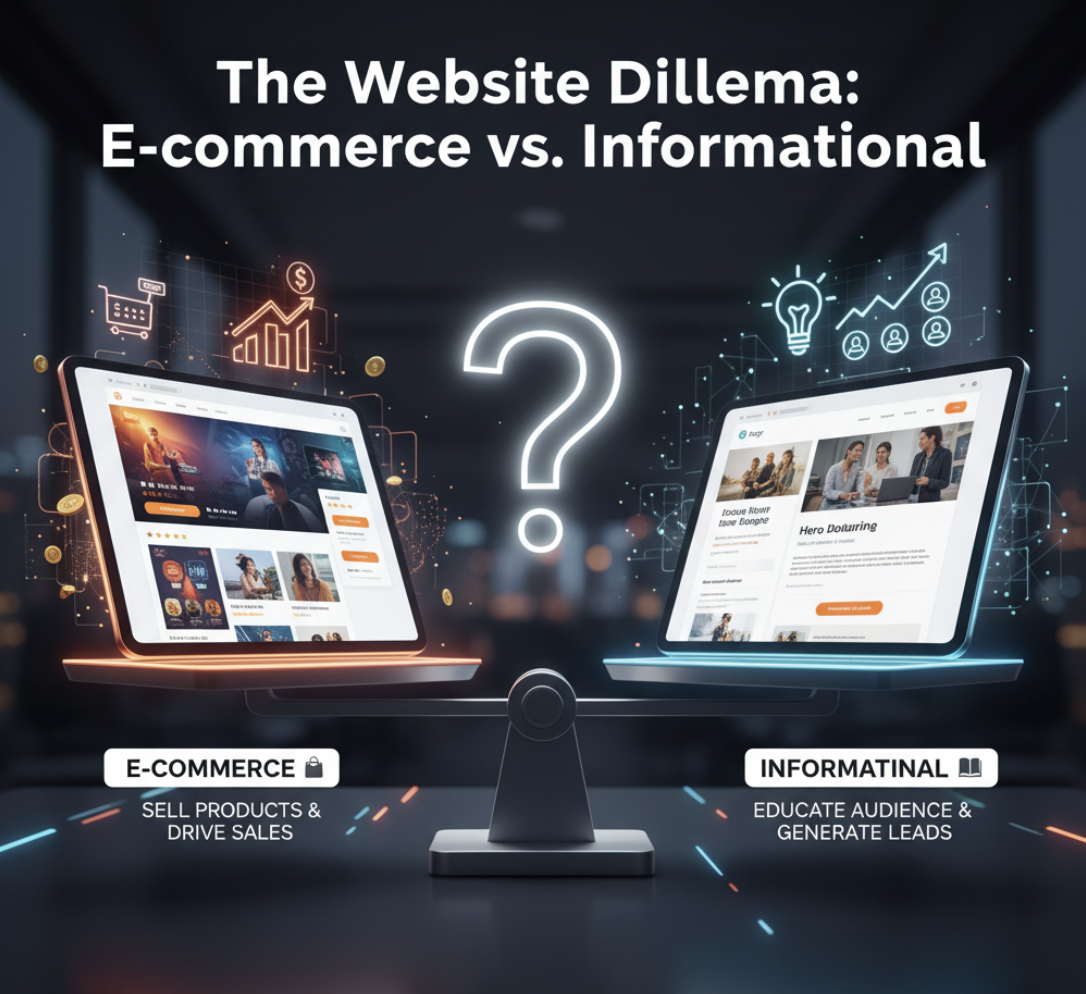
An e-commerce website is designed to sell products or services directly online. Visitors can browse products, add them to a cart, and complete checkout — all within the same site.
Key features of an e-commerce website include:
- Product catalog or store pages
- Shopping cart and secure checkout
- Payment gateway integration (e.g., Stripe, PayPal)
- User accounts and order tracking
- Inventory and shipping management tools
- SEO for product listings and categories
Best for: Retailers, subscription services, digital product creators, and any business that sells directly to consumers.
Business goal: Revenue generation through online transactions.
What Is an Informational Website?
An informational website (also known as a lead-generation website) is built to educate visitors, build trust, and capture leads — not to facilitate purchases.
Typical elements of an informational site include:
- Clear service pages and value propositions
- Lead capture forms or consultation booking tools
- Case studies, blogs, or educational resources
- About and contact pages that humanize the brand
- Testimonials and trust elements
Best for: Consultants, agencies, B2B companies, professional services, or local businesses.
Business goal: Generate qualified leads and nurture relationships that convert later.
E-Commerce vs Informational Website: Side-by-Side Comparison
| Feature | E-Commerce Website | Informational Website |
|---|---|---|
| Primary Goal | Drive direct sales | Generate leads and educate |
| Core Pages | Product pages, cart, checkout | Service pages, contact forms, case studies |
| Conversion Type | Purchase | Lead form submission or call booking |
| Key Tools | Payment gateway, CRM, inventory management | Email capture, CRM, analytics |
| Content Strategy | Product SEO, category descriptions | Educational blogs, case studies, whitepapers |
| Success Metric | Revenue per visitor | Lead-to-client conversion rate |
How to Choose the Right Type of Website for Your Business
If you’re not sure which type fits your goals, ask yourself:
- Do I want visitors to make purchases directly online?
→ If yes, go e-commerce. - Is my business based on service delivery or education?
→ Then an informational site is likely your best bet. - What’s my short-term vs long-term business goal?
→ E-commerce sites are great for volume and speed; informational sites are ideal for long-term trust and inbound lead generation. - Do I have the infrastructure to support online sales?
→ Payment systems, product logistics, and customer service all matter.
Common Mistake: Trying to Be Both (Too Soon)
Some businesses attempt to blend both models — launching with a mix of products and services — but this can cause confusion. Visitors don’t know what action to take, and your funnel loses focus.
Start with one clear purpose. Once your core offer is performing, you can layer in additional functionality (like an e-commerce add-on or lead magnet strategy).
Why the Right Website Type Affects Conversions
Your website’s purpose dictates its conversion design — how pages are structured to guide visitors toward a goal. For example:
- On an e-commerce site, clarity in product hierarchy, mobile checkout speed, and trust badges directly affect cart completion rates.
- On an informational site, strategic CTAs, storytelling, and proof of expertise drive form fills and discovery calls.
If your site’s design or flow doesn’t match your funnel type, even strong traffic won’t convert. This is where many businesses lose growth momentum without realizing it.
💡 Pro Tip: Use the Fix My Website Conversions tool to quickly identify where your site may be leaking conversions — whether product-based or lead-focused.
Steps to Optimize Each Website Type
For E-Commerce Sites:
- Compress images and improve loading speed
- Simplify the checkout process
- Use product reviews for trust
- Offer guest checkout
- Add upsells and abandoned cart recovery
For Informational Sites:
- Create clear service page CTAs
- Showcase testimonials and case studies
- Add lead magnets (e.g., free audit, guide)
- Improve mobile usability
- Build authority with blog content
The Smart Business Owner’s Takeaway
The right website isn’t just about design — it’s about strategy alignment. When your site type supports your business model, every click brings you closer to conversion.
Instead of asking, “What should my website look like?” — ask, “What should my website do for my business?” That shift changes everything.
Explore your options, and if your current site isn’t converting as it should, ActStrategic.ai can help diagnose what’s not working — fast.
FAQs About E-Commerce vs Informational Websites
1. Can a website be both e-commerce and informational?
Yes, hybrid sites exist — especially for brands that sell products and also educate. The key is clarity: make sure visitors know where to go for what they need.
2. How do I know if I need an e-commerce site?
If your business model involves direct online sales, you’ll need e-commerce functionality. Otherwise, focus on a lead-generating site first.
3. Which type of website converts better?
It depends on your audience and offer. E-commerce sites convert when products are priced right and easy to buy. Informational sites convert through trust and authority.
4. What’s the cost difference between the two?
E-commerce sites typically cost more due to additional integrations (payment gateways, inventory systems, etc.), but can deliver faster ROI if optimized well.
5. Can I switch from informational to e-commerce later?
Absolutely. A scalable platform lets you add e-commerce functionality as your business grows — just plan for it early in your website strategy.
Conclusion: Choose Strategy Before Design
Before writing a single line of website copy or hiring a designer, define your site’s purpose. That clarity will shape everything — from layout to metrics.
If you’re unsure whether your current site aligns with your goals, try our Fix My Website Conversions diagnostic. It pinpoints what’s not working and helps you scale smarter.