
The Trust Gap: Why Testimonials Matter More Than Ever
In a world flooded with marketing promises, trust is the ultimate conversion currency. No matter how sleek your site looks or how persuasive your copy sounds, visitors still ask one question before taking action:
“Can I really trust this brand to deliver?”
That’s where testimonials, reviews, and case studies come in — they bridge the trust gap. They serve as real-world validation that what you claim is true. But simply sprinkling a few kind words on your homepage isn’t enough.
When done strategically, testimonials can dramatically increase engagement, conversion rates, and perceived credibility.

Why Testimonials Work (and the Psychology Behind Them)
Testimonials tap into social proof, a concept first studied by psychologist Robert Cialdini. The principle is simple: when people are uncertain, they look to others for cues on what to do. On your website, that means showcasing happy customers who’ve achieved real results using your product or service.
The Benefits of Well-Placed Testimonials
- Reduce risk perception: Visitors see that others trusted you — and were rewarded.
- Increase conversions: Studies show testimonials can lift conversion rates by up to 34% (Spiegel Research Center).
- Differentiate your brand: They show proof of your promises, not just claims.
- Humanize your business: Real voices make your message relatable and authentic.
Where to Showcase Testimonials on Your Website
Placement matters just as much as content. Here’s how to position your social proof for maximum impact:
1. Homepage Hero Section
Include one powerful quote or video clip near your primary call-to-action (CTA). It sets the tone immediately — “others trust us, and you can too.”
💡 Pro tip: Use visuals — photos, names, or even company logos to increase believability.
2. Product or Service Pages
Match testimonials to specific offers. If you’re selling a conversion optimization service, feature clients who saw measurable improvements in conversion rates.
3. Checkout or Contact Page
When visitors are about to commit, even a small nudge of reassurance helps. Add a short quote like “Working with Act Strategic transformed our funnel — 3x more qualified leads in 30 days.”
4. Dedicated Testimonials Page or Case Study Hub
Use a full page to showcase detailed success stories, video testimonials, and case studies. Link to it from your navigation menu for social proof that scales.
📘 See how we pinpoint funnel leaks with our Fix My Funnel Report.
How to Request Powerful Testimonials (Without Making It Awkward)
Most customers are happy to help — they just need guidance. Instead of asking, “Can you write me a testimonial?”, prompt them with specific questions that elicit strong, detailed responses.
Ask These 3 Questions:
- What was the challenge you faced before working with us?
- What changed after using our solution?
- What specific results or improvements did you notice?
Then, lightly edit for clarity while keeping their authentic tone. Always get permission before publishing.
💬 Example: “Before Act Strategic, our website traffic was steady but conversions were low. The Fix My Funnel report pinpointed our exact issue — now we convert 2x more leads each month.”
Crafting Case Studies That Convert
A testimonial tells what happened — a case study shows how it happened. Here’s a simple structure for an engaging mini case study:
| Section | What to Include |
|---|---|
| Client Background | Who they are and what they do |
| The Challenge | Their pain point or bottleneck |
| The Solution | What you implemented (e.g., Fix My Funnel report insights) |
| The Results | Quantifiable improvements (e.g., +40% lead-to-sale rate) |
These stories move beyond praise — they showcase transformation, which is far more persuasive.
Design Tips: Make Your Testimonials Work Harder
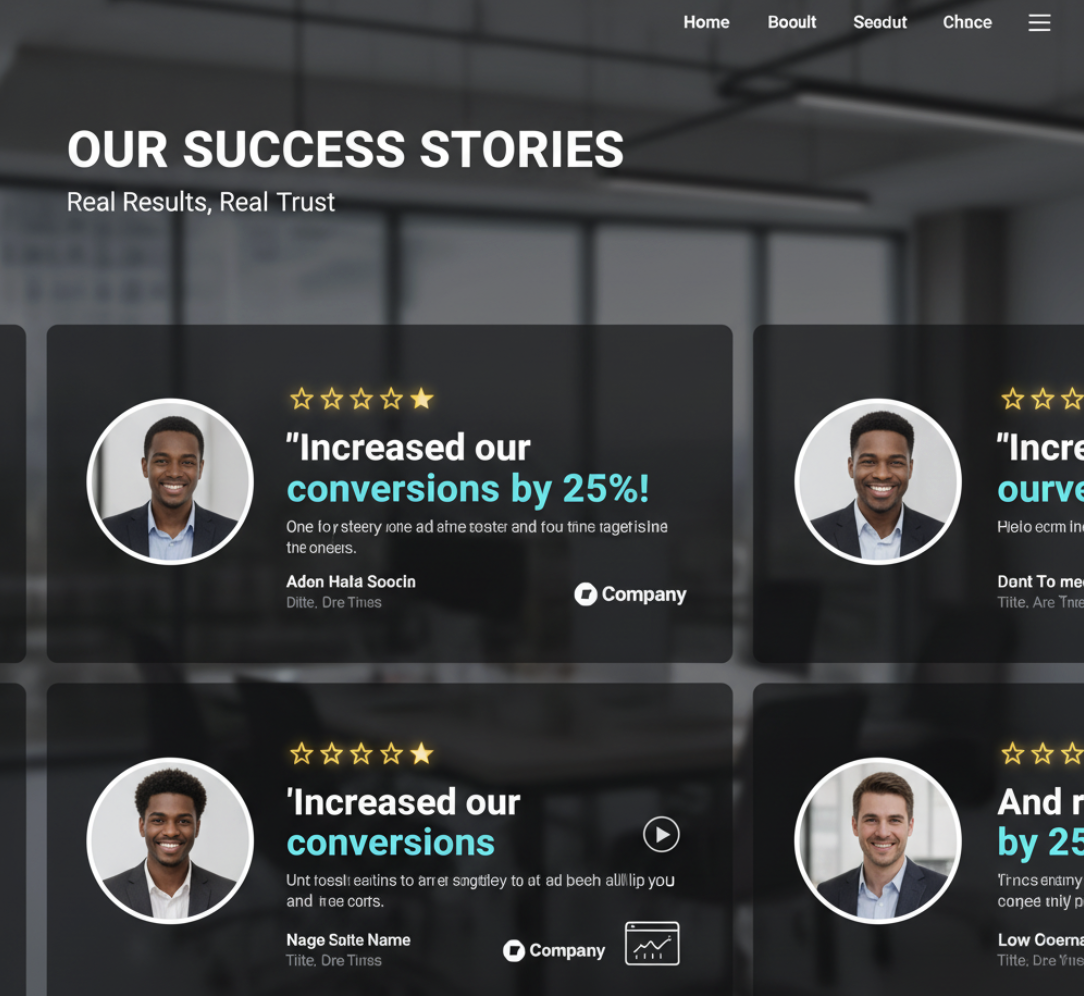
- Use faces: Human faces increase empathy and credibility.
- Keep it scannable: Highlight keywords or results in bold.
- Add metrics: “Increased conversions by 25%” beats “improved results.”
- Mix formats: Combine text quotes, video clips, and screenshots.
Common Mistakes to Avoid
- ❌ Using vague praise (“They’re great!”) — lacks credibility.
- ❌ Hiding testimonials at the bottom of the page — they deserve prime real estate.
- ❌ Forgetting permission or using anonymous reviews — erodes trust.
FAQs About Showcasing Testimonials
1. Should I include video testimonials?
Yes — videos add authenticity and outperform text-only reviews.
2. How often should I update testimonials?
Refresh quarterly to keep them relevant and reflective of your latest work.
3. Can I feature LinkedIn recommendations or Google Reviews?
Absolutely. Embed or screenshot them (with permission) for added credibility.
4. What if I’m a new business without testimonials yet?
Start with pilot clients, beta users, or case studies based on early wins.
Final Takeaway
Your testimonials are more than kind words — they’re conversion accelerators. They turn uncertainty into confidence, and browsers into buyers.
If you’re not sure whether your website showcases social proof effectively, start by reviewing where visitors lose trust.