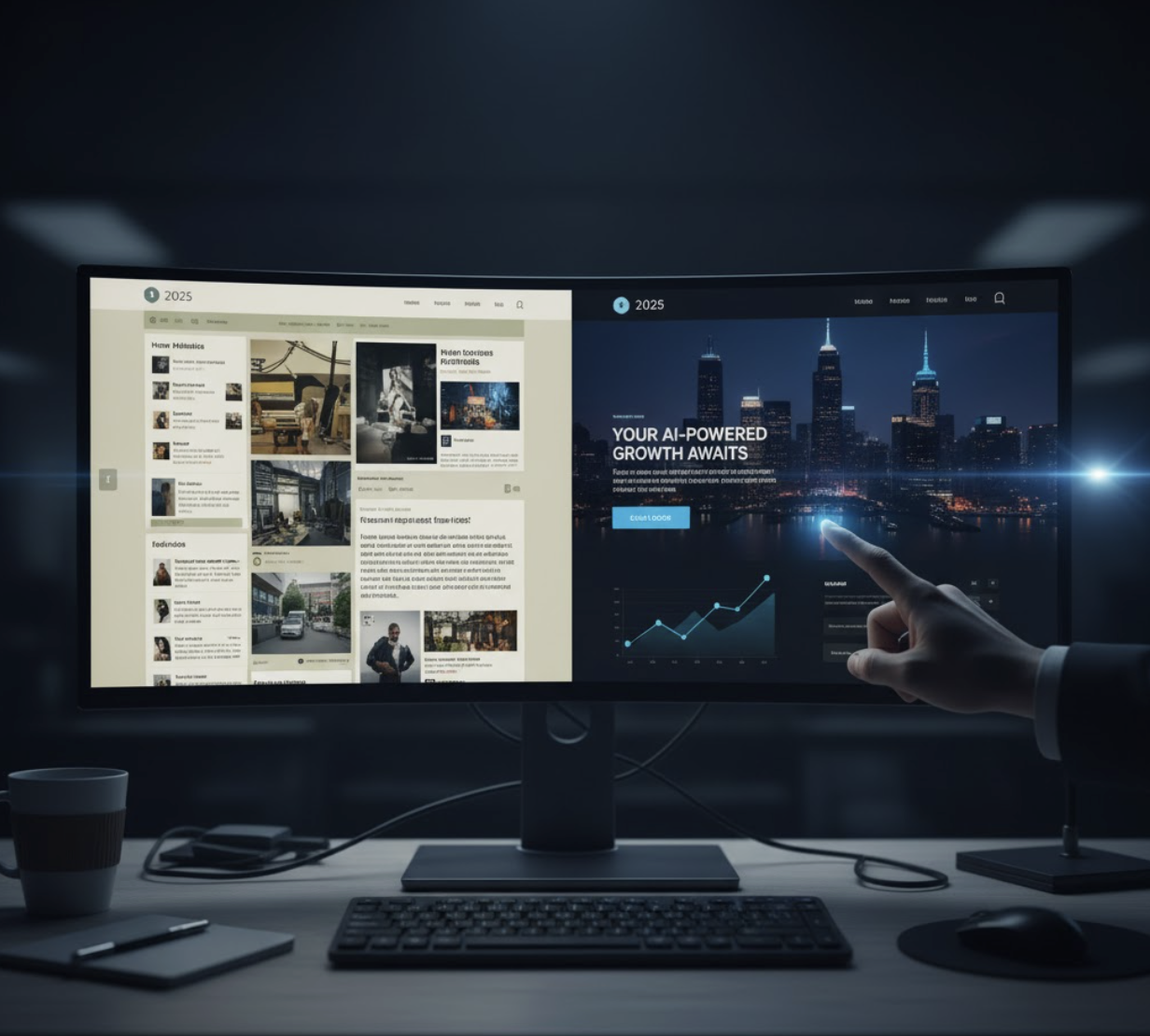
The Future of Web Design Has Arrived
Your website is often your brand’s first impression — and in 2025, that impression needs to be fast, intelligent, and deeply personal.
The world of website design trends in 2025 is shifting fast. Audiences expect more than pretty visuals — they crave intuitive experiences, emotionally engaging content, and seamless performance across every device. If your site still looks or behaves like it did two or three years ago, it might already feel dated to your visitors.
Let’s explore what’s shaping the future of web design — what’s trending in, what’s fading out, and how you can adapt to stay ahead of the curve.
What’s In: The Top Website Design Trends of 2025
1. AI-Driven Personalization
In 2025, your website isn’t just a brochure — it’s a smart system that adapts to every visitor.
AI tools are now enabling websites to personalize content, visuals, and even navigation flows based on visitor behavior. Think dynamic homepages that shift based on user intent, chatbots that act like personal concierges, and predictive product recommendations.
Why it matters:
- Boosts engagement and time-on-site.
- Increases conversion rates by tailoring calls-to-action (CTAs) to user segments.
- Creates a seamless experience across channels.
Pro Tip: Combine AI analytics with your CRM data to predict visitor needs — a strategy ActStrategic.ai can help you clarify through its Fix My Website Conversions audit.

2. Minimalist, Content-First Layouts
The aesthetic trend continues: less clutter, more clarity. Clean layouts with ample white space are replacing overloaded homepages.
In 2025, effective websites:
- Use bold typography instead of busy graphics.
- Focus on storytelling and brand purpose.
- Prioritize accessibility and scannability.
Outdated: Overly animated sliders, long hero videos, and autoplaying media.
3. Immersive Multimedia Experiences
3D visuals, interactive product demos, and motion graphics are now being used more strategically — not for flashiness, but for immersion.
WebGL and lightweight 3D renderers make it possible to give users a hands-on digital experience without slowing page speed.
Why it’s trending:
- Enhances storytelling and emotional connection.
- Helps complex products feel tangible.
- Differentiates your brand experience from competitors.
4. Micro-Interactions and Smart Animations
The subtle things — hover effects, scroll-triggered animations, progress indicators — create delight and reinforce brand polish.
These micro-interactions are being powered by smarter frameworks that balance engagement with performance.
Tip: Keep animations purposeful. Each one should add clarity, not distraction.
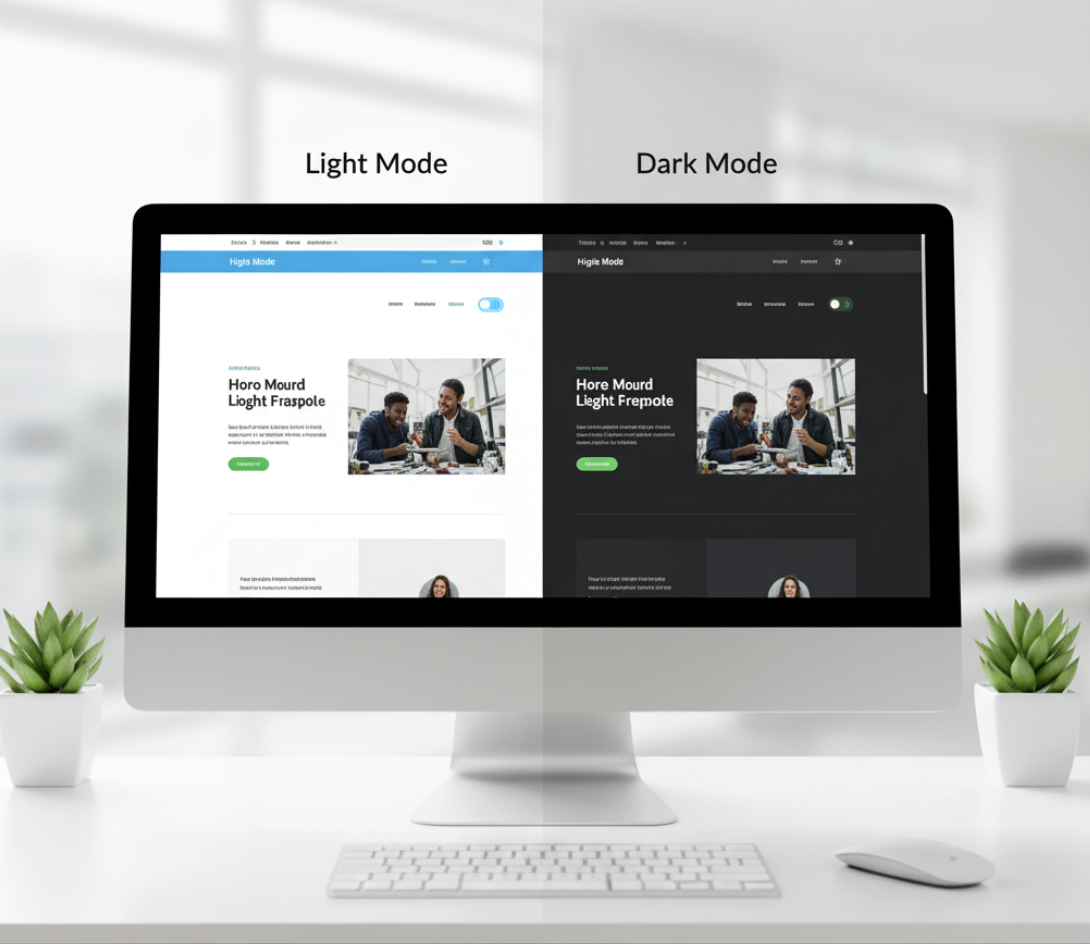
5. Dark Mode and Adaptive Design
With more users browsing at night and on OLED devices, dark mode and adaptive color systems are now standard expectations.
In 2025, websites are going beyond simple toggles — they adjust color contrast and brightness automatically based on user preference or environment.
Why it matters: Improves accessibility, readability, and user comfort.
What’s Out: Website Trends Fading in 2025
| Outdated Trend | Why It’s Going Away |
|---|---|
| Stock-heavy imagery | Feels inauthentic; users prefer real, brand-specific visuals |
| Heavy animations | Slows down mobile and hurts SEO |
| Keyword-stuffed copy | Penalized by Google’s AI-driven search ranking updates |
| Desktop-first design | Fails to meet modern mobile-first behavior |
| Generic CTAs | Users expect personalization and relevance |
Strategic Takeaway: Design for Clarity, Conversion, and Connection
The best web designs in 2025 aren’t just beautiful — they’re strategic.
A great design clarifies your message, reduces friction, and builds trust. But design without strategy is just decoration. If your website looks great but underperforms, it’s time to evaluate the system behind the screen.
👉 Explore Fix My Website Conversions — a diagnostic report from ActStrategic.ai that pinpoints what’s blocking your site from turning visitors into customers.
FAQs: Website Design Trends 2025
1. How often should I redesign my website?
Every 2–3 years is a healthy cadence for most businesses — but if metrics like conversion rate, bounce rate, or session time are declining, that’s your cue to act sooner.
2. Do I need AI to personalize my website?
You don’t need complex infrastructure. Start small with tools that dynamically change CTAs or recommend content based on visitor behavior.
3. What’s the biggest web design mistake businesses make in 2025?
Designing for aesthetics first instead of function — forgetting that your website is a sales and strategy tool, not just a visual asset.
4. How can I make my website faster?
Compress images, use a content delivery network (CDN), and minimize third-party scripts. Google’s Core Web Vitals remain key ranking factors.
5. What design trend offers the best ROI?
AI-driven personalization and conversion-focused UX deliver the highest return, especially for service-based and SaaS businesses.
The Bottom Line
The future of web design is strategic, smart, and human-centric. As technology evolves, so do expectations — and the brands that stay ahead are those that adapt quickly.
If you’re not sure where your site stands, it’s time to get clarity.
Explore your Fix My Website Conversions report to see exactly what’s holding your growth back — and how to fix it fast.