Introduction
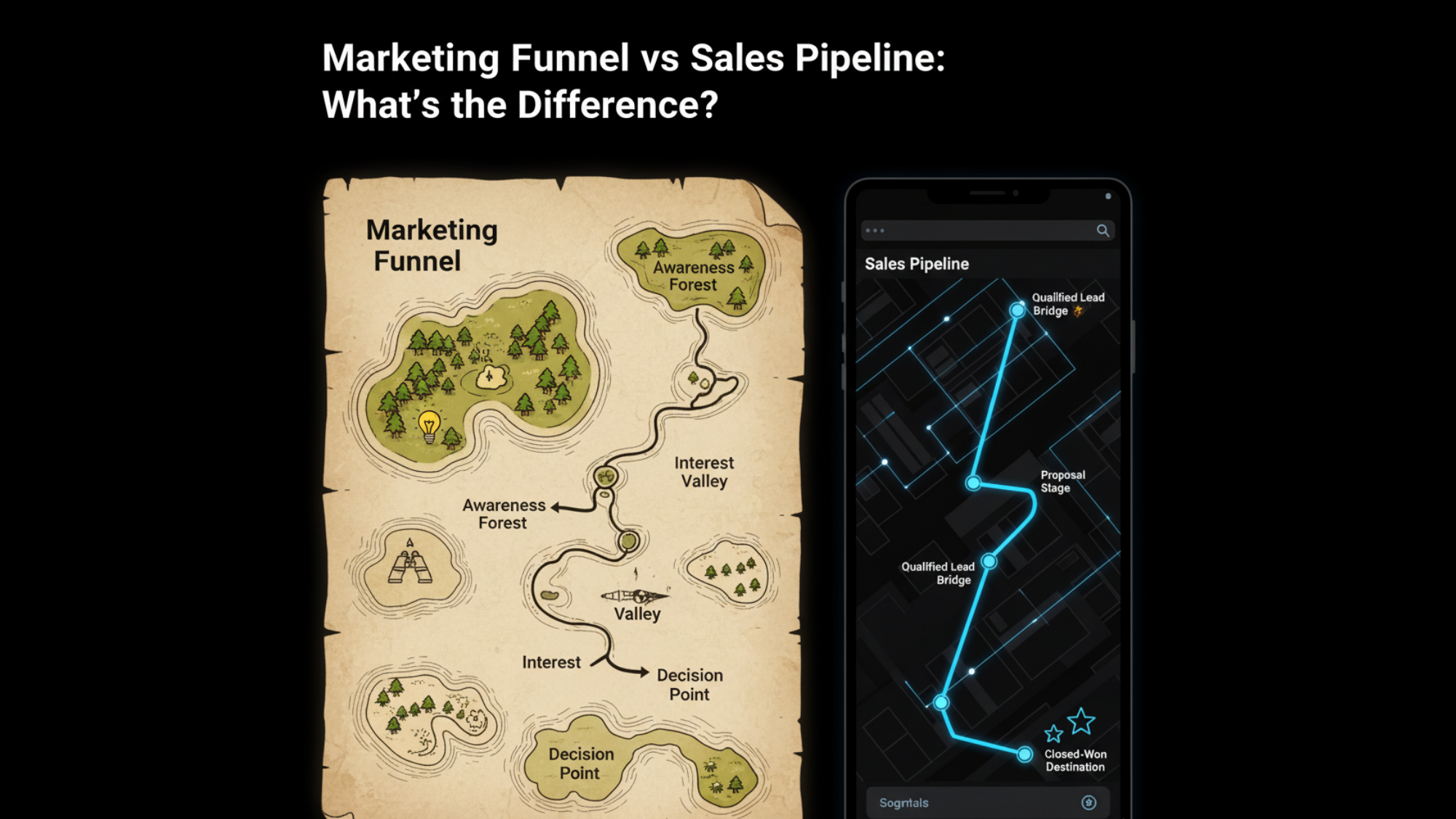
If you’ve ever sat in a meeting where “marketing funnel” and “sales pipeline” were used interchangeably, you’re not alone. Many business owners and marketers struggle to clearly differentiate the two. Yet understanding the distinction between a marketing funnel vs sales pipeline is essential for aligning teams, reducing wasted ad spend, and boosting overall conversion rates.
At ActStrategic.ai, we see this confusion often. The good news? Once you grasp the differences, you’ll be able to spot gaps in your sales process and fix them strategically.
What Is a Marketing Funnel?
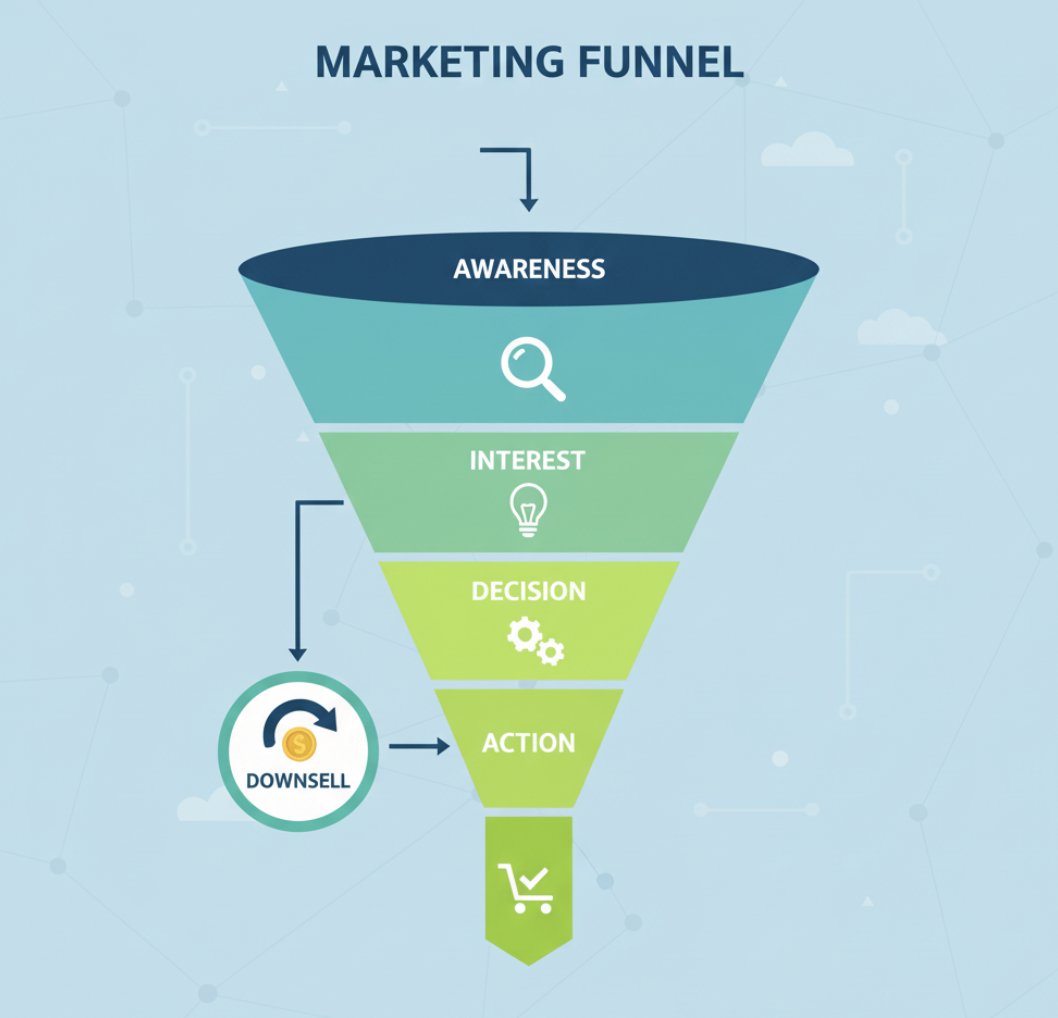
The marketing funnel is a customer-centric model that visualizes how prospects move from awareness to purchase. It focuses on guiding leads through key stages:
- Awareness – Prospects discover your brand.
- Interest – They engage with your content or offers.
- Decision – They evaluate whether your solution fits.
- Action – They take the leap and buy.
The funnel is about attraction and nurturing — ensuring leads don’t slip through before reaching your sales team.
What Is a Sales Pipeline?
The sales pipeline is a seller-centric tool. It tracks the status of individual deals as they move through specific stages of the sales process, such as:
- Lead qualified
- Discovery call completed
- Proposal sent
- Negotiation
- Closed won (or lost)
Where the funnel shows volume and conversion rates, the pipeline shows deal progress and forecasted revenue.

Marketing Funnel vs Sales Pipeline: A Side-by-Side Comparison
| Aspect | Marketing Funnel | Sales Pipeline |
|---|---|---|
| Focus | Customer journey & engagement | Internal sales process & deal tracking |
| Perspective | Buyer-centric | Seller-centric |
| Primary Goal | Nurture leads and generate demand | Manage deals and forecast revenue |
| Metric Examples | Conversion rates, engagement, cost per lead | Deal velocity, pipeline value, win rate |
Why the Distinction Matters
Failing to distinguish between the two often leads to misalignment:
- Marketing teams focus on generating leads but may not understand what makes a “qualified” lead.
- Sales teams may complain about “low-quality” leads without seeing upstream funnel issues.
By clarifying roles:
- Marketing owns top-of-funnel demand generation.
- Sales owns pipeline conversion and deal closure.
When both align, businesses unlock higher ROI on marketing spend and more predictable sales outcomes.
Framework: The Alignment Loop
To bridge funnel and pipeline, try this 3-step framework:
- Define shared language – Agree on what constitutes an MQL (Marketing Qualified Lead) vs SQL (Sales Qualified Lead).
- Integrate systems – Sync CRM and marketing automation tools so funnel activity flows into pipeline stages.
- Close the feedback loop – Sales shares insights on lead quality; marketing adjusts targeting.
Common Mistakes to Avoid
- Treating funnel and pipeline as interchangeable.
- Overloading sales with unqualified leads.
- Measuring success with the wrong KPIs (e.g., marketing only tracking clicks, sales only tracking closed deals).
FAQs
1. What’s the main difference between a marketing funnel vs sales pipeline?
The funnel tracks how prospects move toward purchase, while the pipeline tracks how deals progress once sales is involved.
2. Can a company succeed without using both?
Not for long. A funnel without a pipeline leads to wasted demand; a pipeline without a funnel leads to an empty pipeline.
3. How do I know if my funnel and pipeline are aligned?
Check if sales and marketing share definitions of qualified leads and have consistent reporting metrics.
4. What tools help align funnels and pipelines?
CRM systems like HubSpot or Salesforce, combined with marketing automation platforms, keep both sides in sync.
5. How can ActStrategic.ai help?
Our Fix My Funnel tool pinpoints gaps in your funnel so your pipeline stays healthy and predictable.
Helpful Resources
- ActStrategic.ai homepage – explore all AI-powered strategy tools.
- Fix My Offer tool – ensure your offer resonates with your audience.
- Fix My Website Conversions tool – optimize on-site performance.
Conclusion
The marketing funnel vs sales pipeline distinction isn’t just semantics—it’s the key to aligning your teams for sustainable growth. Mastering both ensures your marketing dollars generate quality leads and your sales team closes them with confidence.
👉 Ready to identify the leaks in your funnel? Explore our Fix My Funnel report and take the first step toward true sales and marketing alignment.