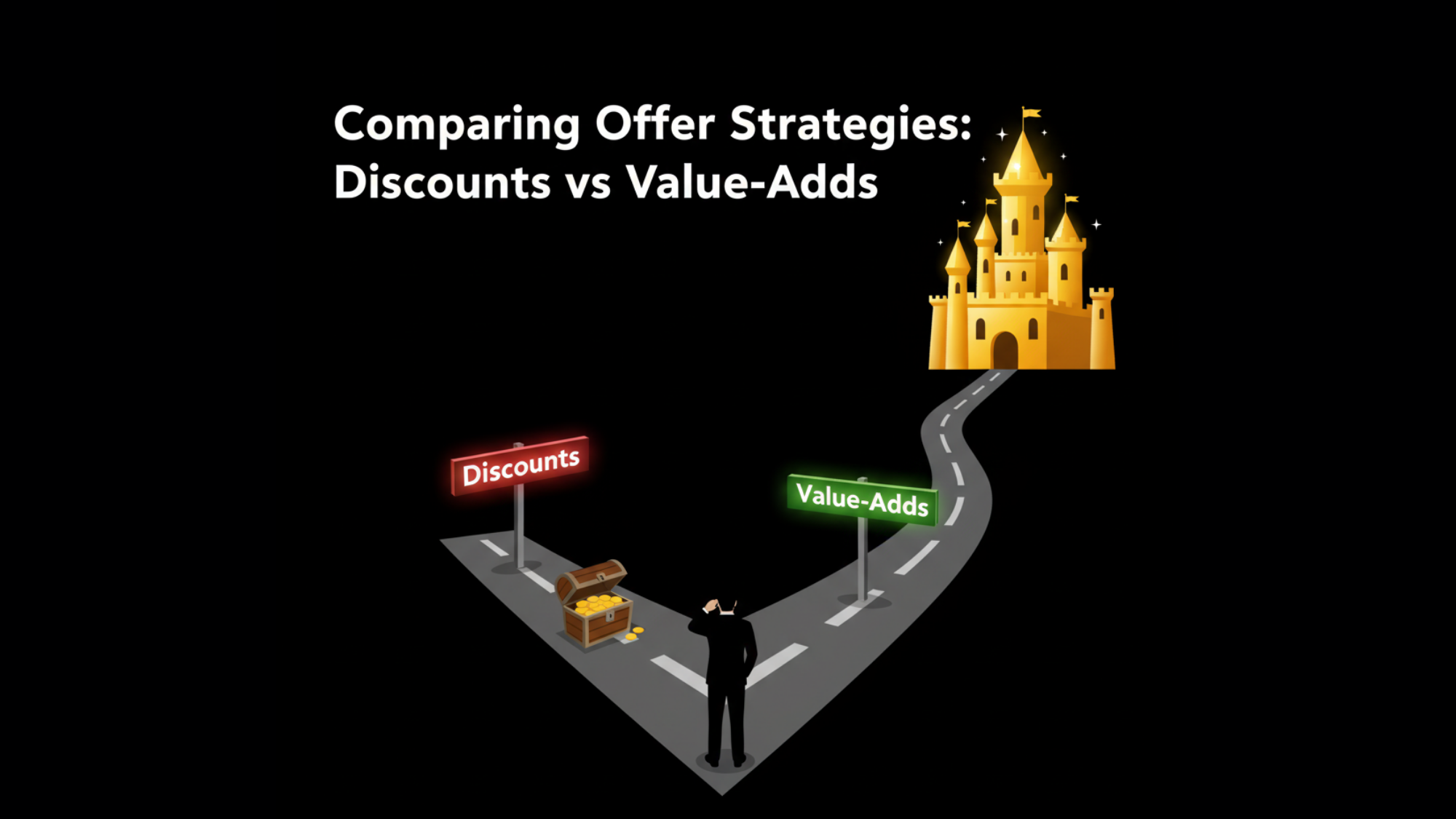
Introduction: The Dilemma Every Business Owner Faces
You’re ready to roll out an irresistible offer. But here’s the dilemma: do you slash prices with a discount, or do you sweeten the deal with a value-added bonus? On the surface, both strategies can spark conversions — but the long-term impact on your brand, margins, and customer relationships is very different. Understanding the discount vs value add offer debate can be the difference between scaling profitably and eroding your positioning.
At ActStrategic.ai, we’ve seen too many businesses chase quick wins with discounts, only to find themselves stuck in a race to the bottom. The smarter move? Take a step back, understand the psychology of both approaches, and choose the strategy that aligns with your growth goals.
What Exactly Is a Discount Offer?
Discount offers are simple: you reduce the price of your product or service. It could be 20% off, $50 off, or a time-limited flash sale. Discounts tap into urgency and the human love of “saving money.”
Pros of Discounts:
- Immediate spike in conversions
- Easy to communicate (“20% Off Today” is crystal clear)
- Creates urgency for fence-sitters
Cons of Discounts:
- Trains customers to wait for sales
- Shrinks profit margins
- Risks cheapening your brand perception

What Is a Value-Add Offer?
Instead of reducing the price, you increase the value. That might mean offering a free bonus, bundling additional services, or providing exclusive access to something extra. Think of it as enhancing the perceived ROI of your product.
Pros of Value-Adds:
- Protects your margins
- Strengthens brand positioning
- Builds customer loyalty with perceived generosity
- Differentiates you from low-price competitors
Cons of Value-Adds:
- More complex to communicate than a simple discount
- Can create operational overhead (e.g., fulfillment of bonuses)
- May not appeal to extremely price-sensitive buyers

Discounts vs Value-Adds: A Side-by-Side Comparison
| Factor | Discount Offer | Value-Add Offer |
|---|---|---|
| Impact on Margins | Lowers profits per sale | Protects margins |
| Brand Positioning | Can cheapen perception | Strengthens premium feel |
| Customer Loyalty | Attracts deal-hunters | Builds loyalty and perceived generosity |
| Ease of Communication | Extremely simple | Requires explanation |
| Short-Term Conversions | High | Moderate to High |
| Long-Term Growth | Risk of discount addiction | Sustainable, scalable |
When Discounts Make Sense
Discounts aren’t inherently bad. They work well in specific scenarios:
- Clearing old inventory (retail, eCommerce)
- Customer acquisition campaigns (loss leader strategy)
- Holiday or event-based promotions
But they should be used strategically — not as your default.
For more insights on fixing funnel leaks that discounts alone can’t solve, explore our Fix My Funnel tool.
When Value-Adds Win
If your goal is to build a premium brand and scale sustainably, value-adds are often the smarter play. Examples include:
- SaaS platforms bundling onboarding or training sessions
- Agencies offering free strategy calls or templates
- E-commerce brands adding a bonus gift or extended warranty
Instead of lowering your worth, you amplify it. Want to test whether your current offer resonates? Try our Fix My Offer tool.
A Hybrid Strategy: Best of Both Worlds
Sometimes, combining both approaches works. For instance:
- Small introductory discount plus a value-added bonus
- Limited-time “VIP bundle” that feels premium but includes a price cut
The key is to design it intentionally — not by accident. If your website isn’t converting, see where offers are falling short with our Fix My Website Conversions tool.
FAQs About Discount vs Value-Add Offers
1. Which strategy works best for startups?
Startups benefit more from value-adds to build brand loyalty early, but a small discount can help acquire first users quickly.
2. How do discounts affect brand perception?
Overusing discounts trains customers to expect sales and can erode a premium image.
3. Are value-adds always more profitable?
Generally yes, since you’re not cutting into margins — but execution costs matter (e.g., staffing for bonuses).
4. Can I A/B test both strategies?
Absolutely. Testing is the smartest way to see what resonates with your audience.
5. How do I know if my offer is weak?
If conversions are low despite strong traffic, your offer might not align with customer needs. Use tools like Fix My Offer to diagnose gaps.
Conclusion: Choose the Strategy That Aligns With Your Goals
At the end of the day, the discount vs value add offer debate is really about clarity of strategy. Do you want short-term sales spikes or long-term brand equity? Discounts deliver urgency but erode margins. Value-adds protect your positioning and loyalty, but require creativity and clarity.
The smartest businesses design their offers with intention — and test rigorously. If you’re not sure where your funnel is leaking, start with clarity. Explore our Fix My Funnel report to pinpoint exactly where your offers fall short and what to do next.